
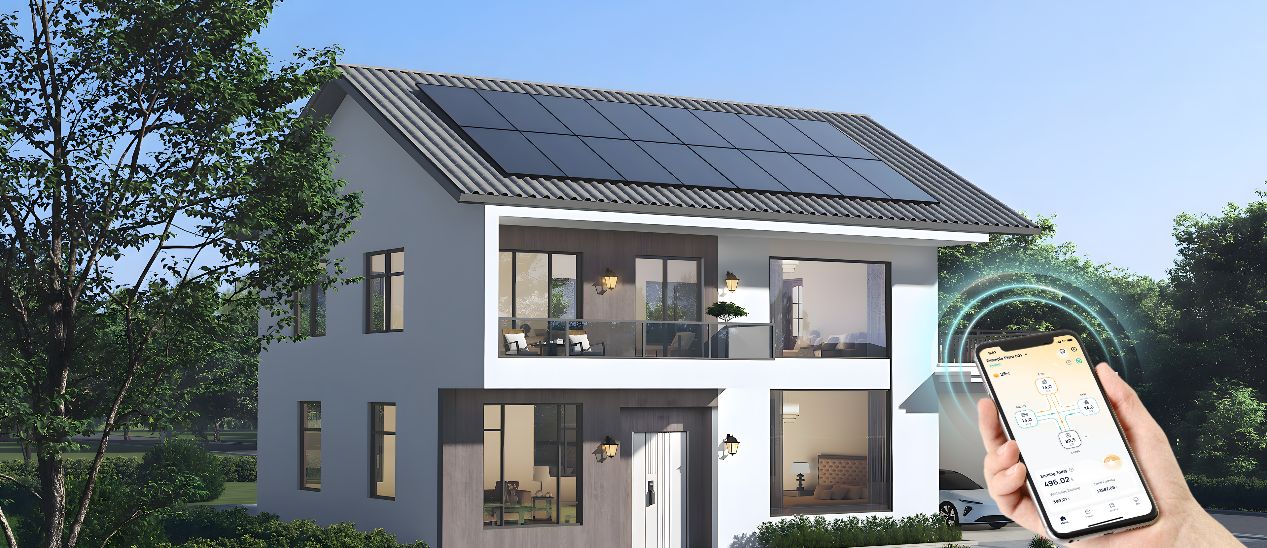
Solar energy has become one of the most attractive upgrades for modern homes. Panels on the roof promise clean electricity, lower utility bills, and greater energy independence. Yet many homeowners discover that installing solar is only the first step. Once the system is running, a new question appears: how do you actually use solar energy in the smartest way possible?
Most solar systems come with their own monitoring apps. These apps show production, daily totals, and lifetime generation. While useful, they often exist in isolation. They tell you how much energy you produce, but not how that production aligns with how your home consumes energy. In other words, they show one side of the story.
Smart home systems, on the other hand, manage devices, schedules, sensors, and automations. When solar monitoring and smart home systems are combined, production and consumption can finally “talk” to each other. This connection allows a home to actively respond to solar availability instead of passively exporting or importing energy. Understanding how to combine these systems reveals how solar can move from a static upgrade to a dynamic energy strategy.
Why Solar Monitoring Alone Is Not Enough
Solar monitoring platforms are excellent at answering certain questions. They show how much your panels generate each hour, day, or month. They help detect faults or drops in performance. They provide reassurance that the system is working.
However, they rarely control anything inside the home. They do not decide when your dishwasher runs. They do not adjust your thermostat. They do not delay EV charging until solar output peaks. As a result, many homes with solar still rely heavily on the grid at the wrong times.
This creates a common situation where a home exports solar energy midday at low compensation rates and then buys electricity back in the evening at higher prices. Financially and energetically, this is not ideal. The missing piece is coordination.
Combining solar monitoring with smart home systems adds that coordination. It allows solar data to influence real decisions inside the home.
The Core Idea: Matching Production with Consumption
The biggest benefit of combining solar and smart homes is increasing self-consumption. Self-consumption means using your own solar energy directly instead of sending it to the grid.
When production and consumption are aligned, more solar energy powers your appliances, HVAC, and devices. This reduces grid imports and improves the return on your solar investment.
Smart home systems can help shift flexible loads into high-production windows. Instead of running whenever someone presses a button, certain appliances can run when solar is abundant. This does not reduce comfort, but it changes timing.
The core strategy is simple in concept: use more energy when the sun is strong, and use less when it is not.
What You Need to Combine Both Systems
To combine solar monitoring with smart home systems, a few elements help.
First, you need accessible solar data. Many inverters and solar platforms offer APIs or integrations. These allow other systems to read production data in near real time.
Second, you need a smart home platform capable of automation. Platforms like Home Assistant, SmartThings, or similar ecosystems can process data and trigger actions.
Third, you need controllable devices. Smart plugs, smart switches, smart thermostats, EV chargers, and connected appliances make automation possible.
Finally, stable connectivity and good configuration matter. The system must receive reliable data and act predictably.
With these pieces in place, meaningful coordination becomes possible.
Using Solar Data to Trigger Automations
One common method is threshold-based automation. For example, when solar production exceeds a certain wattage, a device can turn on. When production drops, it can turn off or pause.
A simple example is a water heater connected through a smart controller. If solar output is high, the heater can run and store energy as hot water. If solar drops, it can reduce activity.
Another example is pool pumps. These are flexible loads that can often run during daylight hours. Aligning them with solar production makes them effectively solar-powered.
These automations do not need to be extreme. Even partial alignment helps.
Smart EV Charging with Solar
Electric vehicles are one of the most powerful opportunities for solar alignment. EVs require significant energy, but charging is often flexible.
By combining solar monitoring and a smart charger, the home can prioritize charging when solar surplus exists. Instead of pulling from the grid, the EV absorbs midday solar.
Some systems even modulate charging speed based on available surplus. If clouds pass and production drops, charging can slow. When the sun returns, it can increase.
This turns the EV into a dynamic solar consumer rather than a fixed load.
HVAC Optimization with Solar Awareness
Heating and cooling are major energy users. While they must maintain comfort, they can still be optimized.
For example, during sunny winter days, slight pre-heating can occur while solar is abundant. In summer, pre-cooling during high production hours can reduce evening demand.
These adjustments are small, often just a degree or two. Yet they can shift meaningful energy into solar-powered windows.
The key is subtlety. Comfort should remain the priority.
Battery Systems and Smart Coordination
Homes with batteries gain even more potential. Batteries store excess solar for later use. When integrated with smart home logic, they become part of a larger strategy.
Smart systems can decide when to charge batteries, when to discharge, and when to preserve stored energy. For example, a battery may discharge during expensive peak-rate periods and recharge during solar peaks.
Some advanced setups also consider weather forecasts. If tomorrow will be cloudy, the system may conserve stored energy.
This adds a predictive layer to energy management.
Dashboards for Visibility
Combining systems is not only about automation but also visibility. Unified dashboards that show solar production, home consumption, and device usage help homeowners understand flows.
Seeing how much solar is self-consumed versus exported can be motivating. It can also guide further automation tweaks.
However, dashboards should inform, not overwhelm. Clear visuals and simple summaries work best.
Common Mistakes to Avoid
One mistake is overcomplicating automations too quickly. Starting with a few high-impact devices is usually better.
Another mistake is ignoring real-life routines. If automations conflict with daily life, they may be disabled. Good design supports habits rather than fighting them.
Some users also chase perfect optimization. In reality, weather variability and lifestyle changes mean perfection is unrealistic. Improvement is the real goal.
Privacy and Security Considerations
Solar and smart home data can reveal patterns about occupancy and routines. Choosing reputable platforms and securing accounts is important.
Local-control options can reduce cloud dependence. Strong passwords and network security also help.
Responsible setup protects both energy data and household privacy.
Long-Term Benefits
Over time, combining solar monitoring with smart home systems can increase self-consumption, lower bills, and reduce reliance on the grid. It can also extend equipment life by smoothing demand peaks.
More subtly, it builds energy awareness. Homeowners start to think in terms of timing and flows, not just totals.
This mindset supports smarter decisions in future upgrades and purchases.
The Future of Solar-Smart Integration
As grids evolve, homes may receive more real-time signals about pricing and carbon intensity. Solar-smart homes could respond automatically.
Appliances may become natively solar-aware. EVs may coordinate directly with home systems. AI may further optimize decisions.
The combination of solar and smart homes is still developing. Early adopters today are shaping how future homes will operate.
Conclusion
Combining solar monitoring with smart home systems transforms solar from a passive generator into an active part of home intelligence. Instead of simply producing energy, the home learns when and how to use it best.
The goal is not to micromanage every watt, but to align major loads with solar opportunity. Even modest coordination can improve financial returns and sustainability.
In a world moving toward electrification and renewables, this coordination becomes increasingly valuable. A home that understands both its production and its consumption is better prepared for the future. Solar provides the energy, and smart systems help use it wisely.
FAQs
Do I need a battery for this to work
No, though batteries increase flexibility.
Is this difficult to set up
Basic automations can be simple; advanced ones take more effort.
Will this eliminate grid use
Usually not, but it can reduce it.
Do I need special solar equipment
Accessible data from your inverter is the key.
Is it worth it for small systems
Yes, alignment still improves self-consumption.

Daniel Harper is a graduate engineer with a postgraduate specialization in Intelligent Solutions and Industry 4.0 technologies. He leads the Mogarzi Team, focusing on smart home automation, residential energy efficiency, and intelligent energy management systems. His work combines engineering principles with practical home optimization strategies, translating complex technical concepts into actionable insights for homeowners seeking smarter and more efficient living environments.