
Solar panels generate electricity silently and automatically, but without proper monitoring, homeowners have no real visibility into how efficiently their system is performing. Many residential solar installations underperform for months — sometimes years — simply because production issues go unnoticed.
A solar monitoring system transforms a photovoltaic installation from a passive energy generator into an intelligent, data-driven energy asset. By tracking performance in real time, identifying inefficiencies, and enabling optimization strategies, monitoring systems play a crucial role in maximizing return on investment (ROI).
This guide explains how solar monitoring works, what metrics matter most, common mistakes homeowners make, and how to use performance data to increase energy production.
What Is a Solar Monitoring System?
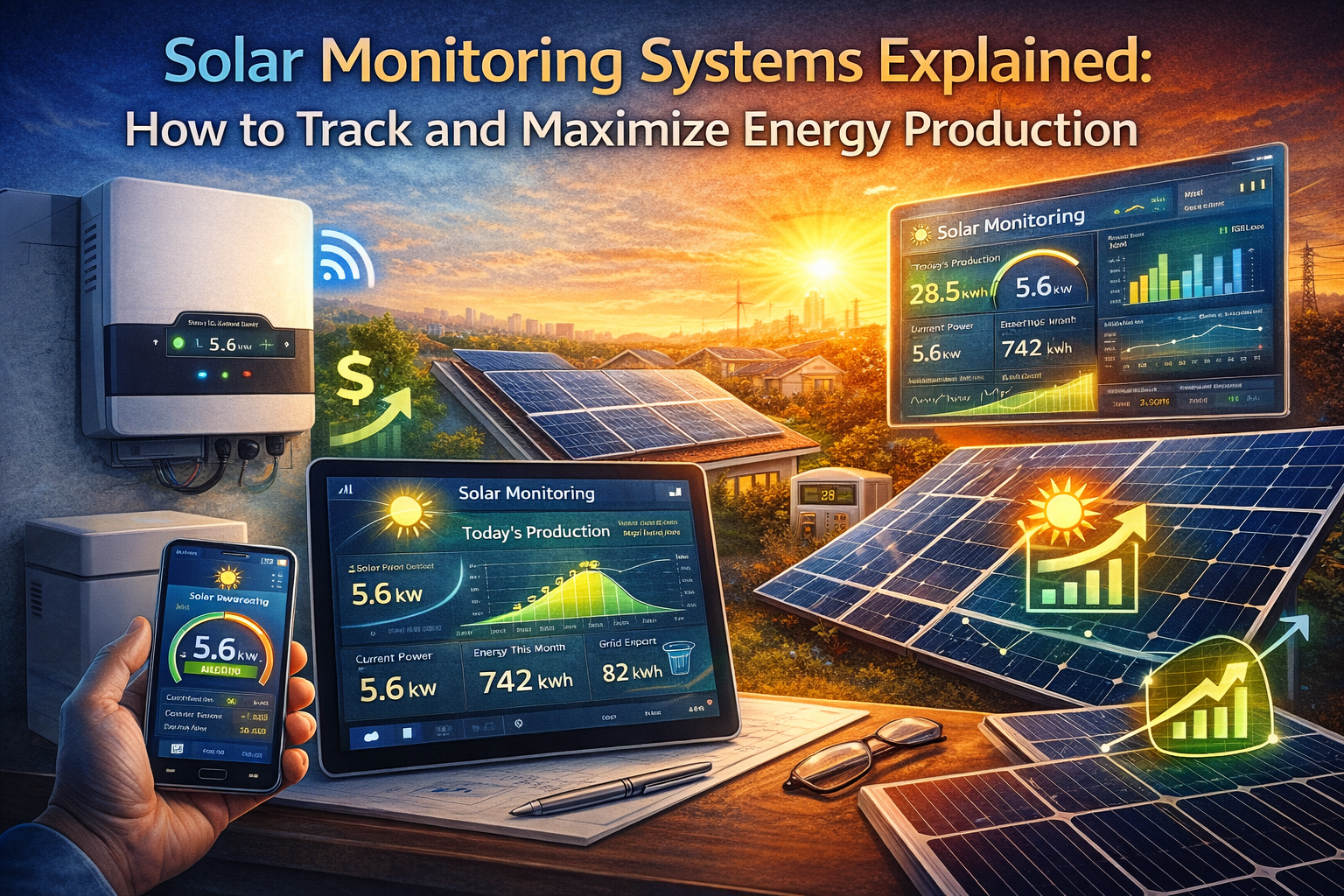
A solar monitoring system is a digital platform that tracks the energy production of a photovoltaic (PV) installation. It collects data from inverters, panels, and sometimes smart meters, then converts that data into accessible dashboards via mobile apps or web portals.
Instead of guessing how much energy your panels are producing, monitoring provides measurable, real-time insights.
Core Components of a Monitoring System
A typical residential monitoring setup includes:
- Data-enabled inverter or microinverters
- Monitoring gateway or communication module
- Cloud-based analytics platform
- Mobile or desktop dashboard
Modern systems often integrate directly with smart home ecosystems, allowing homeowners to correlate solar production with household consumption.
How Solar Monitoring Works
Solar panels generate DC electricity, which flows to an inverter that converts it into usable AC electricity. Modern inverters continuously measure:
- Voltage
- Current
- Power output
- System temperature
- Operational status
This data is transmitted via Wi-Fi, Ethernet, or cellular connection to cloud servers, where it is processed and displayed in user-friendly dashboards.
Advanced systems can even detect anomalies such as shading, panel degradation, inverter faults, or wiring inefficiencies.
Key Metrics Every Homeowner Should Track
Not all data points are equally important. Understanding the right metrics prevents misinterpretation and improves optimization.
1. Real-Time Power Output (kW)
This indicates how much power the system is producing at a given moment. It fluctuates based on sunlight intensity, cloud cover, and time of day.
2. Daily and Monthly Energy Production (kWh)
Measured in kilowatt-hours, this represents total energy generated over time. Comparing monthly data helps identify seasonal patterns or performance drops.
3. Performance Ratio (PR)
The performance ratio measures actual output versus expected output under ideal conditions. A sudden drop in PR may indicate dirt accumulation, shading, or equipment malfunction.
4. Inverter Efficiency
Inverters typically operate between 95% and 98% efficiency. Lower performance could signal thermal issues or internal degradation.
5. Consumption vs Production
When integrated with smart meters, monitoring platforms show how much energy is consumed versus exported to the grid. This is essential for optimizing self-consumption strategies.
Why Monitoring Is Essential for ROI
Solar panels represent a long-term investment, often designed to operate for 20–25 years. Even small inefficiencies compound significantly over that lifespan.
For example, a 5% unnoticed production loss over 20 years can reduce thousands of dollars in expected savings.
Monitoring ensures:
- Early detection of inverter failures
- Identification of shading from new obstacles (trees, constructions)
- Verification that the system performs according to installation projections
- Faster maintenance response
Without monitoring, performance degradation often remains invisible until utility bills reveal discrepancies.
Common Solar Monitoring Mistakes Homeowners Make
Despite having monitoring access, many users fail to leverage it effectively.
Ignoring Performance Drops
A slight monthly decrease might seem insignificant, but consistent underperformance usually signals underlying issues.
Not Comparing Year-Over-Year Data
Seasonal variations are normal, but comparing the same month year over year provides clearer insight into degradation trends.
Overlooking Inverter Alerts
Most systems send automatic notifications for faults. Ignoring these alerts can prolong downtime and increase losses.
Focusing Only on Total Production
Production alone is not enough. Maximizing ROI often requires optimizing consumption timing to increase self-use instead of exporting electricity at lower feed-in rates.
Integrating Solar Monitoring with Smart Home Automation
Solar monitoring becomes significantly more powerful when integrated with smart automation.
For example:
- Running dishwashers or EV chargers during peak solar production
- Automatically activating water heaters when surplus energy is detected
- Adjusting HVAC systems based on solar output
This coordination increases self-consumption rates and reduces grid dependency.
In regions with time-of-use pricing, automation can shift high-consumption activities to periods of maximum solar generation.
Advanced Monitoring Features in 2026
As technology evolves, monitoring systems now include:
Panel-Level Monitoring
Microinverter-based systems allow monitoring at the individual panel level. This makes it easier to detect shading or malfunction affecting a single module.
Predictive Analytics
AI-driven platforms analyze weather forecasts and historical data to estimate future production. This helps optimize energy planning.
Grid Interaction Insights
Modern dashboards display import/export patterns, enabling homeowners to strategically reduce grid purchases.
Authority Insight: Monitoring as an Energy Management Tool
From an energy engineering perspective, monitoring is not optional — it is essential for asset optimization.
Solar systems are exposed to environmental stressors, including:
- UV radiation
- Thermal expansion
- Dust accumulation
- Shading shifts
Even high-quality installations experience gradual degradation (typically 0.3%–0.8% annually). Monitoring ensures this degradation remains within expected parameters.
Energy management professionals consistently identify monitoring as one of the most critical components of solar ROI protection.
Without data visibility, performance cannot be validated, optimized, or protected.
Frequently Asked Questions (FAQ)
Do all solar systems include monitoring?
Most modern systems include basic monitoring, but advanced analytics or panel-level monitoring may require specific inverter brands or upgrades.
How often should I check my solar monitoring app?
A quick weekly check is sufficient for most homeowners, with deeper monthly performance reviews recommended.
Can monitoring increase actual energy production?
Indirectly, yes. By identifying inefficiencies and enabling optimization strategies, monitoring helps ensure maximum operational output.
What happens if my inverter stops reporting data?
Loss of data transmission may indicate Wi-Fi issues or inverter malfunction. Immediate investigation prevents extended downtime.
Is panel-level monitoring necessary?
For larger systems or complex roof layouts, panel-level monitoring provides more precise diagnostics and faster troubleshooting.
Final Considerations
Installing solar panels without monitoring is like investing in financial assets without checking performance statements. While the panels generate electricity automatically, optimization requires visibility.
Solar monitoring systems transform passive energy generation into active energy management. By tracking performance metrics, identifying inefficiencies early, and integrating with automation systems, homeowners can significantly increase the long-term value of their solar investment.
In 2026 and beyond, as energy markets become more dynamic and smart homes more integrated, monitoring systems are no longer a luxury feature — they are foundational infrastructure for maximizing renewable energy returns.

Daniel Harper is a graduate engineer with a postgraduate specialization in Intelligent Solutions and Industry 4.0 technologies. He leads the Mogarzi Team, focusing on smart home automation, residential energy efficiency, and intelligent energy management systems. His work combines engineering principles with practical home optimization strategies, translating complex technical concepts into actionable insights for homeowners seeking smarter and more efficient living environments.