
Introduction
The concept of the smart home has evolved rapidly over the past decade. What was once considered a luxury feature—such as automated lighting or voice-controlled assistants—has gradually become a practical and increasingly common component of modern homes. As buyers grow more familiar with connected technologies, smart home features are no longer viewed only as conveniences; they are also becoming important factors that influence property value.
Real estate markets are increasingly influenced by technology, energy efficiency, and long-term operating costs. Homebuyers today often look beyond the aesthetic qualities of a house and consider how efficiently the home operates, how secure it is, and whether it includes modern infrastructure that supports connected devices.
Smart home upgrades address many of these priorities. When implemented strategically, they can improve comfort, increase energy efficiency, and enhance security—all of which can make a property more attractive to potential buyers.
However, not all smart technologies have the same impact on property value. Some upgrades provide meaningful functional improvements that buyers actively seek, while others offer only minor conveniences. Understanding which smart home investments deliver the greatest long-term value can help homeowners make smarter decisions when upgrading their properties.
Why Smart Home Features Matter to Buyers
Modern homebuyers are increasingly accustomed to digital technologies that simplify everyday tasks. Smartphones, cloud services, and automation systems have shaped expectations about how homes should function.
When buyers evaluate a property, they often consider whether the home is equipped to support modern lifestyles. Features such as remote climate control, energy monitoring, security systems, and automated lighting can make a property feel more modern and easier to manage.
Smart home upgrades also signal that a property has been updated with current technology. This perception can make a home stand out in competitive real estate markets where buyers compare multiple properties with similar sizes and locations.
In addition, many smart home systems improve operational efficiency. Homes that consume less energy or provide better security may be viewed as lower-risk investments by potential buyers.
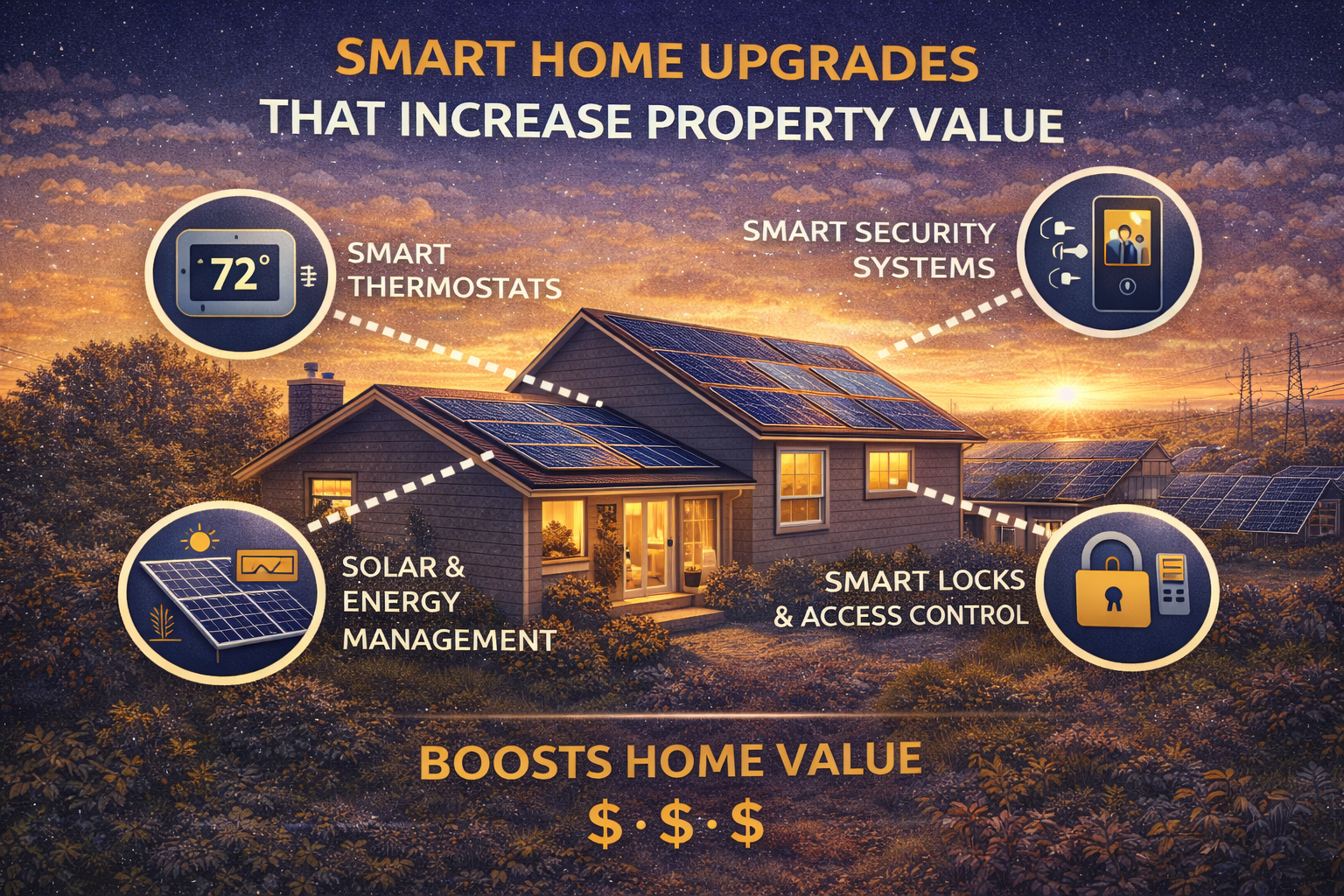
Smart Thermostats and Climate Control Systems
One of the most impactful smart home upgrades for property value is the installation of smart climate control systems. Heating and cooling represent a large portion of residential energy consumption, and buyers are increasingly interested in homes that manage climate efficiently.
Smart thermostats allow homeowners to control heating and cooling remotely through mobile applications. More advanced models also learn occupancy patterns and automatically adjust temperature settings to optimize comfort and energy efficiency.
From a buyer’s perspective, this technology offers two clear advantages. First, it improves everyday convenience by allowing climate control from anywhere. Second, it can reduce energy costs through automated temperature management.
Because HVAC systems are central to household comfort, smart thermostats often provide one of the most visible and practical smart home improvements.
Smart Security Systems
Security is another area where smart home technology can significantly increase property appeal. Modern smart security systems integrate cameras, motion sensors, door sensors, and mobile alerts into a single monitoring platform.
These systems allow homeowners to monitor their property remotely and receive instant notifications when unusual activity is detected. Many systems also include smart doorbells with video capability, allowing residents to see and communicate with visitors from their smartphones.
For potential buyers, a built-in smart security system can provide peace of mind and eliminate the need to install additional equipment after purchasing the home.
Security features often rank high among buyer priorities, making them one of the most valuable smart home upgrades available.
Smart Lighting Systems
Lighting automation is one of the most accessible and widely adopted smart home upgrades. Smart lighting systems allow homeowners to control lighting levels, schedules, and scenes through mobile apps or voice commands.
In addition to convenience, automated lighting can improve energy efficiency by ensuring that lights turn off automatically when rooms are unoccupied.
Some smart lighting systems also allow homeowners to create customizable lighting environments, such as dimming lights for evening relaxation or adjusting brightness for workspaces.
Although lighting upgrades may not dramatically increase property value on their own, they contribute to a modern, technology-forward atmosphere that many buyers appreciate.
Energy Monitoring and Smart Energy Management
Energy efficiency has become a major selling point in real estate markets. As electricity costs increase and environmental awareness grows, many buyers actively seek homes with energy-saving technologies.
Smart energy monitoring systems allow homeowners to track electricity consumption in real time and identify inefficient appliances or usage patterns. When integrated with smart home automation platforms, these systems can automatically optimize energy usage throughout the home.
For example, smart systems may adjust thermostat settings when residents leave the house or schedule appliances to operate during lower electricity pricing periods.
Homes equipped with these technologies demonstrate a clear commitment to energy efficiency, which can improve buyer confidence and perceived value.
Solar Integration and Energy Independence
Solar energy systems represent one of the most significant technological upgrades a homeowner can make. Solar panels allow properties to generate electricity independently, reducing reliance on external energy providers.
In many real estate markets, homes with solar installations attract buyers who are interested in long-term energy savings and sustainability. Solar systems can also increase the perceived modernity and innovation of a property.
When combined with smart home energy management systems, solar installations provide even greater value. Homeowners can monitor energy production, manage battery storage, and optimize electricity consumption automatically.
While solar installations require substantial investment, they can become a defining feature that distinguishes a property in the marketplace.
Smart Locks and Access Control
Another upgrade that can enhance property value is the installation of smart locks and access control systems. These systems replace traditional keys with digital access methods such as smartphone apps, keypad codes, or biometric authentication.
Smart locks allow homeowners to grant temporary access to guests, maintenance workers, or family members without needing physical keys. Access logs also allow homeowners to monitor when doors are opened or closed.
For buyers, these systems provide both convenience and security. They simplify everyday routines and reduce the risk of lost or duplicated keys.
As connected devices become more common in residential environments, smart access control is becoming an increasingly attractive feature.
Authority Insight: Technology Infrastructure Is Becoming a Real Estate Asset
From an engineering perspective, smart home technologies represent more than just convenience features. They are gradually becoming part of the infrastructure that defines modern housing.
Just as homes in previous decades were valued for central heating, modern kitchens, or high-speed internet connectivity, today’s properties are increasingly evaluated based on their technological capabilities.
Homes equipped with integrated automation systems, energy-efficient technologies, and connected security platforms are better aligned with future residential trends. These systems improve operational efficiency, enhance safety, and provide a level of control that traditional homes cannot offer.
As smart home ecosystems continue to expand, properties with built-in technology infrastructure are likely to become more desirable in the real estate market.
Frequently Asked Questions
Do smart home upgrades really increase property value?
In many cases, yes. Smart features that improve energy efficiency, security, or convenience can make a property more attractive to buyers.
Which smart home upgrade provides the most value?
Smart thermostats, security systems, and solar energy installations often provide the most noticeable impact.
Are smart home upgrades expensive?
Costs vary widely depending on the technology. Some upgrades, such as smart lighting or smart plugs, are relatively affordable.
Do buyers expect smart home technology today?
Many buyers appreciate smart features, particularly those related to energy efficiency and home security.
Can smart home technology become outdated?
Technology evolves quickly, but systems built on widely supported platforms tend to remain compatible with newer devices.
Final Considerations
Smart home technology is rapidly becoming an important component of modern residential design. Features that improve energy efficiency, security, and automation are increasingly valued by homebuyers who expect their homes to function seamlessly with connected devices.
While not every smart upgrade dramatically increases property value, strategic investments in climate control, security systems, energy management, and solar integration can make a home more appealing in competitive markets.
As connected technologies continue to shape the way homes operate, properties equipped with thoughtful smart home infrastructure are likely to stand out as more efficient, secure, and future-ready living environments.

Daniel Harper is a graduate engineer with a postgraduate specialization in Intelligent Solutions and Industry 4.0 technologies. He leads the Mogarzi Team, focusing on smart home automation, residential energy efficiency, and intelligent energy management systems. His work combines engineering principles with practical home optimization strategies, translating complex technical concepts into actionable insights for homeowners seeking smarter and more efficient living environments.