
Introduction
Over the past decade, smart homes have evolved from simple convenience tools into complex ecosystems capable of managing energy consumption, automation, and data-driven decision making. While many homeowners begin their journey with individual devices such as smart thermostats, smart plugs, or automated lighting, these components only represent isolated improvements.
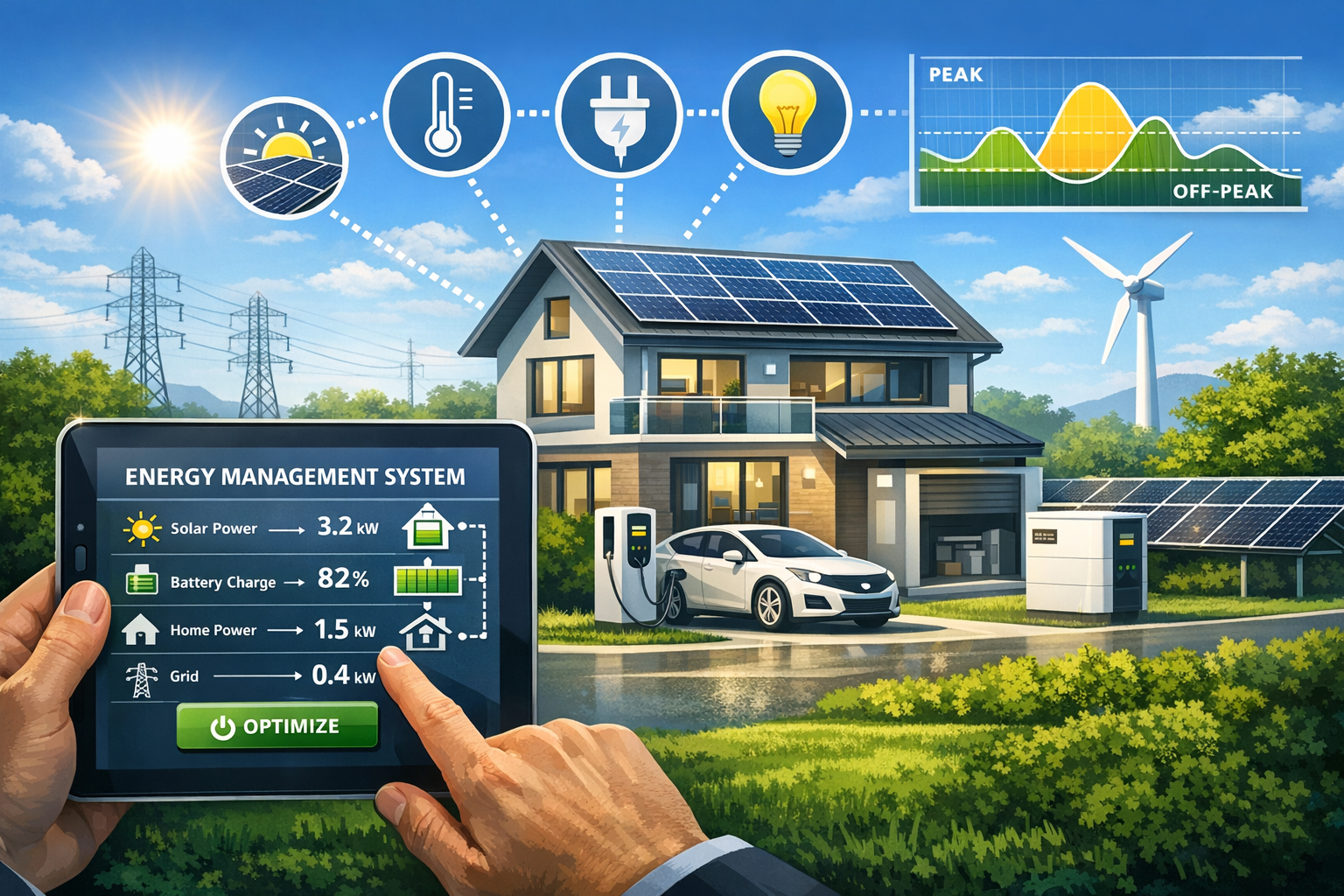
The real transformation occurs when all devices are coordinated through a Smart Home Energy Management System (EMS). Instead of operating independently, systems like HVAC, solar panels, battery storage, appliances, and electric vehicle chargers can work together as part of an integrated energy strategy.
This shift matters because residential energy consumption is becoming more complex. Dynamic electricity pricing, renewable energy integration, and increasing electrification are changing how households interact with the power grid. Without centralized management, optimizing energy use becomes difficult and inefficient.
Smart Home Energy Management Systems solve this challenge by acting as the control center of a modern energy-efficient home. They analyze consumption patterns, coordinate devices, and optimize energy flows automatically. In this article, we explore how these systems work, why they matter, and how they are reshaping the future of residential energy management.
What Is a Smart Home Energy Management System?
A Smart Home Energy Management System is a centralized platform that monitors, analyzes, and controls energy consumption across different devices within a home. Rather than managing appliances individually, an EMS integrates multiple technologies into a coordinated system.
Typical components connected to an EMS include heating and cooling systems, solar panels, battery storage units, electric vehicle chargers, smart appliances, lighting systems, and energy monitoring sensors. The EMS collects real-time data from these devices and uses algorithms to optimize when and how energy is consumed.
For example, instead of running appliances randomly throughout the day, the system may schedule energy-intensive tasks when electricity rates are lowest or when solar production is highest. If a home has battery storage installed, the EMS may decide whether to store solar energy, power the home directly, or export excess electricity back to the grid.
In essence, the EMS transforms a house from a passive energy consumer into an actively managed system.
How Energy Management Systems Work
To understand the value of these systems, it is important to examine how they operate behind the scenes. A modern EMS typically performs three main functions: monitoring, analysis, and automation.
Real-Time Energy Monitoring
The first role of an EMS is collecting data. Sensors and smart meters measure electricity consumption from different circuits or devices throughout the home. This information is transmitted to a central platform where it can be analyzed.
Homeowners can often view this data through dashboards or mobile apps that display real-time usage, historical trends, and system performance. Monitoring provides the foundation for identifying inefficiencies, such as appliances that consume more power than expected or periods when energy usage spikes unnecessarily.
Data Analysis and Pattern Recognition
Once energy data is collected, the EMS analyzes patterns in consumption. This analysis may include daily usage cycles, seasonal trends, and device-specific behavior.
For example, the system may detect that most household electricity demand occurs in the evening when residents return home. It may also identify that certain appliances consistently run during peak electricity pricing periods.
By recognizing these patterns, the EMS can generate recommendations or automatically adjust schedules to improve efficiency.
Automated Energy Optimization
The most advanced function of an EMS is automation. Based on the analysis of consumption patterns and external factors such as weather forecasts or electricity tariffs, the system can adjust device behavior automatically.
An EMS might temporarily reduce HVAC intensity during peak electricity rates or delay a dishwasher cycle until off-peak hours. In homes equipped with solar panels, the system may prioritize running appliances when solar production is highest, maximizing self-consumption.
Automation removes the burden of constant manual management, allowing homeowners to benefit from optimization without continuous monitoring.
The Role of EMS in Solar and Battery Integration
Energy Management Systems become especially valuable when renewable energy systems are involved. Homes with solar panels often generate electricity during the day when residents are not present, leading to a mismatch between production and consumption.
Without an EMS, excess solar power may be exported to the grid at lower compensation rates, while electricity must later be purchased from the grid during evening hours.
An EMS helps resolve this imbalance. By coordinating appliances, battery storage, and energy usage schedules, the system ensures that locally generated electricity is used as efficiently as possible.
For instance, if solar production peaks at midday, the EMS may automatically trigger high-energy appliances or charge an electric vehicle during that window. If a battery is installed, the system can store excess energy for later use when electricity prices increase.
This coordination significantly improves the financial and operational performance of solar installations.
Why Energy Management Systems Matter for Modern Homes
As residential energy systems grow more complex, centralized coordination becomes increasingly important. Homes now include multiple interconnected technologies, each affecting overall energy consumption.
Without integration, each device operates independently, often creating inefficiencies. For example, an electric vehicle charger might operate during expensive peak hours while a battery remains unused. Similarly, a thermostat might maintain full cooling capacity even when the home is unoccupied.
An EMS addresses these inefficiencies by aligning all energy systems toward a common objective: reducing waste and improving performance.
Beyond financial savings, EMS platforms also provide homeowners with transparency. Instead of guessing how electricity is used, residents gain clear visibility into consumption patterns. This awareness alone can lead to more informed decisions and long-term improvements in energy behavior.
The Connection Between EMS and Smart Automation
Many people associate smart homes with convenience features such as voice assistants or automated lighting. However, automation becomes far more powerful when it is guided by energy intelligence.
Energy Management Systems bring a strategic dimension to automation. Rather than triggering actions based solely on user commands or simple schedules, an EMS integrates data about occupancy, weather conditions, electricity tariffs, and renewable energy production.
For example, a smart home might automatically adjust blinds to reduce solar heat gain during hot afternoons, lowering the demand on air conditioning systems. At night, the EMS may shift certain appliances to off-peak hours, reducing electricity costs.
These small adjustments accumulate over time, creating measurable improvements in efficiency.
Potential Limitations of Energy Management Systems
While EMS technology offers significant advantages, it is important to acknowledge its limitations. The effectiveness of a system depends largely on the number of devices integrated and the quality of data available.
Homes with only a few connected devices may experience limited benefits from advanced automation. Similarly, poorly configured systems may fail to optimize energy usage effectively.
Another challenge is interoperability. Not all smart home devices are designed to communicate with each other seamlessly. Ensuring compatibility between platforms can require careful planning during installation.
Despite these challenges, the overall trajectory of EMS technology remains promising. As standards improve and devices become more interconnected, integration will become easier and more effective.
Authority Insight: The Future of Residential Energy Management
From an engineering perspective, Smart Home Energy Management Systems represent the next stage of residential energy evolution. Traditional homes were passive consumers of electricity, relying entirely on external utilities to supply power whenever needed.
Modern homes, by contrast, are gradually transforming into active participants in the energy ecosystem. They generate electricity through solar panels, store energy in batteries, and interact dynamically with the grid.
In this environment, managing energy manually becomes impractical. Automation and intelligent coordination are necessary to balance production, consumption, and cost.
Energy Management Systems provide the framework that makes this coordination possible. By integrating data, automation, and predictive analytics, they allow homeowners to move from reactive energy use to proactive energy strategy.
As renewable energy adoption and electrification continue to grow, EMS platforms will likely become a standard feature of efficient homes.
Frequently Asked Questions
What is the main purpose of a home energy management system?
The primary purpose of an EMS is to monitor and optimize energy consumption across all connected devices within a home.
Do I need solar panels to benefit from an EMS?
No. While solar integration enhances the value of an EMS, the system can still improve efficiency by optimizing appliance schedules and HVAC usage.
Are EMS systems difficult to install?
Installation complexity varies depending on the system and the number of devices involved. Many solutions can be integrated gradually over time.
Can an EMS reduce electricity bills?
In many cases, yes. By shifting energy usage to off-peak hours and improving device coordination, EMS platforms can reduce energy waste and overall costs.
Is an EMS the same as a smart home hub?
Not exactly. A smart home hub focuses primarily on device connectivity and automation, while an EMS specializes in managing energy consumption and optimization.
Final Considerations
Smart Home Energy Management Systems are rapidly becoming a key component of modern energy-efficient homes. As households integrate solar generation, electric vehicles, smart appliances, and advanced automation, managing energy consumption becomes more complex.
EMS platforms address this complexity by providing a centralized system that monitors, analyzes, and optimizes energy use across the entire home. The result is a more efficient, transparent, and responsive residential energy environment.
While not every household requires advanced energy management today, the direction of residential technology is clear. Homes are becoming smarter, more connected, and more energy aware.
Understanding how Energy Management Systems work is an important step toward building homes that are not only convenient but also efficient, resilient, and prepared for the evolving energy landscape.

Daniel Harper is a graduate engineer with a postgraduate specialization in Intelligent Solutions and Industry 4.0 technologies. He leads the Mogarzi Team, focusing on smart home automation, residential energy efficiency, and intelligent energy management systems. His work combines engineering principles with practical home optimization strategies, translating complex technical concepts into actionable insights for homeowners seeking smarter and more efficient living environments.