
Introduction
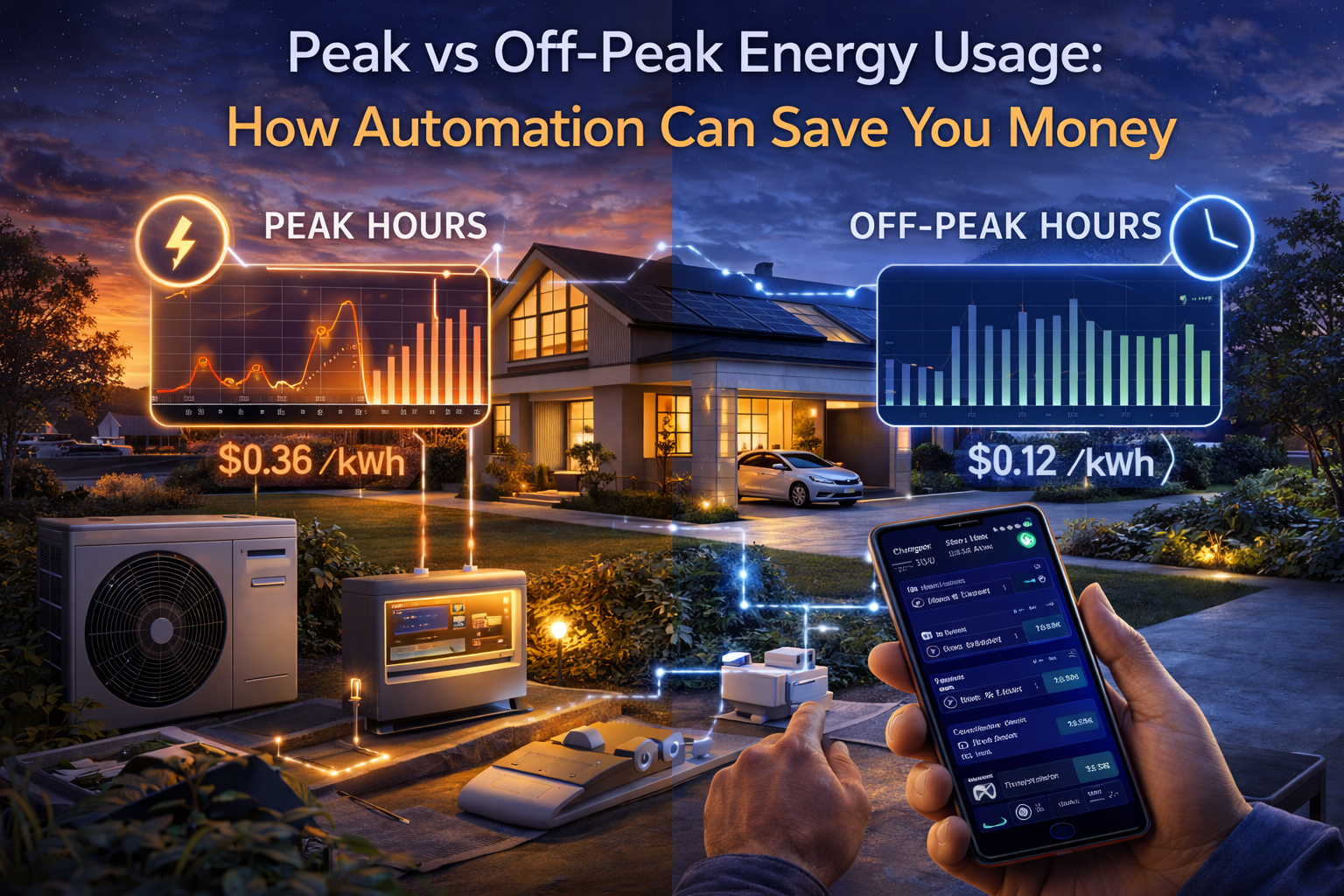
Electricity pricing is no longer static. In many regions, utilities have shifted from flat-rate billing to dynamic pricing structures known as Time-of-Use (TOU) tariffs. Under this system, electricity costs vary depending on the time of day, reflecting grid demand and supply conditions.
For homeowners, this shift changes the rules of energy efficiency. It is no longer only about how much electricity you consume — it is also about when you consume it.
Peak-hour electricity can cost significantly more than off-peak power. As a result, automation has become one of the most powerful financial optimization tools in modern smart homes. When properly configured, automated systems shift energy-intensive activities away from expensive peak windows, reducing overall electricity costs without reducing comfort.
Understanding peak versus off-peak energy usage is now essential for anyone serious about long-term energy optimization.
What Is Peak Energy Usage?
Peak energy usage refers to periods when electricity demand across the grid is highest. These typically occur in the early evening, when households simultaneously turn on lights, cook meals, operate appliances, and adjust HVAC systems.
In warmer climates, summer peaks often coincide with widespread air conditioning use. In colder regions, winter heating can drive peak demand.
Utilities charge higher rates during these windows because:
- Grid stress is higher
- Power generation costs increase
- Backup plants may be activated
- Infrastructure capacity is strained
Peak rates can be 1.5 to 3 times higher than off-peak rates depending on the region.
What Is Off-Peak Energy Usage?
Off-peak hours occur when grid demand is lower, often late at night or during midday in certain markets.
During these periods:
- Electricity supply may exceed demand
- Renewable production may be abundant
- Wholesale prices decrease
Utilities incentivize consumption during off-peak windows to balance the grid. For homeowners, this creates a strategic opportunity.
Consuming the same amount of electricity during off-peak hours can cost substantially less than during peak hours.
Why Timing Now Matters More Than Total Consumption
Under flat-rate pricing, efficiency focused solely on reducing total kWh consumption. With time-of-use pricing, optimization has two dimensions:
- Reducing total energy usage
- Shifting usage to lower-cost time windows
For example, running a dishwasher consumes the same amount of energy whether operated at 6 PM or 11 PM. However, the cost difference may be substantial.
Automation enables this time-based optimization without requiring constant manual adjustments.
Identifying Peak Periods in Your Region
Peak windows vary by utility provider and season. Typical patterns include:
- 4 PM to 9 PM during summer months
- 5 PM to 8 PM during winter evenings
Energy dashboards and utility portals clearly define rate periods. Reading your billing structure carefully is the first step toward strategic automation.
Without understanding tariff schedules, automation cannot be optimized effectively.
How Automation Reduces Peak Energy Costs
Smart automation platforms shift high-consumption loads away from peak hours. Instead of manually scheduling devices daily, automation ensures consistency.
Automated Appliance Scheduling
Dishwashers, washing machines, and dryers can be programmed to start automatically during off-peak windows. Modern smart appliances or smart plugs make this seamless.
Instead of running a laundry cycle at 7 PM, automation can delay it until 10 PM when rates drop.
Smart EV Charging
Electric vehicles represent one of the largest residential loads. Charging immediately after arriving home often overlaps with peak hours.
Smart EV chargers delay charging until off-peak periods or when solar production is highest. This significantly reduces monthly electricity costs.
Smart Thermostat Pre-Cooling or Pre-Heating
Automation can slightly pre-cool a home before peak hours begin. By reducing HVAC runtime during expensive windows, overall cost decreases.
Thermal mass in walls and furniture helps maintain comfort during peak rate periods without continuous system operation.
Water Heater Optimization
Smart water heaters can heat water before peak hours and reduce heating during expensive windows. This shifts load while maintaining availability.
The Financial Impact of Load Shifting
The financial benefit depends on rate differences and household load patterns.
For example, if peak electricity costs $0.30 per kWh and off-peak costs $0.12 per kWh, shifting just 10 kWh per day results in meaningful monthly savings.
Even moderate load shifting can produce noticeable reductions in annual electricity expenses.
Unlike reducing consumption, load shifting often maintains comfort levels while optimizing cost.
Integrating Automation with Solar Systems
In homes with solar panels, the strategy becomes even more powerful.
Automation can prioritize:
- Consuming solar energy before exporting
- Charging batteries during peak solar production
- Avoiding grid purchases during peak pricing
When combined with energy management systems, homes effectively operate as micro-optimized energy hubs.
Even without solar, automation alone provides measurable cost reduction.
Common Mistakes in Peak Optimization
Some homeowners assume that reducing total usage automatically reduces peak exposure. This is not always true.
Running large appliances at peak hours — even if overall consumption decreases — can still generate higher bills under TOU pricing.
Another mistake is failing to adjust automation seasonally. Peak windows may shift between summer and winter.
Lastly, partial automation without understanding rate schedules limits effectiveness.
Optimization requires alignment between tariff structure and device scheduling.
Authority Insight: Grid-Aware Homes Represent the Future of Efficiency
The global energy system is transitioning toward dynamic pricing and decentralized generation.
Homes that adapt to grid signals — rather than passively consuming electricity — gain structural advantages.
Automation enables real-time responsiveness to price signals. As utilities increasingly implement demand-response programs and variable pricing, grid-aware homes will outperform static systems.
The future of energy efficiency is not simply lower consumption — it is intelligent participation in grid dynamics.
Understanding peak versus off-peak usage transforms homeowners from passive consumers into active energy managers.
Frequently Asked Questions
Does shifting energy use reduce total electricity consumption?
Not necessarily. It primarily reduces cost by moving usage to lower-rate periods.
How do I know my peak hours?
Check your utility provider’s time-of-use schedule. It is typically listed on your electricity bill or online portal.
Can renters benefit from peak automation?
Yes. Smart plugs and appliance timers allow partial load shifting without permanent installation.
Is automation expensive?
Basic automation tools are affordable. More advanced systems offer greater optimization but require higher initial investment.
Does this strategy work without solar panels?
Absolutely. Time-based optimization reduces cost regardless of renewable integration.
Final Considerations
Peak versus off-peak energy usage is now one of the most important factors in residential electricity management.
By understanding rate structures and implementing smart automation, homeowners can reduce electricity costs without sacrificing comfort or convenience.
Automation transforms energy timing into a strategic advantage. Instead of reacting to high bills, optimized homes proactively manage when energy is consumed.
As pricing models evolve, grid-aware automation will become a cornerstone of intelligent home energy systems.

Daniel Harper is a graduate engineer with a postgraduate specialization in Intelligent Solutions and Industry 4.0 technologies. He leads the Mogarzi Team, focusing on smart home automation, residential energy efficiency, and intelligent energy management systems. His work combines engineering principles with practical home optimization strategies, translating complex technical concepts into actionable insights for homeowners seeking smarter and more efficient living environments.