
Introduction
Solar energy has become one of the most important technologies in the global transition toward cleaner and more efficient energy systems. Millions of homeowners are installing photovoltaic (PV) systems to reduce electricity costs, increase energy independence, and lower their environmental impact. However, many people assume solar panels produce the same amount of electricity every day as long as sunlight is present. In reality, solar production is influenced by several environmental factors, and weather conditions play a critical role in determining system performance.
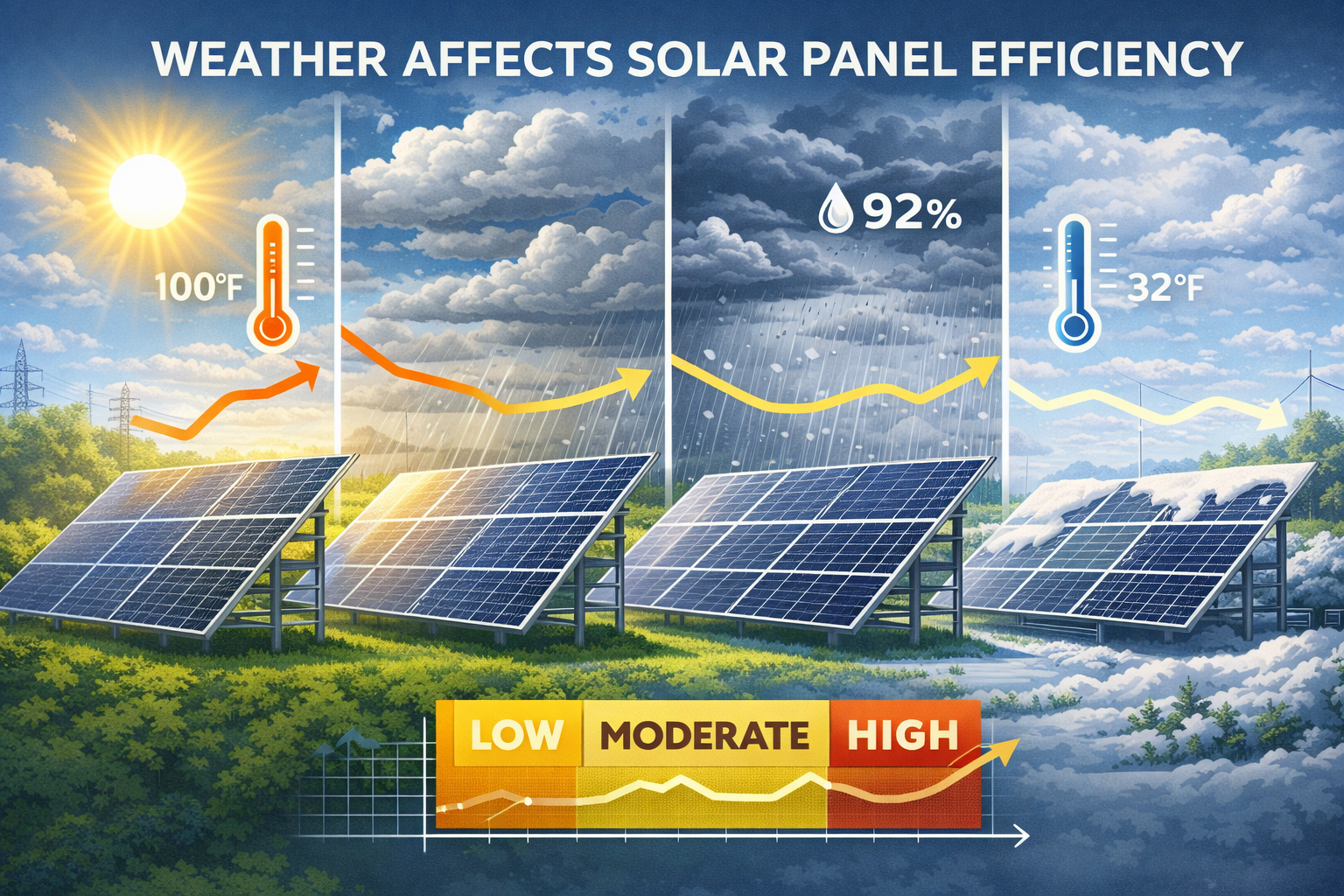
Solar panels convert sunlight into electricity through photovoltaic cells. While the concept is straightforward, the actual output of a solar installation varies depending on atmospheric conditions such as temperature, cloud coverage, humidity, and seasonal changes. These variables affect how much solar radiation reaches the panels and how efficiently photovoltaic cells convert that energy into usable electricity.
Understanding how weather affects solar panel efficiency helps homeowners manage expectations, design better solar systems, and optimize energy usage throughout the year. In this article, we explore the most important weather-related factors that influence solar production and explain how modern systems adapt to changing environmental conditions.
How Solar Panels Generate Electricity
To understand the impact of weather, it is helpful to briefly review how solar panels work. Photovoltaic cells inside solar panels absorb sunlight and convert it into electrical current. The intensity of solar radiation determines how much energy can be generated at any given moment.
Solar radiation refers to the amount of energy from the sun that reaches the surface of the earth. On clear days, panels receive higher levels of radiation, which increases electricity production. When atmospheric conditions reduce sunlight intensity, the output of solar panels decreases accordingly.
However, sunlight intensity is not the only factor that matters. Temperature, air quality, and atmospheric conditions all influence how effectively solar cells operate.
The Impact of Cloud Coverage
Clouds are one of the most visible factors affecting solar energy production. Thick cloud layers reduce the amount of sunlight reaching solar panels, which lowers energy generation.
On heavily overcast days, solar output can drop significantly compared to clear sky conditions. However, solar panels do not stop producing electricity when clouds appear. Diffuse sunlight still reaches the panels, allowing them to generate a portion of their normal output.
Interestingly, certain cloud formations can briefly increase solar production. When sunlight reflects off nearby clouds and concentrates radiation toward the panels, temporary spikes in energy production may occur. This phenomenon is known as the “edge-of-cloud effect.”
While clouds reduce average daily output, modern solar systems are designed with these variations in mind.
Temperature and Solar Panel Performance
Many people assume solar panels perform best in extremely hot climates because they receive more sunlight. In reality, high temperatures can slightly reduce photovoltaic efficiency.
Solar panels are designed to operate optimally within specific temperature ranges. As panel temperatures increase beyond those levels, electrical resistance within the cells rises. This resistance reduces the efficiency of energy conversion.
For this reason, solar panels often perform better in cooler sunny environments than in extremely hot regions. A clear day with moderate temperatures may produce more electricity than a very hot day with the same sunlight intensity.
Manufacturers account for this factor by providing temperature coefficients that describe how panel performance changes as temperatures increase.
Rain and Solar Panel Efficiency
Rain has a mixed impact on solar energy production. During rainfall, sunlight intensity decreases due to cloud cover, which temporarily reduces electricity generation.
However, rain also provides an important benefit: natural cleaning. Dust, pollen, and debris can accumulate on solar panels over time, blocking sunlight and lowering efficiency. Rainwater helps wash away these particles, restoring optimal panel exposure.
In regions with moderate rainfall, this natural cleaning process can improve long-term solar performance. As a result, occasional rainstorms often contribute to maintaining consistent solar output.
Snow and Solar Production
In colder climates, snowfall introduces additional variables for solar energy systems. When snow accumulates on solar panels, it can temporarily block sunlight and prevent electricity generation.
Fortunately, most solar panels are installed at an angle that allows snow to slide off relatively quickly. The dark surface of photovoltaic panels also absorbs sunlight and heat, which helps melt snow accumulation faster than surrounding surfaces.
Additionally, snow-covered landscapes can reflect sunlight toward solar panels, increasing available radiation once the panels are clear. This reflection effect can enhance solar production on bright winter days.
Although heavy snowfall can interrupt energy generation briefly, solar systems in cold climates can still perform effectively throughout the year.
Humidity and Air Quality
Atmospheric conditions such as humidity, pollution, and airborne particles also affect solar panel performance. These factors influence how much sunlight reaches the surface of the panels.
High humidity levels can scatter solar radiation, reducing the intensity of sunlight reaching photovoltaic cells. Similarly, pollution and dust particles in the air can block or diffuse sunlight before it reaches the panels.
Regions with clear air and low pollution levels often experience higher solar efficiency because sunlight travels through the atmosphere with less obstruction.
Air quality improvements in many urban areas have therefore contributed to improved solar energy potential in recent years.
Seasonal Changes and Solar Output
Seasonal changes influence solar production through variations in daylight duration and sun angle. During summer months, longer days provide more sunlight hours, increasing potential energy generation.
The position of the sun in the sky also changes throughout the year. In winter, the sun sits lower on the horizon, which reduces the intensity of solar radiation reaching panels in many regions.
However, cooler winter temperatures can partially offset this effect by improving photovoltaic efficiency. While total production may decrease due to shorter days, solar systems still generate meaningful electricity during winter months.
Understanding seasonal patterns allows homeowners to anticipate energy production and plan electricity usage accordingly.
How Modern Solar Systems Adapt to Weather Variability
Modern solar installations include technologies designed to handle fluctuating environmental conditions. Inverters, monitoring systems, and energy management platforms help optimize system performance even when weather conditions change.
Solar monitoring systems track real-time production data and identify performance trends. Homeowners can observe how different weather conditions affect energy output and adjust energy consumption patterns accordingly.
Battery storage systems add another layer of flexibility. By storing excess solar energy generated during sunny periods, batteries allow households to use that power later when production drops due to weather conditions.
Together, these technologies ensure that solar systems remain reliable despite environmental variability.
Authority Insight: Weather Variability Is Built Into Solar System Design
From an engineering perspective, solar installations are designed with weather variability in mind. Solar production models consider historical weather patterns, seasonal changes, and local climate conditions to estimate long-term system performance.
Instead of focusing on daily fluctuations, system designers evaluate average annual energy production. Even though cloudy days and seasonal variations reduce output temporarily, the cumulative performance of solar systems remains highly predictable over time.
This reliability is one of the reasons solar energy has become a widely adopted technology in both residential and commercial environments. Weather affects short-term output, but long-term production remains stable and measurable.
Understanding these dynamics helps homeowners interpret solar performance data more accurately and appreciate the resilience of photovoltaic systems.
Frequently Asked Questions
Do solar panels work on cloudy days?
Yes. Solar panels continue producing electricity using diffuse sunlight, although output is lower compared to clear sky conditions.
Do solar panels work in cold climates?
Yes. Solar panels can perform very well in cold environments because lower temperatures improve photovoltaic efficiency.
Does rain damage solar panels?
No. Solar panels are designed to withstand rain and other environmental conditions. Rain often helps clean the panel surface.
Can extreme heat reduce solar panel efficiency?
Yes. High temperatures increase electrical resistance within photovoltaic cells, slightly lowering efficiency.
Do solar panels stop working during winter?
No. Solar panels continue producing electricity during winter, although total output may decrease due to shorter daylight hours.
Final Considerations
Weather conditions play a significant role in determining how much electricity solar panels produce at any given time. Factors such as cloud coverage, temperature, humidity, and seasonal changes all influence the amount of solar radiation reaching photovoltaic cells.
However, these fluctuations do not undermine the long-term reliability of solar energy systems. Solar installations are designed with climate variability in mind, and modern monitoring technologies help homeowners understand how environmental conditions affect production.
By learning how weather impacts solar performance, homeowners can set realistic expectations, optimize energy usage, and fully appreciate the resilience of solar power as a renewable energy solution.

Daniel Harper is a graduate engineer with a postgraduate specialization in Intelligent Solutions and Industry 4.0 technologies. He leads the Mogarzi Team, focusing on smart home automation, residential energy efficiency, and intelligent energy management systems. His work combines engineering principles with practical home optimization strategies, translating complex technical concepts into actionable insights for homeowners seeking smarter and more efficient living environments.