
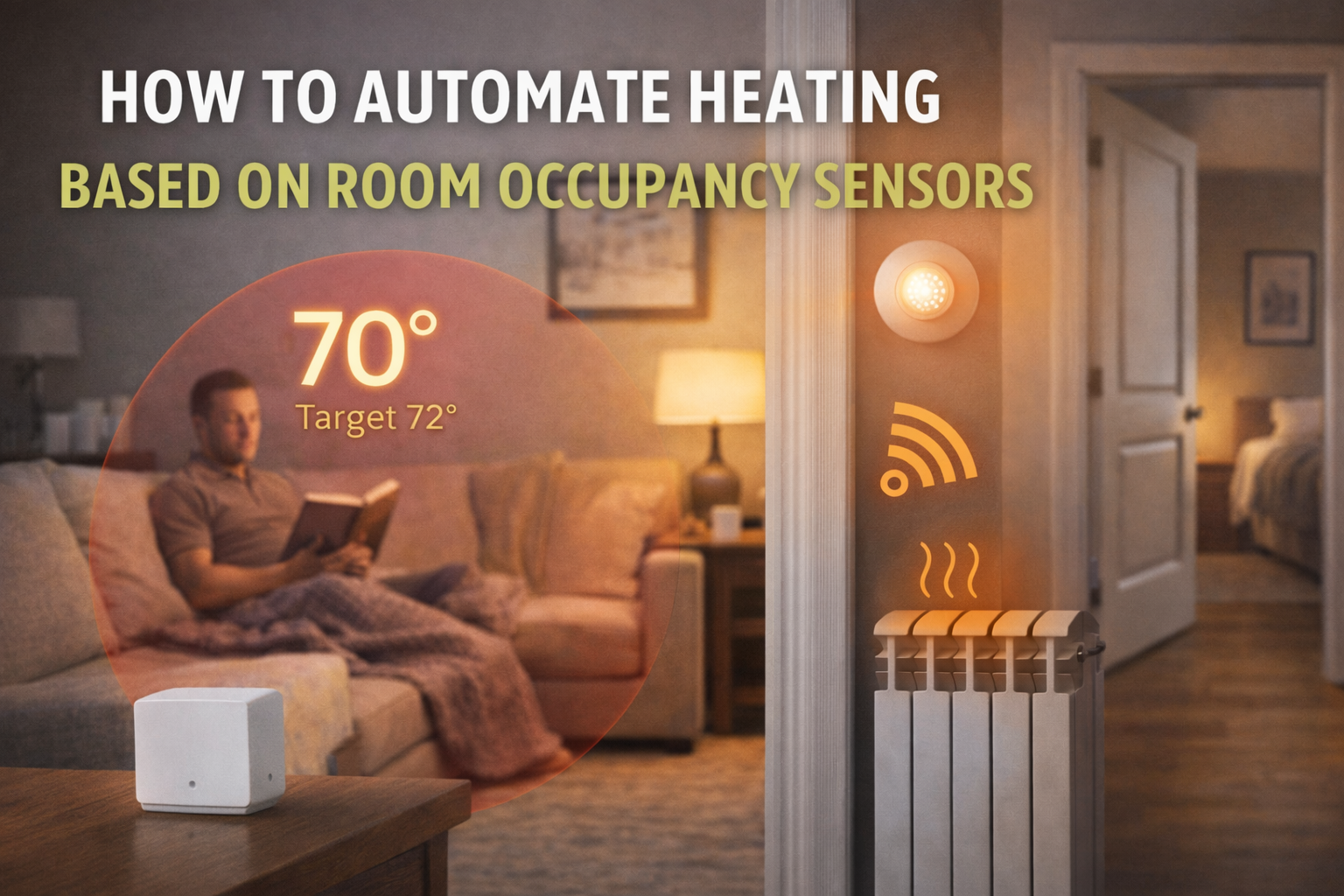
Heating systems consume a significant portion of household energy, especially in colder climates. Yet much of that energy goes toward maintaining temperatures in spaces that are only occasionally used. Guest rooms, hallways, and home offices may be heated for hours without anyone present. Over time, this pattern leads to unnecessary energy consumption and higher utility bills.
At the same time, comfort expectations remain high. No one wants to walk into a cold living room or wait for a bedroom to warm up at night. The challenge, therefore, is balancing readiness with efficiency. Heating must feel available without running constantly.
Occupancy-based automation helps bridge this gap. By responding to presence rather than assumptions, it allows heating to align more closely with real living patterns. Understanding how this works in depth reveals how modern smart homes can become both more comfortable and more efficient. Exploring these ideas carefully can reshape how heating is managed throughout a home.
How to Automate Heating Based on Room Occupancy Sensors
Why Traditional Heating Schedules Waste Energy
Traditional schedules assume predictable routines. They heat the home in the morning, reduce temperature during work hours, and warm it again in the evening. While this works in theory, it rarely matches reality perfectly.
People work from home, travel, change plans, or use different rooms on different days. Consequently, heating may run at full comfort levels even when no one is present. Alternatively, it may be reduced when someone is quietly working in a rarely used room.
Because schedules cannot sense real-time presence, they rely on guesswork. That guesswork inevitably leads to inefficiency. Occupancy-based systems, by contrast, respond to actual conditions rather than assumptions.
What Occupancy Sensors Actually Detect
Occupancy sensors do not literally “see” people. Instead, they detect signs of presence. Most commonly, they sense motion through passive infrared technology, which recognizes changes in heat patterns. When a person moves, the sensor detects a shift in infrared radiation.
More advanced sensors use millimeter-wave technology. These can detect subtle movements such as breathing or small gestures. As a result, they are better at recognizing someone who is sitting still.
Some systems combine multiple sensing methods. By merging signals, they reduce false negatives and improve reliability. This layered detection is particularly valuable for heating automation where comfort matters.
How Occupancy-Based Heating Automation Works
At its core, occupancy-based heating follows simple logic. When a room is occupied, the system maintains or raises temperature. When a room is vacant for a defined period, it allows temperature to drift slightly lower.
However, the sophistication lies in timing and thresholds. Immediate shutoff when someone leaves would feel abrupt. Therefore, systems often use delay periods. If no presence is detected for, for example, twenty or thirty minutes, then heating gradually reduces.
Similarly, pre-heating can occur when presence is predicted. Some systems learn patterns, noticing that a home office is used every weekday morning. Over time, automation becomes anticipatory rather than purely reactive.
Types of Occupancy Sensors for Smart Homes
Passive infrared sensors remain common due to affordability and efficiency. They work well in areas with regular movement, such as living rooms. However, they may struggle to detect still occupants.
Millimeter-wave sensors provide higher sensitivity. They detect micro-movements and therefore maintain heating when someone is quietly reading or working. This makes them attractive for offices and bedrooms.
Hybrid sensors combine motion, presence, and sometimes door-state information. These layered inputs improve reliability and reduce guesswork.
Choosing the Right Sensor for Heating Automation
Reliability should be the first priority. A sensor that frequently misses presence undermines comfort. Consistent detection ensures the system behaves predictably.
Battery life and connectivity also matter. Sensors that disconnect or drain quickly create maintenance burdens. Stable communication with the hub or thermostat is essential.
Compatibility with your ecosystem determines how advanced your automation can be. Sensors that integrate deeply allow richer rule creation and smoother coordination.
Strategic Sensor Placement
Placement determines effectiveness. Sensors should face areas where movement naturally occurs. Corners that overlook entry points often work well.
They should not be blocked by furniture or curtains. Obstructions reduce detection range and reliability. Height also matters, as mounting too high or too low can narrow coverage.
Thoughtful placement ensures that detection reflects real occupancy rather than chance movement.
Building Intelligent Heating Rules
Automation rules should include delays and gradual changes. Immediate temperature drops can feel uncomfortable. Gentle setbacks, by contrast, maintain comfort while saving energy.
Different rooms may need different rules. A bedroom may prioritize nighttime presence. A living room may respond more to evening activity.
Well-designed rules respect how spaces are actually used rather than applying one logic everywhere.
Multi-Room Heating Strategies
In multi-room homes, prioritization becomes important. Frequently used spaces should maintain comfort more consistently. Rarely used rooms can tolerate larger setbacks.
This layered strategy prevents the system from overreacting to minimal activity. It also ensures that energy is focused where it matters most.
Over time, patterns emerge. Automation can then be refined to match these patterns more closely.
Integrating With Smart Thermostats and Hubs
Smart thermostats act as decision centers. When they receive occupancy data, they adjust heating calls accordingly. Hubs coordinate signals from multiple sensors and devices.
Integration allows cross-device logic. For example, door sensors can confirm entry while occupancy sensors confirm presence. This layered awareness improves reliability.
Avoiding False Triggers and Cold Surprises
False triggers can come from pets, sunlight shifts, or HVAC airflow. Sensitivity settings help reduce these errors. Many systems allow calibration to match room conditions.
Cold surprises occur when absence is assumed too quickly. Longer delay periods help prevent this. Gradual setbacks also soften transitions.
Testing and refining rules ensures comfort remains stable.
Using Data to Refine Automation
Historical data reveals patterns. You may notice that certain rooms are occupied at consistent times. Adjusting automation around these trends improves performance.
Data-driven refinement turns automation into an evolving system rather than a fixed setup.
Long-Term Energy and Comfort Benefits
Over time, occupancy-based heating aligns closely with real life. Energy is used when needed and conserved when not. Comfort becomes more consistent because heating follows presence.
This approach encourages awareness. Homeowners begin to see heating as responsive rather than static. That shift often leads to broader efficiency habits.
Conclusion
Automating heating based on room occupancy sensors transforms how a home responds to daily life. Instead of relying on rigid schedules, heating adapts to presence and patterns. When sensors are chosen carefully, placed thoughtfully, and programmed intelligently, they support both comfort and efficiency. The result is a heating system that feels attentive, balanced, and aligned with how people actually live.
FAQs
1. Do occupancy sensors save a noticeable amount of energy?
Yes, especially in homes with many rooms or irregular schedules.
2. Are they difficult to install?
Most are wireless and simple to mount.
3. Do pets trigger occupancy sensors?
Some do, but sensitivity settings can reduce this.
4. How long do batteries last?
Typically one to two years depending on usage.
5. Can they work without a smart thermostat?
They are most effective when integrated with one.

Daniel Harper is a graduate engineer with a postgraduate specialization in Intelligent Solutions and Industry 4.0 technologies. He leads the Mogarzi Team, focusing on smart home automation, residential energy efficiency, and intelligent energy management systems. His work combines engineering principles with practical home optimization strategies, translating complex technical concepts into actionable insights for homeowners seeking smarter and more efficient living environments.