
Introduction
Building a smart energy-efficient home is often perceived as an expensive, luxury-level project. Many homeowners assume that integrating advanced automation, renewable energy systems, storage solutions, and high-performance construction materials dramatically increases total construction costs. While it is true that building a high-efficiency smart home requires strategic investment, the reality is more nuanced.
The cost of building a smart energy-efficient home depends heavily on design choices, integration depth, geographic location, technology selection, and long-term planning. In many cases, the incremental cost over traditional construction is lower than expected — especially when efficiency is integrated from the beginning rather than retrofitted later.
Understanding the financial structure behind smart energy-efficient construction requires analyzing both upfront investment and long-term operational savings. This article explores the real cost components, phased investment strategies, and return on investment considerations involved in building a fully integrated smart energy-efficient home.
What Defines a Smart Energy-Efficient Home?
Before discussing cost, it is essential to define what qualifies as a smart energy-efficient home. It is not simply a house with solar panels or smart lighting. It is a coordinated system designed around five core pillars: a high-performance building envelope, efficient HVAC systems, renewable generation, energy storage integration, and intelligent automation.
The building envelope includes advanced insulation, air sealing, high-efficiency windows, and structural design that minimizes thermal transfer. HVAC systems often rely on inverter-driven heat pumps and zoned climate control. Renewable generation typically includes rooftop photovoltaic systems. Energy storage enables load shifting and resilience. Automation coordinates everything through data-driven control.
The cost of building such a home varies depending on how comprehensively these elements are implemented.
Base Construction Costs vs Efficiency Premium
A common misconception is that building energy-efficient homes doubles construction costs. In reality, the incremental cost often ranges between 5% and 15% above conventional construction, depending on the level of performance targeted.
High-performance insulation and upgraded windows increase material costs modestly but reduce HVAC sizing requirements. Air sealing techniques may require additional labor but improve long-term efficiency significantly.
When energy efficiency is planned during the design phase, cost premiums are minimized. Retrofitting later is substantially more expensive because structural modifications are required.
Smart home infrastructure, including wiring, communication protocols, and centralized control panels, is also more affordable when installed during initial construction rather than post-completion.
Cost Breakdown by System Category
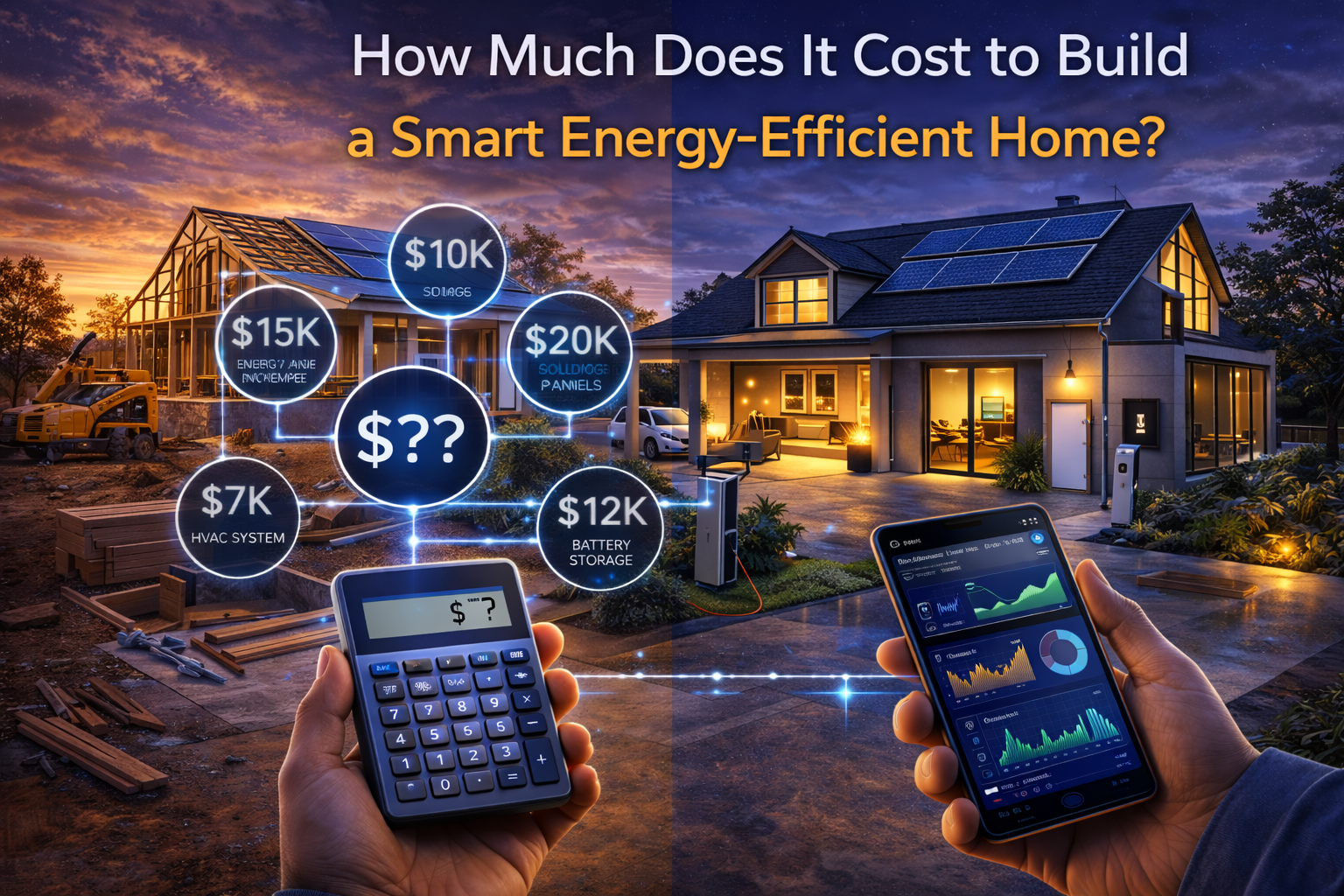
While total cost varies by region, the major categories typically include building envelope upgrades, HVAC systems, renewable energy systems, energy storage, and automation platforms.
High-Performance Building Envelope
Upgraded insulation, advanced window glazing, and improved air sealing generally add a modest percentage to total build cost. However, these upgrades reduce heating and cooling demand permanently.
Because HVAC systems can be downsized when thermal performance improves, part of the envelope investment offsets mechanical system costs.
High-Efficiency HVAC Systems
Modern variable-speed heat pumps and zoned systems cost more than traditional HVAC equipment. However, they operate more efficiently and reduce long-term operating expenses.
Smart thermostat ecosystems from companies like Google Nest and Ecobee add incremental cost but enhance climate optimization significantly.
Solar Photovoltaic Systems
The cost of solar panels depends on system size, regional labor rates, and component selection. Manufacturers such as Canadian Solar and JinkoSolar offer modules across multiple price tiers.
Solar typically represents one of the largest single line items in smart energy-efficient construction, but it also provides measurable long-term cost offset.
Battery Storage
Battery systems, including solutions like the Tesla Powerwall, increase upfront investment. However, storage improves energy resilience and enables time-of-use optimization.
Battery pricing continues to decline gradually, but storage remains optional depending on local tariff structures.
Energy Management and Automation Systems
Energy Management Systems (EMS) integrate HVAC, solar, storage, and appliance control. Companies such as Enphase Energy provide integrated monitoring ecosystems.
The cost of automation varies depending on system complexity. Basic automation adds limited cost, while full-home integration increases infrastructure requirements.
Phased Investment Strategy
Building a smart energy-efficient home does not require implementing every system simultaneously. Strategic phasing allows homeowners to manage cash flow effectively.
Phase one typically focuses on the building envelope and high-efficiency HVAC systems. These form the structural efficiency foundation.
Phase two may include solar installation and basic smart controls.
Phase three can integrate battery storage and advanced energy management once dynamic pricing or grid instability justifies it.
Planning for scalability during initial construction reduces future upgrade costs significantly.
Long-Term Financial Impact
Evaluating cost without considering lifetime savings creates a distorted perspective.
Energy-efficient homes reduce monthly utility expenses, often dramatically. Over a 20–30 year period, cumulative savings may exceed the initial efficiency premium.
Additionally, high-performance homes experience:
- Increased resale value
- Lower maintenance costs
- Reduced system strain
- Greater resilience during grid instability
Financial modeling often shows that energy efficiency investments generate internal rates of return competitive with traditional financial assets.
Regional Variables and Incentives
Construction costs vary significantly by geography. Labor rates, material availability, climate conditions, and local building codes influence total investment.
In many regions, tax credits, rebates, and incentives offset portions of renewable energy and storage costs. Federal and regional programs can substantially improve ROI.
Understanding local policy frameworks is essential before estimating total project cost.
Authority Insight: Cost Must Be Viewed as Lifecycle Investment
From an engineering and financial perspective, cost analysis must extend beyond upfront construction expenses.
Traditional construction often prioritizes lower initial cost while ignoring long-term operational inefficiency. Smart energy-efficient homes invert that logic by optimizing lifetime performance.
Energy costs will likely continue fluctuating as grids transition toward renewable integration and dynamic pricing models. Homes designed for efficiency and automation are better positioned to adapt to these changes.
A smart energy-efficient home is not simply a construction project. It is a multi-decade energy strategy.
Frequently Asked Questions
Is building a smart energy-efficient home significantly more expensive?
The incremental cost is typically moderate when efficiency is integrated during the design phase.
Can I build efficiently without solar panels?
Yes. A high-performance envelope and HVAC system already reduce energy demand significantly.
Are batteries necessary?
Not mandatory, but increasingly valuable in dynamic pricing environments.
Does a smart home increase resale value?
Energy-efficient homes often command higher resale value due to lower operating costs and future readiness.
Is retrofitting more expensive than building efficiently from the start?
Yes. Integrating efficiency during initial construction is substantially more cost-effective than retrofitting later.
Final Considerations
The cost of building a smart energy-efficient home depends on design ambition, system integration level, and regional variables. However, when approached strategically, the premium over conventional construction is often smaller than expected.
By prioritizing the building envelope, high-efficiency HVAC systems, renewable integration, and scalable automation, homeowners can create properties that deliver long-term financial, environmental, and operational benefits.
The question is not only how much it costs to build such a home. The more important question is how much it costs not to.
Energy-efficient construction represents a shift from short-term expense thinking to lifecycle investment strategy.

Daniel Harper is a graduate engineer with a postgraduate specialization in Intelligent Solutions and Industry 4.0 technologies. He leads the Mogarzi Team, focusing on smart home automation, residential energy efficiency, and intelligent energy management systems. His work combines engineering principles with practical home optimization strategies, translating complex technical concepts into actionable insights for homeowners seeking smarter and more efficient living environments.