
Introduction
Solar energy has become one of the most widely adopted renewable energy technologies in residential and commercial buildings. Homeowners considering solar installations are often attracted by the promise of long-term electricity savings, energy independence, and environmental benefits. However, one of the most common questions people ask before installing a solar system is simple: how long do solar panels actually last?
The lifespan of solar panels is a critical factor when evaluating the long-term value of a solar installation. Unlike many household appliances that may require replacement within a decade, solar panels are designed to operate reliably for decades. Manufacturers typically provide long warranties, and real-world installations have shown that solar technology can remain functional for far longer than many people expect.
At the same time, it is important to understand that solar panels do not suddenly stop working after a certain number of years. Instead, they gradually lose efficiency over time through a process known as degradation. Even after several decades of operation, solar panels can continue producing electricity, though at slightly reduced output levels.
Understanding how long solar panels last—and what factors influence their lifespan—helps homeowners make more informed decisions about investing in solar energy systems.
The Typical Lifespan of Solar Panels
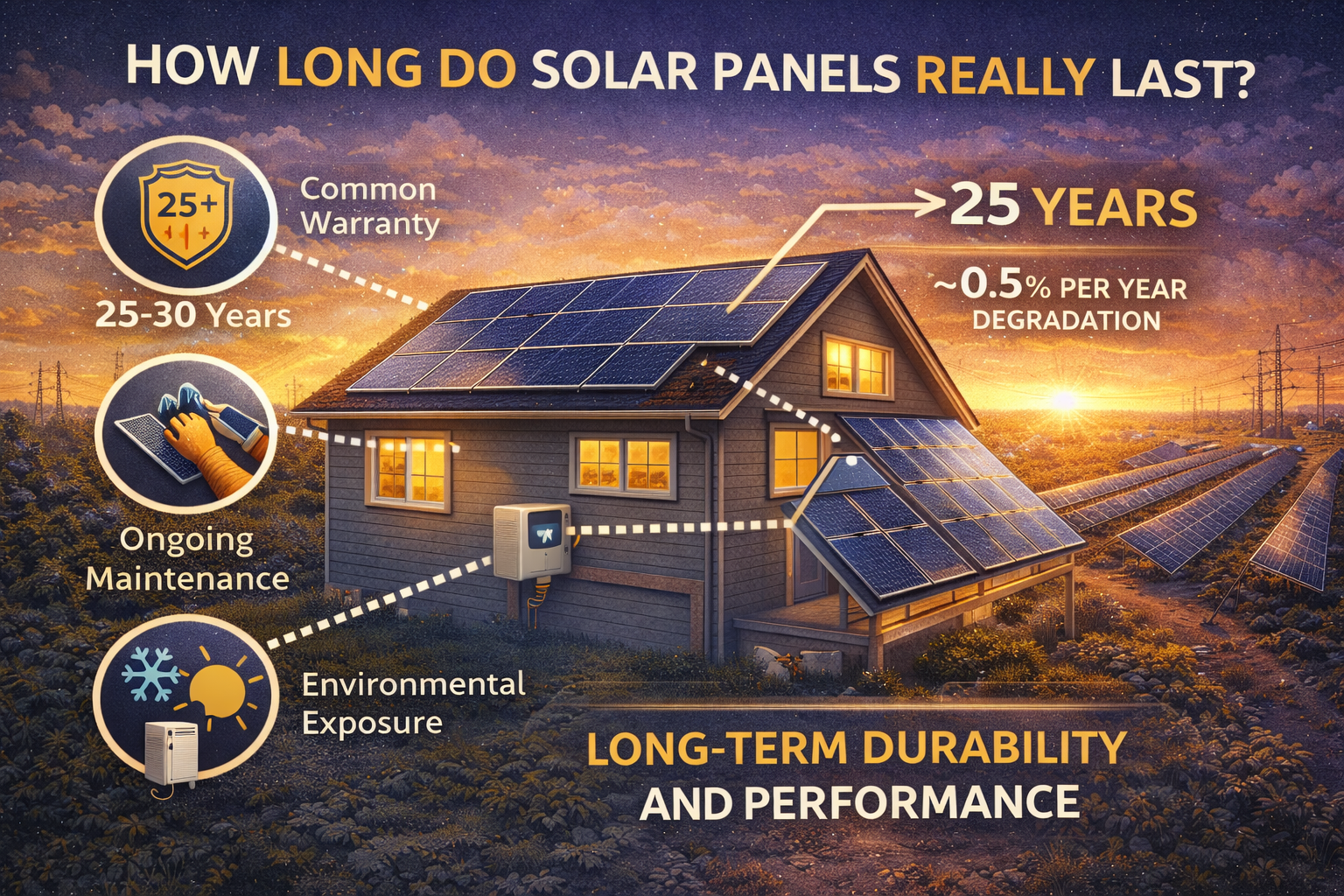
Most modern solar panels are designed to operate effectively for 25 to 30 years or more. This estimate is based on both manufacturer warranties and long-term field data from early photovoltaic installations.
Manufacturers usually provide performance warranties guaranteeing that panels will maintain a certain percentage of their original power output after a specific number of years. A common warranty structure guarantees around 80–90 percent of the panel’s original output after 25 years.
This does not mean the panels stop working after the warranty period ends. In many cases, panels continue producing electricity well beyond 30 years, although their efficiency gradually declines.
Early solar installations from the 1980s and 1990s still operate today, demonstrating the long-term durability of photovoltaic technology.
Understanding Solar Panel Degradation
Solar panels experience gradual performance loss over time, known as degradation. This process occurs because environmental exposure slowly affects the materials inside photovoltaic cells.
Most modern solar panels degrade at a rate of approximately 0.3 to 0.8 percent per year. At this rate, a panel that originally produced 100 percent of its rated power may still operate at around 85–90 percent efficiency after 25 years.
Several factors contribute to degradation, including exposure to ultraviolet radiation, temperature fluctuations, and mechanical stress from wind or snow loads. These effects slowly alter the electrical properties of photovoltaic cells.
Despite this gradual decline, the overall performance loss is relatively small compared to the long operational lifespan of the panels.
The Role of Inverters and System Components
While solar panels themselves can last decades, other components of a solar system may require replacement sooner. One of the most important components is the inverter.
Solar panels generate electricity in the form of direct current (DC), but homes use alternating current (AC). Inverters convert DC electricity into AC electricity that household appliances can use.
Most residential solar inverters have lifespans between 10 and 15 years, meaning they may need to be replaced once or twice during the life of the solar panels.
Other components such as mounting systems, wiring, and monitoring equipment generally last longer but may occasionally require maintenance.
Understanding these system components helps homeowners anticipate the full lifecycle of a solar installation.
Environmental Factors That Affect Longevity
Solar panels are designed to operate in outdoor environments and are tested to withstand a wide range of weather conditions. However, environmental factors can influence how long they last.
Temperature cycles, humidity levels, hail exposure, and airborne debris can all affect solar panels over time. High temperatures may accelerate material aging, while extreme weather events may occasionally damage panels.
Manufacturers test panels under rigorous conditions to ensure durability. Most panels are rated to withstand heavy snow loads, strong winds, and moderate hail impacts.
Proper installation also plays an important role in long-term durability. Secure mounting systems and correct electrical configuration help prevent premature wear or mechanical stress.
Maintenance and Performance Monitoring
One of the advantages of solar energy systems is that they require relatively little maintenance. Solar panels have no moving parts, which reduces the likelihood of mechanical failure.
However, periodic inspection and cleaning can help maintain optimal performance. Dust, pollen, leaves, and bird droppings may accumulate on panel surfaces and reduce sunlight exposure.
In most climates, rainfall naturally cleans solar panels, but occasional manual cleaning may be beneficial in dusty environments.
Energy monitoring systems also help track long-term performance. These systems allow homeowners to verify that solar production remains consistent and identify potential issues early.
Monitoring platforms can alert homeowners if energy output drops unexpectedly, which may indicate shading, inverter problems, or equipment damage.
Technological Improvements in Panel Durability
Solar technology has improved significantly over the past two decades. Modern photovoltaic panels are more efficient, more durable, and better protected against environmental stress.
Manufacturers now use advanced materials, improved encapsulation layers, and stronger glass surfaces to protect photovoltaic cells. These improvements reduce degradation rates and improve resistance to weather-related damage.
Many premium solar panels now include performance warranties extending beyond 25 years, reflecting increased confidence in long-term reliability.
As solar technology continues to evolve, future panels may achieve even longer operational lifespans.
Authority Insight: Solar Panels Are Long-Term Energy Infrastructure
From an engineering perspective, solar panels should be viewed less like consumer electronics and more like infrastructure. Unlike devices such as televisions or computers that are replaced frequently, photovoltaic systems are designed for decades of operation.
This durability is essential because solar installations represent long-term energy investments. The economic benefits of solar energy depend on consistent performance over many years.
Fortunately, the reliability of modern photovoltaic technology has been demonstrated through decades of real-world installations. Solar panels continue to produce electricity long after their initial installation, often providing valuable energy production well beyond their warranty periods.
Understanding this long lifecycle helps homeowners evaluate solar systems not just as short-term upgrades, but as durable energy assets.
Frequently Asked Questions
Do solar panels stop working after 25 years?
No. Solar panels typically continue producing electricity beyond 25 years, though their efficiency may gradually decline.
What happens to solar panels as they age?
Solar panels slowly lose efficiency due to natural material degradation, but they can still generate electricity for many years.
How often do solar panels need maintenance?
Most systems require minimal maintenance. Occasional cleaning and performance monitoring are usually sufficient.
Which part of a solar system fails first?
Inverters often have shorter lifespans than solar panels and may need replacement after 10–15 years.
Can extreme weather damage solar panels?
Modern panels are designed to withstand harsh weather conditions, although severe storms or debris impact can occasionally cause damage.
Final Considerations
Solar panels are built to deliver reliable energy production for decades. With typical lifespans exceeding 25 years and gradual degradation rates that remain relatively small, photovoltaic systems provide long-term value for homeowners seeking sustainable energy solutions.
While certain components such as inverters may require replacement during the life of the system, the solar panels themselves remain durable and dependable.
As technology continues to improve, solar installations are becoming even more resilient and efficient. For homeowners considering renewable energy investments, understanding the longevity of solar panels reinforces why solar energy has become one of the most reliable and practical solutions for long-term residential energy generation.

Daniel Harper is a graduate engineer with a postgraduate specialization in Intelligent Solutions and Industry 4.0 technologies. He leads the Mogarzi Team, focusing on smart home automation, residential energy efficiency, and intelligent energy management systems. His work combines engineering principles with practical home optimization strategies, translating complex technical concepts into actionable insights for homeowners seeking smarter and more efficient living environments.