
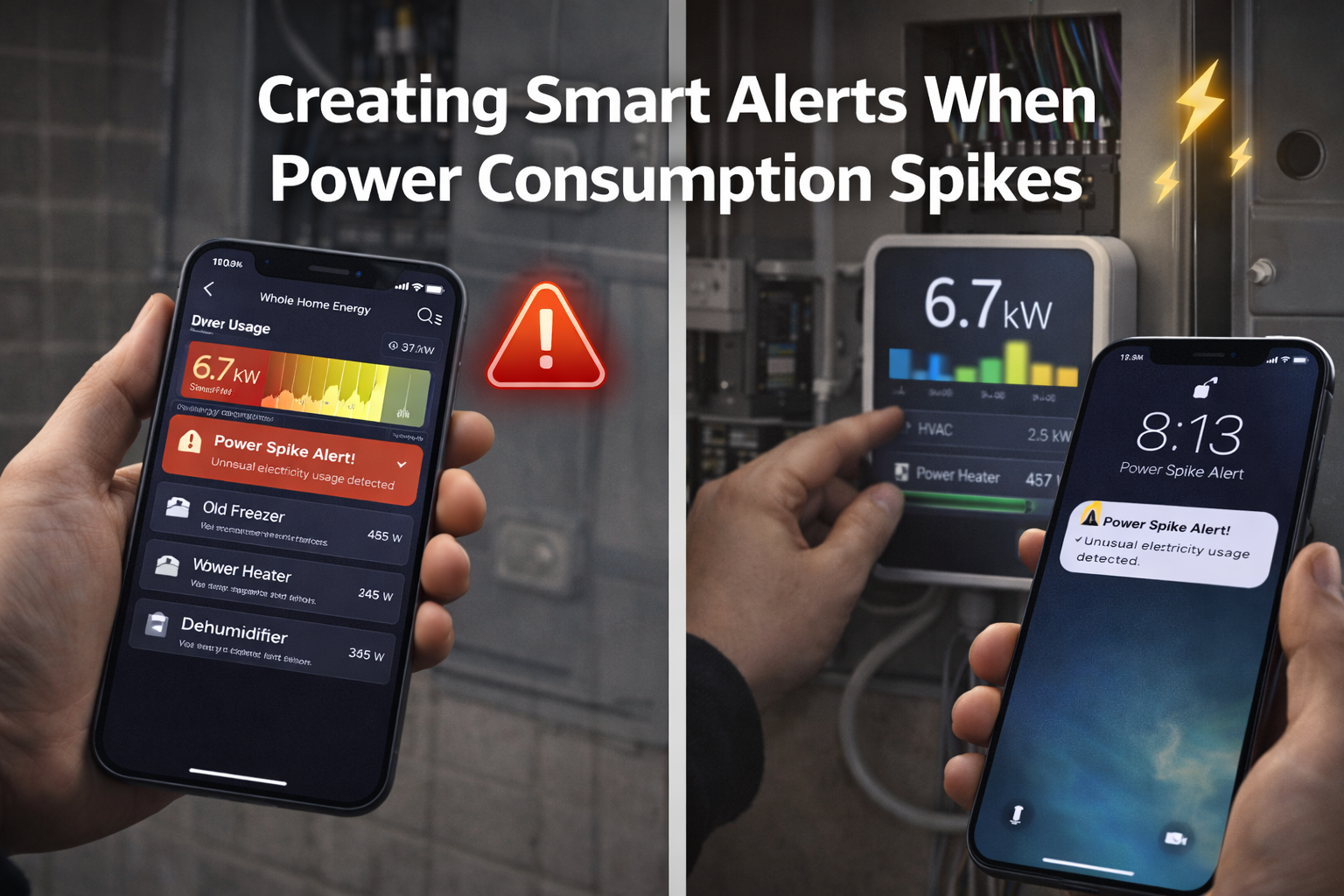
Electricity use in a home is rarely flat. It rises and falls throughout the day as appliances cycle on and off, people move between rooms, and heating or cooling systems respond to weather. Some variation is completely normal. However, sudden or unusual spikes in power consumption can signal waste, malfunction, or inefficient habits. The challenge is that most homeowners never see these spikes in real time.
A monthly bill cannot show you that your power jumped at 3 PM on Tuesday. Even daily totals often hide short but significant peaks. Yet those peaks can matter. They can increase costs under time-of-use or demand-based pricing, stress home electrical systems, and reveal devices that are not operating as expected.
Smart alerts for power consumption spikes solve this visibility problem. Instead of constantly watching an app, homeowners receive notifications when something unusual happens. These alerts act like an early warning system for energy use. When set up thoughtfully, they help households react quickly, prevent waste, and learn more about their own patterns.
What Is a Power Consumption Spike
A power consumption spike is a sudden increase in electricity use above a normal or expected level. Some spikes are predictable. Turning on an oven, dryer, or air conditioner naturally raises consumption. These are not problems by themselves.
A spike becomes interesting when it is unexpected. For example, a large jump when no major appliance was intentionally started. Or a spike at a time when the home is usually quiet. These moments can indicate hidden loads, malfunctioning equipment, or devices left running unintentionally.
Spikes can be short or sustained. A short spike might come from a device cycling on. A sustained spike may indicate a heavy load running continuously. Smart alerts help distinguish these situations.
Why Spikes Matter
Spikes matter for several reasons. First, they can increase costs. In regions with time-of-use pricing, high usage during peak periods can be expensive. In some areas, demand charges are based on the highest usage level reached, even briefly.
Second, spikes can reveal inefficiencies. A system that runs harder than necessary wastes energy. For example, an HVAC unit struggling due to poor maintenance may draw more power.
Third, spikes can signal problems. Electrical faults, failing appliances, or unusual behavior can show up as abnormal consumption.
Finally, spikes shape awareness. Seeing when and how they happen teaches homeowners about their own energy patterns.
The Role of Smart Monitoring Devices
Smart alerts depend on data. Whole-home energy monitors, smart meters with real-time access, and smart plugs provide this data. These devices track usage continuously and feed it into apps or automation platforms.
Whole-home monitors are especially useful for spike detection because they see the total load. If the entire home suddenly jumps from 1 kW to 5 kW, the system can flag it.
Smart plugs can also generate alerts, but at the device level. For example, a plug can notify you if a heater draws power longer than expected.
Combining these tools provides both big-picture and detailed insight.
Setting a Meaningful Threshold
One of the most important steps in creating smart alerts is choosing thresholds. If the threshold is too low, alerts will trigger constantly and become annoying. If it is too high, important events may be missed.
A good approach is to observe your typical range first. Look at normal peaks over a week or two. Then set alerts slightly above what is typical for that time of day.
Some systems allow dynamic thresholds. For example, different limits for daytime and nighttime. This reflects real patterns more accurately.
The goal is to detect unusual events, not normal life.
Time-Based Conditions for Alerts
Time context matters. A 4 kW load at dinner time may be normal. The same load at 2 AM may be unusual. Smart alert systems can include time conditions.
For instance, you might enable stricter alerts overnight or during work hours when the home is usually quiet. This reduces noise and increases relevance.
Time-aware alerts feel smarter and less intrusive.
Using Alerts to Detect Specific Issues
Smart alerts can help identify concrete problems. A refrigerator that runs far longer than usual may need maintenance. A sump pump running frequently could indicate drainage issues. A water heater drawing power at odd hours may have a thermostat problem.
Even lifestyle issues can appear. For example, a space heater left on daily can create repeated spikes. Alerts make these patterns visible.
Early detection can save both energy and repair costs.
Integration with Smart Home Platforms
Platforms like Home Assistant and other smart home hubs allow custom alert logic. You can combine energy data with occupancy, time, and device states.
For example, you can trigger an alert only if a spike occurs while no one is home. This filters out expected usage. You can also link alerts to actions, such as turning off a smart plug automatically.
This turns alerts into part of a larger automation strategy.
Choosing the Right Notification Method
Alerts can arrive as push notifications, emails, or even voice announcements through smart speakers. The method should match urgency.
For critical issues, immediate push notifications make sense. For less urgent insights, daily summaries may be better.
Too many urgent alerts can lead to fatigue. Balanced notification design is key.
Avoiding Alert Fatigue
Alert fatigue happens when users receive too many notifications. They start ignoring them, which defeats the purpose.
To avoid this, start with a small number of alerts. Focus on the most meaningful scenarios. Adjust thresholds if alerts trigger too often.
Quality matters more than quantity.
Learning From Alerts Over Time
Alerts are not just warnings. They are learning tools. Over time, homeowners see which spikes repeat and which are rare. This builds energy literacy.
You may discover that certain days or activities consistently raise consumption. With this knowledge, you can adjust habits or schedules.
Alerts become part of an ongoing feedback loop.
Privacy and Security Considerations
Energy data can reveal patterns about when a home is occupied. Smart alert systems rely on this data. Choosing reputable devices and securing accounts is important.
Strong passwords and updated firmware help protect data. For some users, local-control systems offer additional comfort.
Responsible use of data supports both efficiency and privacy.
Long-Term Benefits of Smart Alerts
In the long run, smart alerts support proactive energy management. Instead of reacting to high bills, homeowners react to real-time signals. This shortens the feedback loop.
They also support maintenance and safety. Unusual consumption can hint at electrical issues. Early awareness can be valuable.
Financially, even small avoided wastes add up. Environmentally, reduced waste lowers impact.
Conclusion
Creating smart alerts for power consumption spikes transforms energy monitoring from passive observation into active awareness. Instead of discovering problems after the fact, homeowners gain timely insights. These insights help prevent waste, detect issues, and understand patterns.
The key is thoughtful setup. Alerts should be meaningful, contextual, and manageable. When designed well, they act like a quiet assistant, watching for unusual energy behavior.
In a connected home, data is already flowing. Smart alerts simply make that data speak up when it matters. Over time, this leads to smarter decisions and a more energy-aware household.
FAQs
Do I need a whole-home monitor for spike alerts
It helps, but some smart plugs also support alerts.
Will alerts save energy automatically
They enable action but do not reduce usage alone.
How many alerts should I set
Start small and expand carefully.
Are spikes always bad
No, many are normal and expected.
Is setup complicated
Basic alerts are usually simple to configure.

Daniel Harper is a graduate engineer with a postgraduate specialization in Intelligent Solutions and Industry 4.0 technologies. He leads the Mogarzi Team, focusing on smart home automation, residential energy efficiency, and intelligent energy management systems. His work combines engineering principles with practical home optimization strategies, translating complex technical concepts into actionable insights for homeowners seeking smarter and more efficient living environments.