
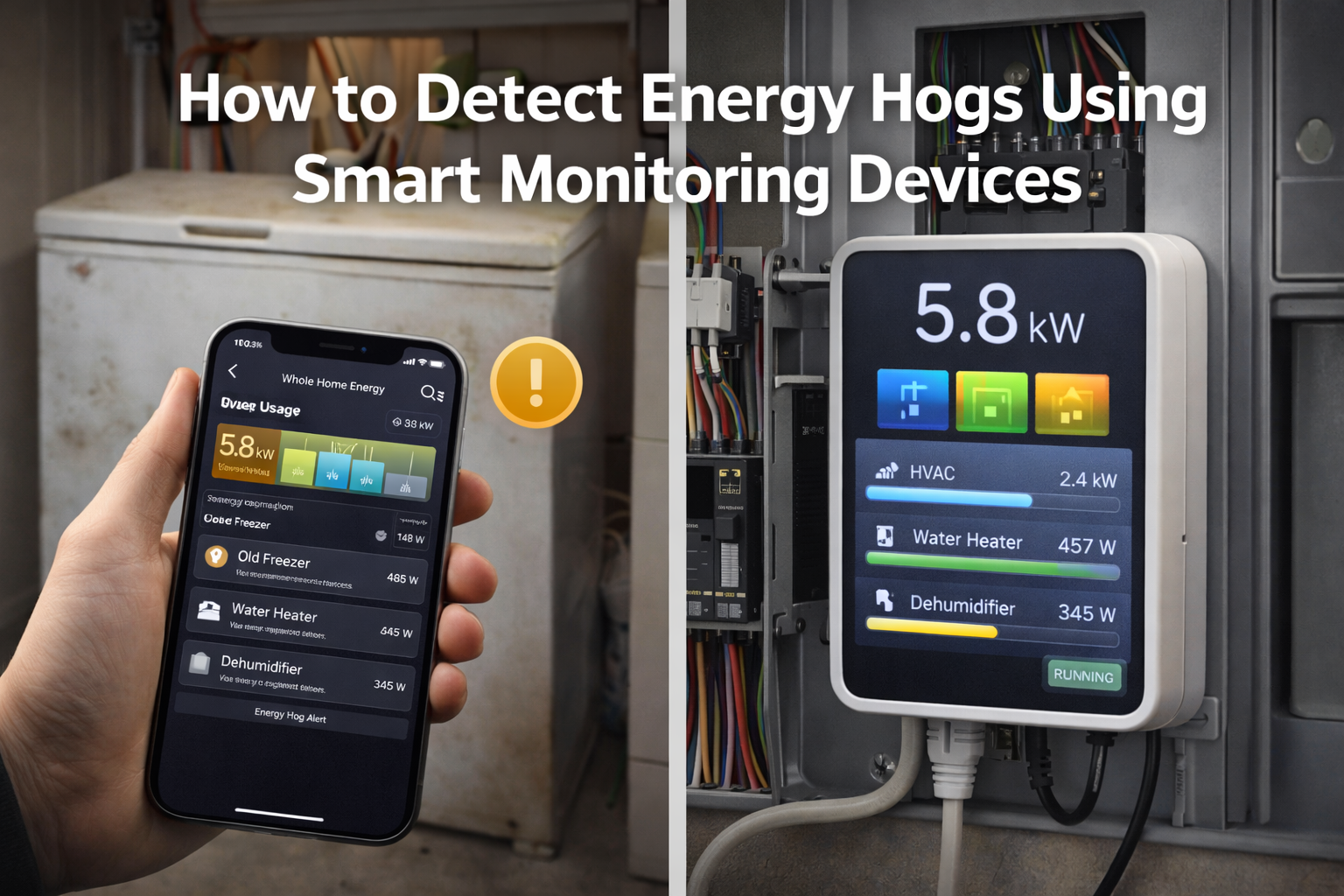
Many households try to reduce electricity bills by focusing on obvious actions such as turning off lights or adjusting thermostats. While these habits help, they often overlook a bigger issue: hidden high-consumption devices. In most homes, a small number of appliances are responsible for a large share of total energy use. These are often called “energy hogs.” The challenge is that they are not always obvious.
At the same time, modern homes contain more electronics and appliances than ever. Some run continuously, others cycle automatically, and many draw standby power even when they appear off. Because electricity is invisible, it is easy to underestimate which devices matter most. A homeowner may worry about a lamp while a dehumidifier or old freezer quietly consumes far more.
Smart monitoring devices change this situation. They make energy use visible at both whole-home and device levels. Instead of guessing, homeowners can identify which loads are truly significant. Understanding how to detect energy hogs with smart monitoring devices reveals how data can guide smarter decisions and meaningful savings.
What Is an Energy Hog
An energy hog is any device or system that consumes a disproportionately high amount of electricity relative to its purpose. This does not automatically mean it is “bad.” Some devices, like HVAC systems or water heaters, naturally use more energy because they perform energy-intensive tasks. The problem arises when consumption is higher than necessary or higher than expected.
Energy hogs often fall into a few categories. First, large heating or cooling systems that run inefficiently. Second, appliances that run for long periods, such as old refrigerators or freezers. Third, devices with high standby consumption that never truly turn off. Fourth, malfunctioning equipment that draws more power than it should.
Identifying these devices is the first step toward optimization. Without identification, efforts may target the wrong areas.
Why Energy Hogs Go Unnoticed
Energy hogs are rarely dramatic. They usually operate quietly in the background. A refrigerator cycles on and off without drawing attention. An HVAC system runs as needed for comfort. A server, aquarium heater, or pool pump may operate in a utility space out of sight.
Additionally, electricity bills are aggregated. They show totals, not sources. This makes it hard to connect cost to specific devices. Human intuition is also unreliable. People often assume that frequently used small devices matter more than rarely used large ones, which is not always true.
Because of these factors, energy hogs can persist for years without detection.
Types of Smart Monitoring Devices
Smart monitoring devices come in several forms. Whole-home energy monitors connect at the electrical panel and measure total consumption. They are useful for seeing overall patterns and spotting unusual spikes.
Smart plugs with energy monitoring track individual devices. They show real-time watts and cumulative usage. These are ideal for testing specific appliances.
Circuit-level monitors measure specific breakers. They can track large loads like HVAC systems, ovens, or EV chargers. Some advanced systems combine multiple approaches for deeper insight.
Each type provides a different layer of visibility. Together, they create a clearer picture.
Starting With Whole-Home Monitoring
Whole-home monitoring is often the starting point. It reveals how much energy the home uses at any moment. By watching real-time data, homeowners can notice spikes when certain appliances run.
For example, if turning on the dryer causes a large jump, its impact becomes clear. If overnight usage never drops below a certain level, that indicates a constant load.
This baseline view helps narrow down where to investigate. It does not identify specific devices directly, but it shows when something significant is happening.
Using Smart Plugs to Pinpoint Devices
Once a suspect device is identified, a smart plug can provide precise measurement. Plugging a device into a monitored plug reveals its actual consumption over time.
For example, a second refrigerator in a garage might use far more than expected. A gaming PC may draw high power under load. A space heater may be a major contributor in winter.
Testing devices one by one can be very revealing. Even short measurement periods can show patterns.
Smart plugs are especially useful for portable or plug-in appliances.
Recognizing Common Energy Hogs
Certain devices frequently appear as energy hogs. HVAC systems often top the list, especially if poorly maintained or oversized. Electric water heaters can also be major loads, particularly if set too hot or poorly insulated.
Old refrigerators and freezers are common culprits. Technology has improved significantly, so older models can be inefficient. Dehumidifiers, pool equipment, and EV chargers can also be large users depending on usage.
However, every home is different. Monitoring confirms rather than assuming.
Looking at Duration, Not Just Power
High wattage alone does not define an energy hog. Duration matters. A device that uses moderate power continuously can consume more energy than a high-power device used briefly.
For instance, a device drawing 150 watts all day may use more total energy than a microwave used for a few minutes. Smart monitoring helps reveal this difference by showing cumulative kilowatt-hours.
This perspective prevents misinterpretation.
Spotting Malfunctions and Inefficiencies
Smart monitoring can also reveal problems. A refrigerator that runs almost constantly may have a failing seal or compressor. An HVAC system that runs longer than usual may need maintenance.
Sudden changes in typical patterns often signal issues. Catching these early can prevent larger costs and waste.
Monitoring acts as a diagnostic tool as well as an efficiency tool.
Turning Insights Into Action
Once energy hogs are identified, several options exist. Maintenance can restore efficiency. Replacing very old appliances may be worthwhile. Scheduling or automation can reduce runtime. Smart thermostats and timers can help manage large systems.
In some cases, behavior changes are enough. Reducing unnecessary use or adjusting settings can lower consumption.
The key is targeted action based on data.
Avoiding Overreaction
Not every large load is a problem. Some energy use is necessary for comfort and function. The goal is optimization, not elimination.
It is also important to look at trends over time rather than reacting to one day of data. Balanced interpretation leads to better decisions.
Energy awareness should feel empowering, not stressful.
Long-Term Benefits of Detecting Energy Hogs
Over time, identifying and addressing energy hogs can reduce bills, lower environmental impact, and extend appliance life. It can also guide future purchases toward more efficient models.
Additionally, households develop better energy literacy. They understand how their home behaves. This knowledge supports smarter choices beyond the initial fixes.
Monitoring becomes a continuous learning process.
The Future of Smart Energy Detection
As technology evolves, detection may become more automated. Machine learning systems already attempt to identify devices by signature. Future systems may provide clearer recommendations automatically.
Integration with dynamic pricing and grid signals may also grow. Homes could adjust loads in response to grid conditions.
Detecting energy hogs today prepares homes for smarter energy ecosystems tomorrow.
Conclusion
Detecting energy hogs using smart monitoring devices transforms energy management from guesswork into informed action. By making consumption visible, these tools reveal which devices truly matter. Instead of focusing on minor loads, homeowners can target the biggest opportunities.
The process does not require perfection. Even small improvements can add up over time. With the right monitoring and thoughtful interpretation, homes become more efficient without sacrificing comfort.
Ultimately, the goal is not to eliminate energy use but to align it with real needs. Smart monitoring provides the clarity needed to do exactly that.
FAQs
Do I need many smart plugs?
Start with a few and focus on likely high-use devices.
Are whole-home monitors enough?
They are great for patterns but not device-level detail.
Can monitoring reduce bills immediately?
Savings come from actions taken after insights.
Are these devices hard to set up?
Many are plug-and-play, though panel monitors may need care.
Is it worth it for small homes?
Yes, because patterns still matter.

Daniel Harper is a graduate engineer with a postgraduate specialization in Intelligent Solutions and Industry 4.0 technologies. He leads the Mogarzi Team, focusing on smart home automation, residential energy efficiency, and intelligent energy management systems. His work combines engineering principles with practical home optimization strategies, translating complex technical concepts into actionable insights for homeowners seeking smarter and more efficient living environments.