
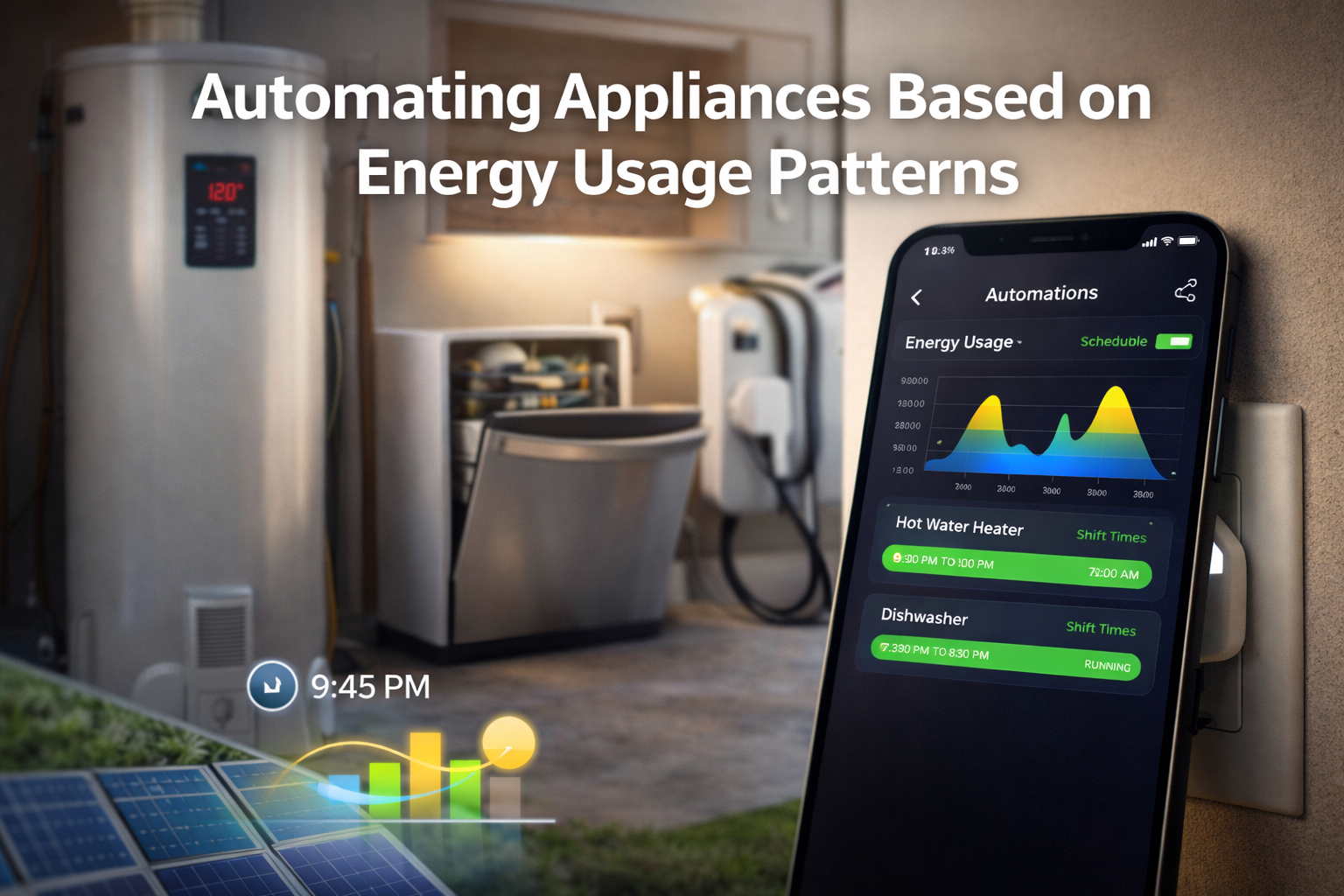
Most homes use electricity in patterns, even if the people living in them do not consciously notice. Mornings often bring spikes from coffee makers, showers, and heating or cooling systems. Evenings may show peaks from cooking, entertainment, and lighting. Overnight, a smaller but steady baseline load usually remains from refrigerators, networking gear, and standby electronics. These rhythms repeat day after day, quietly shaping the home’s energy profile.
At the same time, many households try to save energy by focusing on single actions, such as turning off lights or adjusting thermostats. While helpful, these actions are often reactive and inconsistent. They depend on memory and attention. Real efficiency, however, comes from systems that adapt automatically to how energy is actually used.
Automating appliances based on energy usage patterns takes efficiency to a more strategic level. Instead of fixed schedules or manual control, appliances respond to real data. They run when energy is cheaper, cleaner, or more available, and they scale back when demand is high. Understanding how to build these automations reveals how data-driven homes can reduce waste without sacrificing comfort.
What Are Energy Usage Patterns
Energy usage patterns are recurring trends in how and when electricity is consumed. They can be daily, weekly, or seasonal. For example, a home might use more energy every weekday morning, less during work hours, and more again in the evening. Weekends may look different, with more daytime usage.
Seasonal patterns are also common. Summer often increases cooling loads, while winter raises heating demand. Holiday periods can temporarily change patterns as well.
These patterns are not random. They reflect routines, climate, and home characteristics. Once identified, they provide valuable guidance for automation.
Why Patterns Matter for Automation
Automation works best when it matches reality. If an appliance runs on a fixed schedule that does not align with actual needs, it can waste energy. For instance, heating a water tank at full power during expensive peak hours may be unnecessary if hot water is mostly used later.
Patterns reveal when energy is truly needed. They also reveal when it is not. By aligning appliance behavior with these insights, automation becomes more effective.
Moreover, patterns help avoid guesswork. Instead of assuming when to run devices, the system learns from historical data. This makes automation more personalized and efficient.
How to Discover Your Home’s Patterns
The first step is visibility. Whole-home energy monitors, smart meters with customer access, and smart plugs provide useful data. Many platforms show hourly or daily usage graphs. Reviewing these over several weeks often reveals clear trends.
For example, you might notice consistent peaks around dinner time or overnight baseloads that never drop. You may see that certain days of the week differ. These observations form the foundation for automation logic.
It is important to look at trends rather than single days. One unusual day does not define a pattern. Repetition does.
Types of Appliances Suitable for Pattern-Based Automation
Not all appliances are equally flexible. Some must run on demand, while others can shift timing.
Highly suitable appliances include dishwashers, laundry machines, water heaters, EV chargers, pool pumps, and dehumidifiers. These often have flexible windows of operation.
HVAC systems can also be optimized, though comfort must remain a priority. Pre-cooling or pre-heating based on predicted demand can help.
Lighting is usually less about shifting time and more about adjusting intensity or duration. Still, patterns can inform when lights are most needed.
Critical devices like medical equipment or refrigerators should not be automated aggressively. Reliability comes first.
Automation Based on Time-of-Use Rates
In areas with variable pricing, energy cost changes throughout the day. Peak hours are more expensive, while off-peak hours are cheaper. Patterns often align with these periods.
If your home typically uses heavy appliances in the evening, and that is also peak pricing time, automation can shift some loads. For example, a dishwasher can run later at night when rates drop.
Smart home platforms can integrate pricing schedules and trigger appliances accordingly. This does not reduce total energy use but can reduce cost and grid strain.
Automation Based on Solar Production
Homes with solar panels have another dimension. Solar production follows its own pattern, usually peaking midday. If appliances run when solar output is high, more energy is self-consumed rather than exported.
For example, a water heater or EV charger can activate when solar surplus is available. This effectively uses free solar energy.
Pattern-based automation can learn typical solar curves and anticipate production. Combined with weather forecasts, it can be even smarter.
Using Machine Learning and Smart Platforms
Some advanced systems use machine learning to detect device signatures and usage trends. Over time, they can suggest automations or identify inefficiencies.
Platforms like Home Assistant allow users to build logic based on historical data. For instance, if average usage exceeds a threshold at certain times, specific appliances can be limited.
While not every home needs complex algorithms, simple data-driven rules can already make a difference.
Balancing Comfort and Efficiency
Automation should support, not fight, daily life. If a system delays hot water too often or adjusts temperatures too aggressively, users may disable it.
Small, gradual adjustments are usually better. For example, shifting an appliance by one or two hours rather than many. Comfort builds trust, and trust keeps automation active.
Efficiency that annoys people rarely lasts. Efficiency that feels invisible often does.
Common Mistakes to Avoid
One mistake is over-automating too quickly. Starting with a few high-impact appliances allows learning and adjustment.
Another mistake is ignoring changing routines. Patterns can evolve. A new job schedule or season can shift usage. Automations should be reviewed periodically.
Relying on incomplete data can also mislead. Good data improves decisions.
Long-Term Benefits
Over time, pattern-based automation can reduce wasted energy, smooth demand peaks, and lower bills. It can also extend appliance life by avoiding unnecessary operation.
Beyond numbers, it builds awareness. Households become more conscious of how their routines shape energy use. This often leads to smarter purchases and habits.
Automation becomes a quiet partner in efficiency.
The Future of Pattern-Based Energy Automation
As grids modernize, homes may receive more signals about grid conditions and carbon intensity. Automation could respond not only to cost but also to environmental impact.
Appliances may become more grid-aware, adjusting automatically. Homes could coordinate with utilities to reduce peak demand.
Pattern-based automation is a step toward this future. It prepares homes to be flexible and responsive.
Conclusion
Automating appliances based on energy usage patterns transforms energy management from reactive to proactive. Instead of fixed schedules or constant manual control, the home adapts to real behavior and conditions. This alignment reduces waste while preserving comfort.
The key is understanding patterns first, then applying thoughtful automation. Even small shifts can add up over time. When appliances run at smarter times, energy use becomes more intentional.
In a connected home, data is already available. Using it wisely turns that data into meaningful savings. Pattern-based automation is not about complexity; it is about aligning technology with how people actually live.
FAQs
Does this require advanced technical skills?
Basic setups can be simple, though advanced automations take more knowledge.
Will it disrupt daily routines?
Good automations are designed to fit routines, not disrupt them.
Do I need solar for this to work?
No. Solar adds benefits but is not required.
How quickly do savings appear?
Savings accumulate gradually as patterns are optimized.
Is this expensive to start?
It can start small with existing smart devices.

Daniel Harper is a graduate engineer with a postgraduate specialization in Intelligent Solutions and Industry 4.0 technologies. He leads the Mogarzi Team, focusing on smart home automation, residential energy efficiency, and intelligent energy management systems. His work combines engineering principles with practical home optimization strategies, translating complex technical concepts into actionable insights for homeowners seeking smarter and more efficient living environments.