
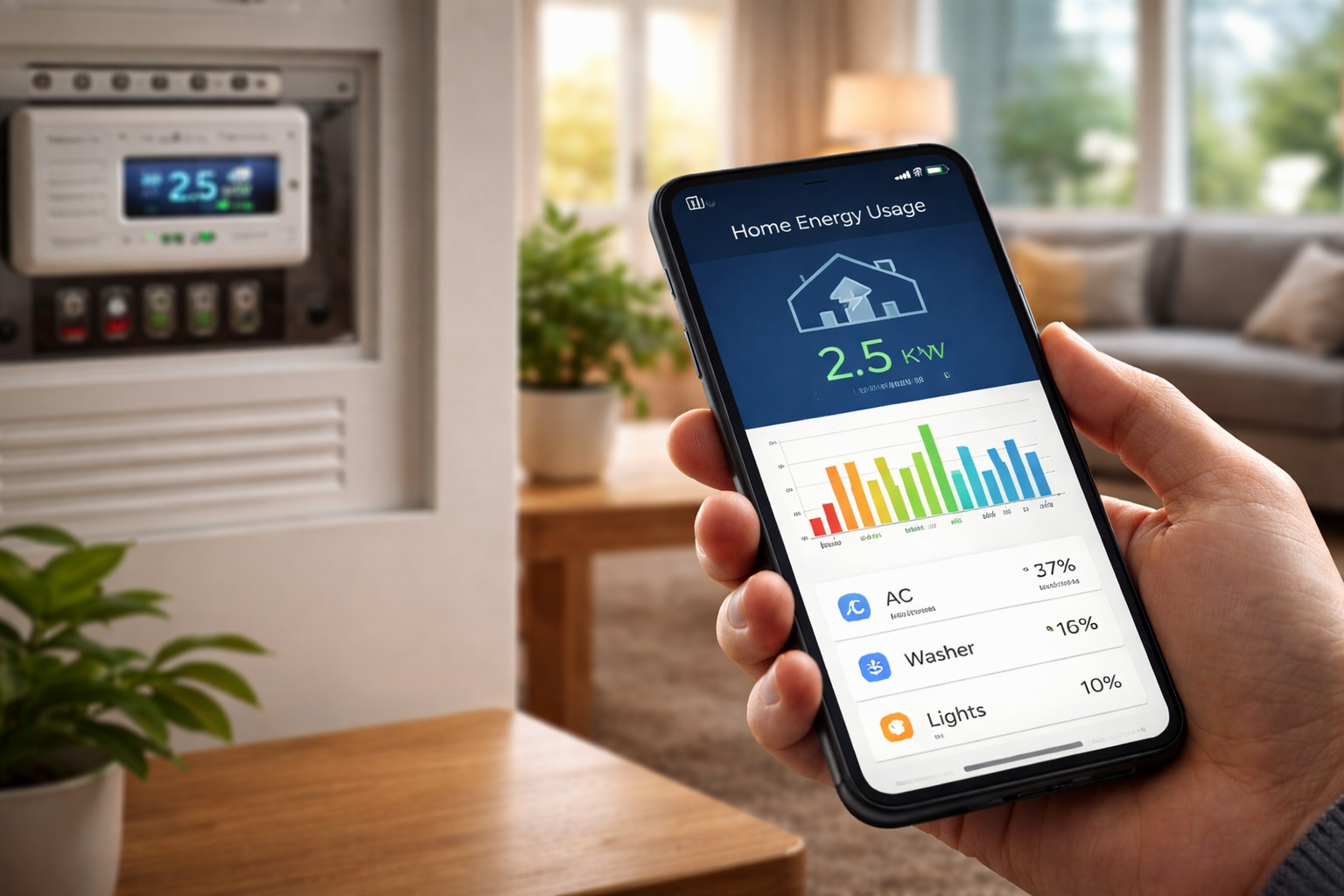
Energy efficiency at home often starts with good intentions. Many households want to reduce their electricity bills, lower their environmental footprint, or simply understand where their money goes each month. However, without clear information, these goals quickly become guesswork. A monthly utility bill shows the total, but it rarely explains the story behind that number. It does not tell you which devices are responsible, what time of day usage peaks, or which habits quietly drive consumption.
At the same time, modern homes are filled with energy-using devices. From HVAC systems and water heaters to gaming consoles, kitchen appliances, and chargers, electricity flows constantly. Some devices run occasionally, others cycle automatically, and many draw standby power even when “off.” Because this usage is mostly invisible, it is easy to underestimate. Small, repeated consumption often matters more than occasional heavy use.
Smart home energy monitoring systems change this dynamic. They turn electricity from an abstract cost into visible data. Instead of guessing, homeowners can see patterns, spikes, and trends. More importantly, they can connect energy use to real behaviors. When used thoughtfully, smart monitoring does not just provide numbers. It provides insight, and insight leads to better decisions. Understanding how to track home energy usage effectively reveals how awareness can evolve into long-term efficiency.
Why Tracking Energy Use Matters More Than Ever
Electricity used to be simpler. Fewer devices meant fewer variables. Today, households operate like small ecosystems of electronics. Work-from-home setups, smart appliances, entertainment systems, and climate control technologies all contribute to a more complex energy profile.
Because of this complexity, assumptions often fail. People may blame one appliance when another is responsible. They may focus on turning off lights while ignoring a device that runs all night. Therefore, tracking matters because it replaces assumptions with evidence.
Moreover, energy prices in many regions fluctuate. Time-of-use pricing, peak demand charges, and seasonal rate changes make timing relevant. Knowing when energy is used becomes almost as important as how much is used. Smart monitoring helps reveal these timing patterns.
Tracking also supports sustainability goals. Households that want to reduce carbon impact need measurable baselines. Without measurement, improvement is difficult to verify. Smart monitoring provides that baseline.
What Smart Energy Monitoring Systems Actually Are
A smart energy monitoring system is a device or set of devices that measure electricity consumption and present the data in a user-friendly way. These systems often connect to a home’s electrical panel or to individual outlets. They then transmit data to a mobile app or web dashboard.
Some systems monitor whole-home usage. Others focus on individual appliances. Many advanced setups combine both approaches. The goal is visibility at different levels.
Importantly, these systems do not control energy by themselves. They observe and report. Their value comes from the decisions they enable. In other words, they are informational tools that support action.
Most smart monitoring systems provide:
Real-time power usage
Historical usage trends
Device-level estimates or measurements
Cost estimates based on local rates
Alerts for unusual activity
This combination transforms energy from a static bill into a dynamic stream of information.
Whole-Home Monitoring vs Device-Level Monitoring
Whole-home monitoring looks at total consumption. It is typically installed at the electrical panel and measures the entire household load. This approach provides a broad overview. It helps identify peak times and overall trends.
However, whole-home data alone can be vague. If usage spikes, it may not be clear why. Was it the dryer, the HVAC, or the oven? Without detail, action is harder.
Device-level monitoring focuses on specific appliances. This can be done with smart plugs or circuit-level sensors. Device-level data is more granular. It shows which items contribute most.
The most effective strategy often combines both. Whole-home monitoring reveals patterns. Device-level monitoring explains them.
How Smart Monitors Collect Data
Smart energy monitors use current transformers or internal sensors to measure electrical flow. These sensors detect how much current passes through a wire. The system then calculates power usage based on voltage and current.
This process happens continuously. Data is sent to an app where it is visualized as charts or dashboards. Users can view real-time consumption or explore historical trends.
Some advanced systems use machine learning to identify devices based on their electrical signatures. For example, a refrigerator has a different usage pattern than a washing machine. Over time, the system may learn to recognize these patterns.
While not perfect, this identification improves as more data accumulates.
Understanding the Key Metrics
To use monitoring effectively, it helps to understand a few basic terms.
Watts represent instant power use.
Kilowatt-hours represent energy over time.
Cost estimates translate energy into money.
A device that draws high watts briefly may use less total energy than a lower-watt device running for hours. Therefore, duration matters.
Smart dashboards often show daily, weekly, and monthly totals. Looking at all three helps reveal patterns. Short-term spikes and long-term habits both matter.
Identifying Energy Patterns in Daily Life
One of the biggest advantages of monitoring is pattern recognition. For example, you might notice higher usage every evening. That could correlate with cooking, heating, or entertainment.
Similarly, overnight usage can be revealing. A home that consumes significant power at 3 AM likely has always-on devices. This may include HVAC systems, refrigerators, servers, or standby electronics.
Weekend patterns may differ from weekday ones. Work-from-home days may show different peaks than office days. Seasonal shifts also appear clearly in data.
These patterns are not problems by themselves. They are information. Once visible, they can be evaluated.
Turning Data into Decisions
Data becomes valuable when it informs choices. For example, if monitoring shows high standby consumption, smart plugs or power strips may help. If peak usage aligns with expensive rate periods, shifting appliance use may reduce costs.
If HVAC usage dominates, thermostat optimization may be worthwhile. If a particular appliance uses more than expected, maintenance or replacement may be considered.
Importantly, not every spike requires action. Some energy use is necessary. The goal is not zero consumption but intentional consumption.
Smart monitoring helps distinguish between necessary and unnecessary use.
Using Alerts and Notifications Wisely
Many smart monitors allow alerts. These can notify users about unusual usage or thresholds. For example, a sudden spike could indicate a malfunctioning device.
However, too many alerts can cause fatigue. If every small fluctuation triggers a notification, users may ignore them. Therefore, thresholds should be meaningful.
Well-configured alerts act as safeguards. They highlight anomalies rather than routine behavior.
The Behavioral Impact of Visibility
One underestimated benefit of monitoring is psychological. When people see their energy use in real time, awareness increases. Actions become more intentional.
Turning off a device feels more meaningful when its impact is visible. Small changes feel validated. This feedback loop encourages continued improvement.
Over time, households often develop energy literacy. They learn what different appliances consume and when. This knowledge influences future purchases and habits.
Privacy and Security Considerations
Smart monitors collect data about household behavior. Usage patterns can indirectly reveal routines. Therefore, choosing reputable manufacturers matters.
Secure networks, strong passwords, and updated firmware reduce risk. Reviewing data policies also helps users stay informed.
For many households, the benefits outweigh the concerns, but awareness is still important.
Long-Term Benefits Beyond Savings
While saving money is a common goal, monitoring provides additional benefits. It supports preventive maintenance. Unusual usage can indicate failing appliances.
It also supports smarter home upgrades. Solar installations, battery systems, and efficiency retrofits all benefit from baseline data.
Moreover, monitoring encourages mindful consumption. This mindset often extends beyond electricity to water and gas usage as well.
Common Mistakes to Avoid
One mistake is expecting instant dramatic savings. Monitoring reveals opportunities, but action is required. Another mistake is obsessing over small fluctuations. Trends matter more than momentary spikes.
Installing too many monitors at once can also overwhelm. Starting small and expanding gradually often works better.
Finally, ignoring the data defeats the purpose. Regular review turns information into improvement.
Creating a Sustainable Monitoring Routine
A simple routine helps. Checking weekly summaries rather than constant real-time tracking prevents overload. Looking for trends rather than perfection keeps the process practical.
Pairing monitoring with small goals works well. For example, aiming to reduce standby use by a certain percentage or shifting one major appliance to off-peak hours.
Sustainability comes from consistency, not intensity.
The Future of Smart Energy Monitoring
Energy monitoring is evolving. Integration with smart homes, dynamic pricing, and renewable energy systems is increasing. Future systems may offer predictive insights rather than just historical data.
For example, systems may suggest optimal times to run appliances based on grid conditions. They may coordinate with solar production or battery storage.
As technology advances, monitoring may become less about observation and more about optimization.
Conclusion
Tracking home energy usage with smart monitoring systems transforms electricity from a mystery into a measurable resource. Instead of reacting to bills after the fact, households gain insight in real time. This insight supports better decisions, smarter upgrades, and more intentional habits.
The real power of monitoring lies not in the technology itself but in the awareness it creates. When people understand their energy patterns, they can align consumption with priorities. Over time, small improvements accumulate. Efficiency becomes a practice rather than a project.
Smart monitoring does not demand perfection. It simply provides clarity. And in the world of home energy, clarity is often the first step toward meaningful change.
FAQs
1. Do smart energy monitors save energy automatically?
No, they provide information that helps users make energy-saving decisions.
2. Are they difficult to install?
Some require panel installation, but many plug-in options are simple.
3. How accurate are they?
Most are accurate enough for household-level insights.
4. Do renters have options?
Yes, plug-level monitors and smart plugs work well.
5. How long before savings appear?
Savings depend on actions taken after insights are gained.

Daniel Harper is a graduate engineer with a postgraduate specialization in Intelligent Solutions and Industry 4.0 technologies. He leads the Mogarzi Team, focusing on smart home automation, residential energy efficiency, and intelligent energy management systems. His work combines engineering principles with practical home optimization strategies, translating complex technical concepts into actionable insights for homeowners seeking smarter and more efficient living environments.