
Energy efficiency often begins with awareness. People cannot change what they cannot see. Unfortunately, most homes lack visibility at the device level. They know the total cost but not the contributors. As a result, efforts to save energy may focus on the wrong areas.
At the same time, modern homes contain dozens of plug-in devices. Some operate continuously, others cycle on and off, and many draw standby power. Without measurement, it is difficult to distinguish significant loads from minor ones. Assumptions frequently replace facts.
Smart plugs with energy monitoring bridge this gap. They provide accessible, device-level data without requiring professional installation. Instead of rewiring a home, users simply plug devices into a smart plug. From there, data begins to accumulate. Exploring how to use this data effectively shows how monitoring can evolve into real optimization.
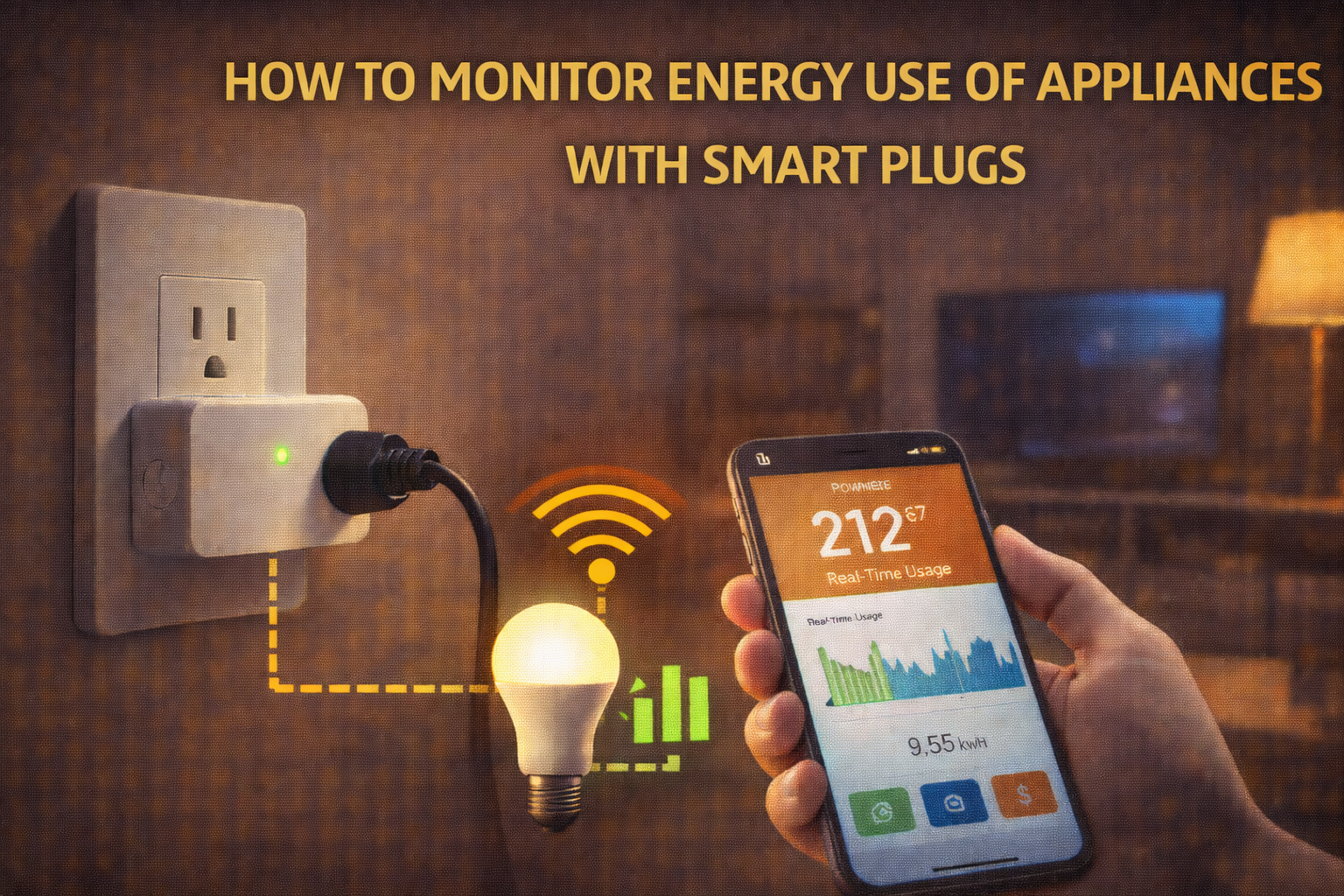
How to Monitor Energy Use of Appliances with Smart Plugs
The Growing Importance of Energy Awareness at Home
Electricity prices fluctuate, and household energy use continues to grow with more electronics and appliances. Consequently, awareness becomes increasingly valuable. However, awareness is not only about environmental responsibility. It is also about financial predictability and informed decision-making.
When people see how much energy certain appliances use, their priorities shift. For example, a device assumed to be minor may turn out to be a steady contributor. Conversely, a feared device may use less than expected. Therefore, awareness corrects misconceptions.
Moreover, awareness supports smarter investments. If you know where energy is consumed, you know where efficiency upgrades matter most.
What Smart Plugs with Energy Monitoring Actually Measure
Smart plugs with monitoring capabilities track electrical flow between the outlet and the appliance. They typically measure voltage, current, and power. From these values, they calculate wattage and energy consumption over time.
Most apps display real-time watts and cumulative kilowatt-hours. Some also estimate cost based on electricity rates. While these are estimates, they are often accurate enough for household decisions.
Importantly, these plugs do not measure the entire home. They focus on the device connected to them. This specificity is what makes them useful.
Why Whole-Home Data Isn’t Enough
Whole-home monitors provide a big-picture view. However, they rarely identify which device is responsible for which portion of usage. They show totals and trends but not sources.
This is similar to knowing your grocery bill without knowing what items you bought. The number alone does not guide improvement. Device-level data, on the other hand, provides clarity.
Therefore, smart plugs complement whole-home monitoring by adding detail. Detail enables targeted action.
How Appliance-Level Monitoring Changes Behavior
When people see real numbers, behavior often changes. A device left running unnecessarily becomes noticeable. A charger drawing constant standby power becomes less invisible.
This awareness encourages small actions. Devices may be unplugged or automated. Usage times may shift. Over time, these small actions accumulate.
Behavioral change is one of the strongest drivers of energy savings. Monitoring supports that change.
How Smart Plugs Collect and Report Data
Smart plugs use internal sensors to measure electrical parameters. Data is then sent to a companion app via Wi-Fi, Zigbee, or another protocol. The app organizes the data into readable formats.
Users can usually view real-time usage, daily totals, and historical trends. Some apps allow export or integration with smart home platforms.
Because data collection is automatic, users do not need to log anything manually. This convenience supports consistent monitoring.
Understanding Watts, kWh, and Cost Estimates
Watts represent instantaneous power. Kilowatt-hours represent energy over time. For example, a 100-watt device running for 10 hours uses 1 kWh.
Understanding this difference helps interpretation. A high wattage device used briefly may use less energy than a lower wattage device used continuously.
Cost estimates convert energy into currency. While rates vary, these estimates provide useful context.
Which Appliances Are Worth Monitoring First
Not every appliance needs monitoring. Prioritization improves efficiency. Devices that run frequently or continuously are good candidates.
Examples include refrigerators (via compatible setups), entertainment systems, desktop computers, space heaters, and dehumidifiers. Devices with standby modes also deserve attention.
Monitoring begins where potential impact is highest.
High-Impact vs Low-Impact Devices
High-impact devices use significant energy or run often. Low-impact devices use little or run rarely. Smart plugs help distinguish between them.
For instance, a gaming PC may show high peaks. A small lamp may show minimal use. Knowing this prevents misdirected effort.
Therefore, data guides focus.
Setting Up Smart Plugs for Accurate Tracking
Accuracy begins with proper setup. Ensure the plug is rated for the appliance’s load. Connect it securely. Configure the app correctly.
It also helps to monitor for several days or weeks. Short snapshots may not reflect real patterns. Longer data sets reveal trends.
Consistency improves insight.
Interpreting Patterns in Energy Data
Patterns matter more than single readings. For example, a device that spikes occasionally may not be a problem. A device that draws moderate power continuously might be.
Look for unexpected overnight usage. Identify devices that never truly turn off. These patterns often reveal savings opportunities.
Interpretation turns data into knowledge.
Turning Insights into Automation
Once patterns are clear, automation becomes possible. Smart plugs can schedule shutoffs. They can respond to occupancy or time of day.
For example, an entertainment system can power down at night. An office setup can shut off after work hours.
Automation converts awareness into action.
Room-by-Room Monitoring Strategies
Monitoring can be phased by room. Start with offices and entertainment areas. Then consider kitchens or utility spaces.
This phased approach prevents overload. It also spreads cost over time.
Room-by-room insight builds a full picture gradually.
Avoiding Common Monitoring Mistakes
One mistake is monitoring everything at once. This creates too much data. Another mistake is reacting too quickly to short-term readings.
Patience helps. Trends matter more than anomalies. Additionally, not all savings justify intervention.
Balanced judgment improves outcomes.
Privacy and Data Considerations
Smart plugs collect usage data. While typically benign, data still exists. Choosing reputable brands and securing networks is wise.
Local-control options may appeal to privacy-conscious users. Awareness of data policies also helps.
Responsible use includes data awareness.
Long-Term Benefits of Monitoring
Over time, monitoring builds literacy. People learn how devices behave. They become more intentional.
This knowledge influences future purchases and habits. Efficient devices become more attractive. Wasteful patterns become less acceptable.
Therefore, monitoring has educational value beyond immediate savings.
Conclusion
Monitoring appliance energy use with smart plugs transforms electricity from an abstract bill into visible behavior. By revealing where energy actually goes, these devices empower better decisions. While each plug measures only one appliance, together they create a clearer picture of household consumption. Over time, this clarity supports smarter automation, better habits, and more intentional use. Efficiency then becomes a process of learning and refining rather than guessing. In many homes, that shift from guesswork to knowledge is the most valuable outcome.
FAQs
1. Are smart plug measurements accurate?
They are generally accurate enough for household decisions.
2. Do they work with all appliances?
They work with most plug-in devices within load limits.
3. Can they reduce bills alone?
They inform and enable savings but do not save energy by themselves.
4. How many do I need?
Start with a few for key devices and expand as needed.
5. Is setup difficult?
Most are simple plug-and-app setups.

Daniel Harper is a graduate engineer with a postgraduate specialization in Intelligent Solutions and Industry 4.0 technologies. He leads the Mogarzi Team, focusing on smart home automation, residential energy efficiency, and intelligent energy management systems. His work combines engineering principles with practical home optimization strategies, translating complex technical concepts into actionable insights for homeowners seeking smarter and more efficient living environments.