
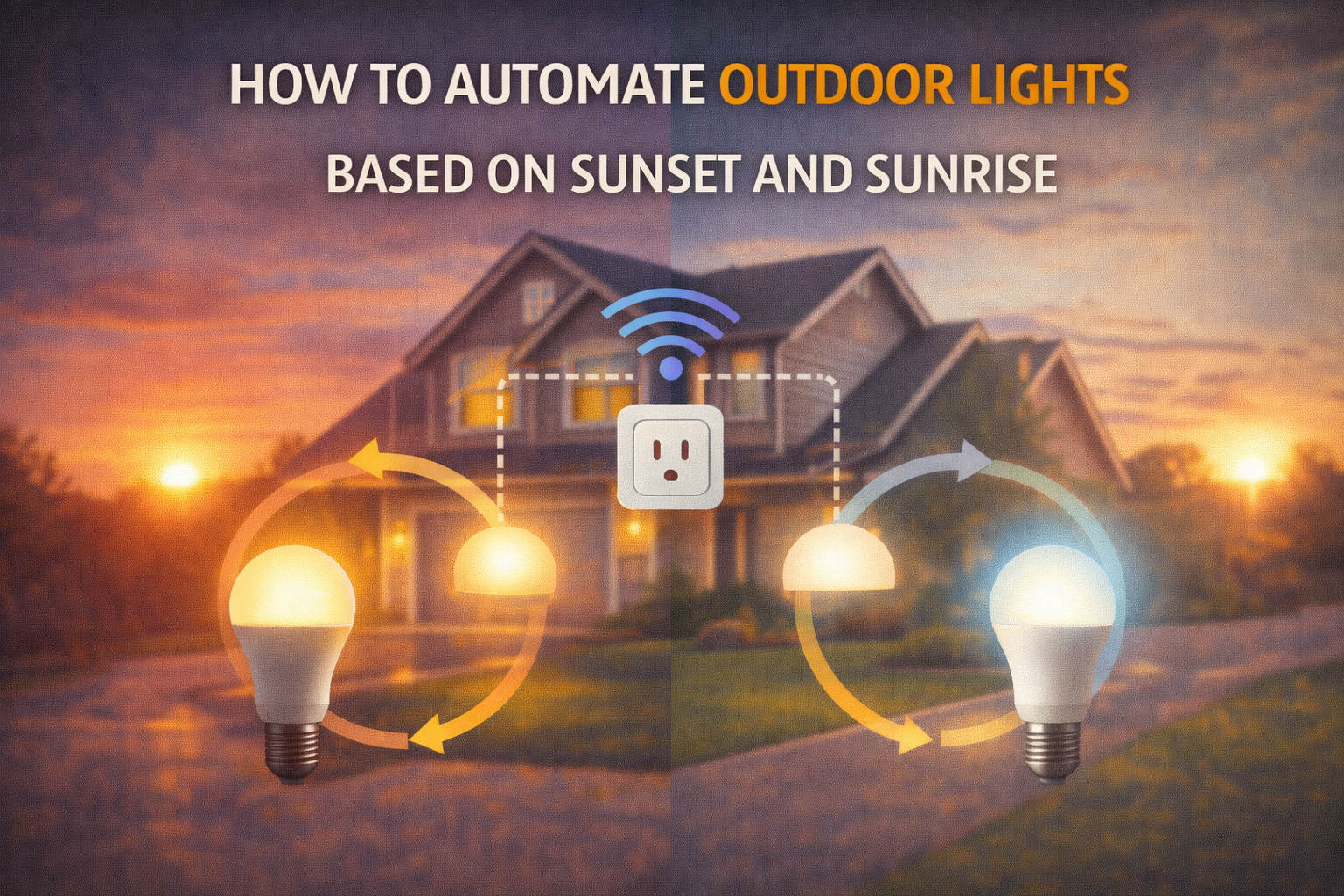
Outdoor lighting is often installed with good intentions. It illuminates pathways, deters intruders, and makes outdoor spaces more usable. However, once installed, it frequently runs on outdated logic. A timer set in winter may still be active in summer, even though sunset occurs much later. Consequently, lights may turn on too early or stay on too long.
Manual control rarely solves this problem. People forget to adjust timers or simply leave systems unchanged. Meanwhile, daylight hours shift gradually throughout the year. What worked last month may already be inefficient today.
Sunset and sunrise automation aligns lighting with natural cycles. Rather than relying on human memory, it uses predictable solar patterns. This allows outdoor lighting to remain functional without being wasteful. By exploring how to set up and refine this automation, homeowners can achieve a balance between efficiency, safety, and comfort.
How to Automate Outdoor Lights Based on Sunset and Sunrise
The Role of Outdoor Lighting in Energy Use and Safety
Outdoor lighting contributes to both perceived and actual safety. A well-lit entrance reduces trip hazards. Illuminated pathways improve navigation. Meanwhile, consistent lighting can discourage opportunistic intrusions.
However, safety does not require lights to run all night at full brightness. In fact, excessive lighting can create glare, reduce contrast, and even disturb neighbors or wildlife. Therefore, thoughtful control matters as much as brightness.
From an energy perspective, outdoor lights often operate for long stretches. Even efficient LEDs consume electricity when left on unnecessarily. Therefore, timing accuracy becomes a key efficiency lever.
Why Fixed Schedules Often Fail
Traditional timers operate on fixed times. For example, lights may turn on at 6:00 PM and off at 6:00 AM. While simple, this approach ignores seasonal variation.
In summer, sunset may occur much later than 6:00 PM. As a result, lights may turn on while it is still bright. In winter, sunrise may occur later than 6:00 AM, leaving mornings underlit.
Because daylight shifts gradually, fixed schedules drift out of alignment. Adjusting them manually is possible but rarely done consistently. Automation tied to sun cycles solves this drift.
What Sunset and Sunrise Automation Really Means
Sun-based automation uses your geographic location to calculate daily sunrise and sunset times. These times update automatically throughout the year.
Instead of turning on lights at a fixed hour, the system triggers based on sunset. Instead of turning them off at a fixed hour, it uses sunrise. This keeps lighting aligned with natural light levels.
Importantly, this method does not rely on light sensors alone. It uses astronomical data, which is predictable and precise. That precision improves reliability.
How Smart Systems Know Local Sun Times
Most smart home platforms request your location during setup. Using latitude and longitude, they calculate solar events. These calculations account for seasonal tilt and daylight changes.
Because calculations are software-based, they update automatically. No hardware adjustment is needed. This makes sun-based automation low-maintenance.
Accuracy depends on correct location settings. Therefore, ensuring your home location is set properly is a simple but critical step.
Core Devices Needed for Automation
A typical setup includes smart outdoor-rated bulbs or switches and a control platform. Some homeowners use smart plugs for low-voltage landscape lighting.
The control platform can be a dedicated hub or a cloud-based ecosystem. The key requirement is support for sun-based triggers.
Importantly, devices must be rated for outdoor conditions. Weather resistance ensures reliability.
Sunset vs Clock-Based Automation
Clock-based automation assumes consistent timing. Sunset-based automation follows real conditions. The difference becomes more pronounced at higher latitudes where daylight variation is greater.
For example, in some regions, summer days are long and winter days are short. Fixed schedules struggle there. Sunset automation adapts automatically.
Therefore, sun-based logic provides resilience against seasonal drift.
Offsets and Fine-Tuning Timing
Many systems allow offsets. For example, lights can turn on 15 minutes before sunset or off 20 minutes after sunrise.
Offsets add flexibility. known for early dusk shadows may benefit from earlier activation. Meanwhile, bright mornings may allow earlier shutoff.
Fine-tuning offsets helps match local conditions and preferences.
Seasonal Variations and Latitude Effects
Latitude strongly influences daylight length. Northern regions experience larger seasonal swings. Southern regions see more moderate variation.
Automation absorbs this variation effortlessly. As seasons shift, trigger times shift too.
This automatic adaptation is one of the biggest advantages over manual control.
Weather and Cloud Cover Considerations
Sunset calculations do not account for cloud cover. A cloudy evening may appear darker earlier. Therefore, some setups combine sun triggers with light sensors.
Light sensors measure actual brightness. When combined with sun logic, they provide context. For example, lights may turn on at sunset OR when brightness drops below a threshold.
This layered logic improves responsiveness.
Motion Sensors + Sun-Based Logic
Motion sensors add another layer. Instead of staying on all night, lights can activate with motion after sunset.
This reduces runtime while preserving security. Pathway lights, for instance, can remain off until someone approaches.
Combining motion with sun triggers balances efficiency and function.
Zone-Based Outdoor Lighting
Not all outdoor lights need identical behavior. Entry lights may follow sunset closely. Garden lights may run shorter periods. Decorative lights may shut off earlier.
Zoning allows tailored logic. This prevents overlighting and reduces waste.
Each zone can follow its own automation rules.
Security and Presence Simulation
Automated lighting can support presence simulation. Lights can vary slightly in timing to mimic occupancy.
However, randomness should remain subtle. Predictable variation works better than dramatic shifts.
Presence simulation adds security value without excessive energy use.
Avoiding Overlighting and Light Pollution
Too much light can be counterproductive. It wastes energy and contributes to light pollution. Glare can reduce visibility rather than improve it.
Adaptive brightness helps. Lights can dim late at night while remaining available for motion triggers.
This approach respects both efficiency and environment.
Energy Impact Over Time
Savings from outdoor lighting automation are usually gradual. Yet outdoor lights often run for many hours. Even small reductions add up.
For example, reducing runtime by one hour daily saves energy across the year. Multiply that across multiple fixtures and the impact grows.
Consistency matters more than dramatic change.
Common Setup Mistakes
Incorrect location settings lead to wrong trigger times. Overlooking offsets can create poor timing. Ignoring weather context may reduce satisfaction.
Additionally, overcomplicating rules can reduce reliability. Simpler automations often perform better.
Testing and refinement improve outcomes.
Conclusion
Automating outdoor lights based on sunset and sunrise aligns lighting with nature rather than rigid schedules. This alignment reduces unnecessary runtime while preserving safety and convenience. By layering sun triggers with offsets, sensors, and zoning, homeowners can create lighting systems that feel natural and efficient. The goal is not darkness but appropriateness. When outdoor lighting responds to real conditions, it supports both comfort and responsible energy use. Over time, this thoughtful approach turns a simple automation into a reliable efficiency habit.
FAQs
1. Do I need internet for sunset automation?
Many systems use internet-based data, though some hubs cache calculations.
2. Are light sensors better than sun times?
They complement each other rather than replace.
3. Does this work in all climates?
Yes, since calculations are location-based.
4. Can renters use this?
Yes, with smart bulbs or plugs.
5. Is it hard to maintain?
Once set, it requires minimal adjustment.

Daniel Harper is a graduate engineer with a postgraduate specialization in Intelligent Solutions and Industry 4.0 technologies. He leads the Mogarzi Team, focusing on smart home automation, residential energy efficiency, and intelligent energy management systems. His work combines engineering principles with practical home optimization strategies, translating complex technical concepts into actionable insights for homeowners seeking smarter and more efficient living environments.