
Electricity use from lighting has decreased over the past decade thanks to LED technology. Nevertheless, lighting still represents a controllable portion of household consumption. More importantly, it influences daily habits. A brightly lit home invites different behavior than a dim or naturally lit one. Therefore, lighting decisions affect both energy use and lifestyle patterns.
Many homes still rely on manual switching or simple schedules. While these methods provide basic control, they rarely reflect real conditions. Lights may remain on in already bright rooms or operate at full intensity when lower levels would suffice. Over time, these small inefficiencies accumulate.
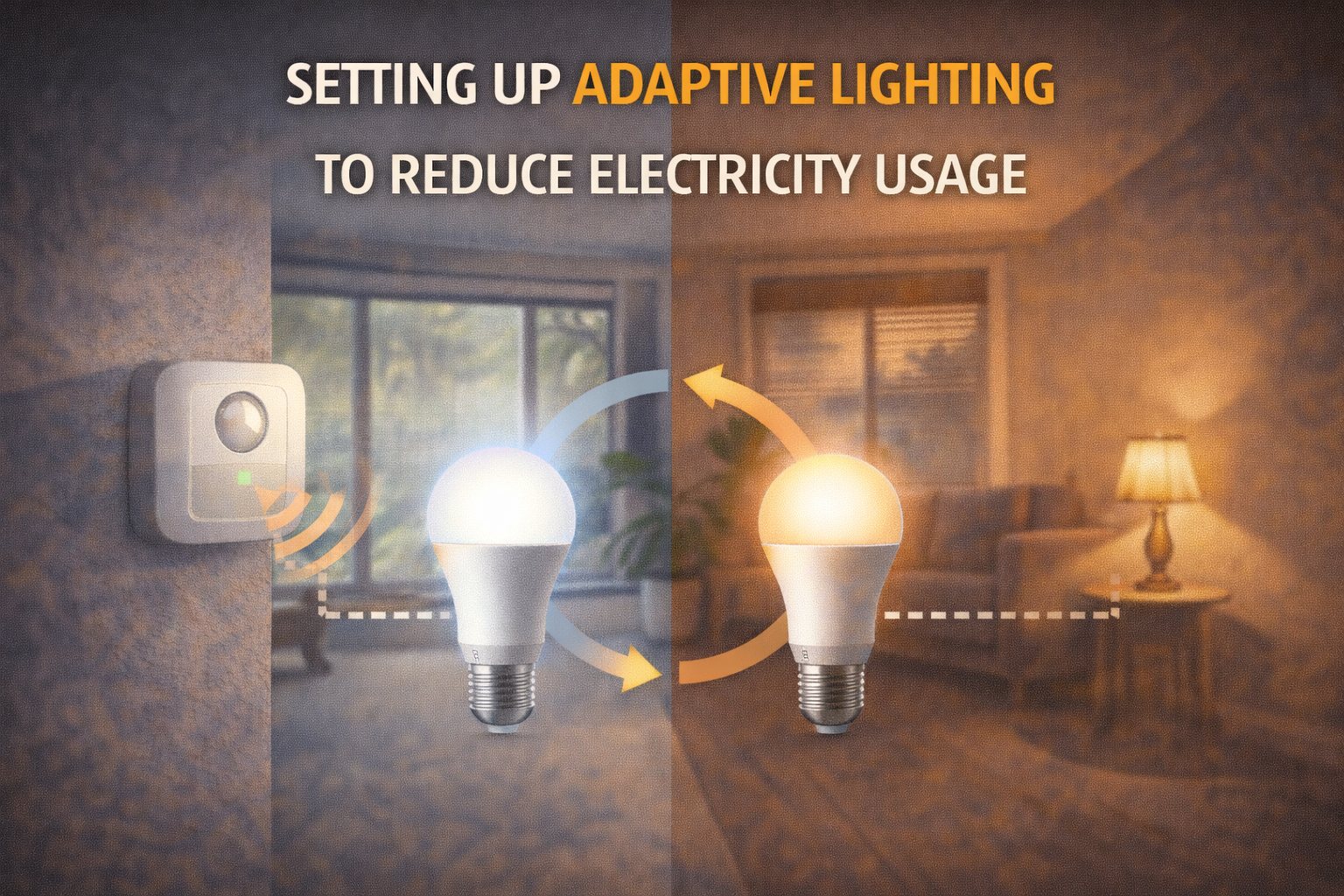
Adaptive lighting introduces responsiveness. It allows lighting to follow natural light cycles, occupancy patterns, and human needs. Rather than asking people to remember to dim or switch off, the system adjusts automatically. This approach reduces waste while preserving comfort. Exploring how to design such a system reveals how lighting can become an active participant in energy efficiency.
Setting Up Adaptive Lighting to Reduce Electricity Usage
What Adaptive Lighting Really Means
Adaptive lighting refers to lighting systems that adjust brightness, color temperature, or timing based on context. Context can include time of day, occupancy, daylight levels, or user activity.
Unlike static lighting, which treats every moment the same, adaptive lighting recognizes that lighting needs change. Morning light often benefits from brightness and cooler tones. Evening light usually benefits from warmer and softer illumination. Meanwhile, unoccupied rooms need little or no lighting.
Therefore, adaptive lighting is not about constant change. It is about appropriate change. That distinction matters because unnecessary adjustments can become distracting, while well-calibrated adjustments feel natural.
The Hidden Energy Cost of Traditional Lighting
Even efficient bulbs waste energy when used unnecessarily. A 10-watt LED left on for hours still consumes electricity without purpose. Multiply that across rooms and days, and the impact grows.
Traditional lighting often assumes maximum brightness as the default. However, many activities do not require full intensity. Watching television, walking through a hallway, or relaxing in the evening can be done comfortably under lower light levels.
Therefore, the hidden cost is not inefficiency of bulbs but inefficiency of usage. Adaptive lighting addresses this gap.
Core Components of Adaptive Lighting
An adaptive setup usually includes dimmable smart bulbs or fixtures, sensors, and a control platform. The bulbs allow brightness and color adjustment. Sensors provide context such as occupancy or daylight. The platform coordinates decisions.
Importantly, these components do not need to be complex. Even a modest system can support meaningful adaptation. The key is coordination rather than quantity.
Starting small often leads to better outcomes than attempting whole-home automation immediately.
How Light Affects Human Behavior and Energy Use
Lighting influences how people use spaces. Bright light encourages activity. Soft light encourages relaxation. Consequently, lighting can indirectly shape how long lights remain on.
For example, overly bright evening lighting may make a space feel active, leading to longer use. Conversely, softer lighting may encourage winding down, which can naturally reduce usage.
Therefore, adaptive lighting aligns environmental cues with natural rhythms. This alignment supports both comfort and efficiency.
Brightness, Color Temperature, and Timing
Brightness and color temperature work together. Cooler light appears brighter and more energizing. Warmer light feels softer and calmer. Adaptive systems use this relationship.
During daytime, brighter and cooler lighting can support tasks. In the evening, dimmer and warmer lighting reduces glare and supports relaxation. Lower brightness also means lower power use.
Timing ensures these changes happen gradually. Sudden shifts feel artificial, while gradual transitions feel natural.
Daylight Integration and Circadian Alignment
Daylight is the most efficient light source. Adaptive lighting respects its presence. When daylight is sufficient, artificial lighting dims or remains off.
Circadian alignment goes further. It adjusts artificial light to mimic natural daylight progression. This can support sleep patterns while also reducing late-night electricity use.
By letting natural light lead, adaptive systems reduce reliance on artificial lighting.
Sensors and Context-Aware Lighting
Occupancy sensors detect presence. Daylight sensors detect ambient light. Together, they provide context.
For instance, if a room is bright from sunlight, lights need not activate. If someone enters a dim room, lights can respond. This prevents both over-lighting and under-lighting.
Context awareness is where adaptive lighting becomes intelligent rather than merely automated.
Automation Logic That Saves Energy
Good automation is simple and purposeful. For example, lights can dim to 50% during daytime occupancy and rise only if daylight drops.
Another approach involves gradual fade-outs when inactivity is detected. Instead of switching off abruptly, lights dim first. This warns occupants and reduces annoyance.
When automation respects human comfort, people trust it. Trust leads to consistent energy savings.
Room-by-Room Adaptive Lighting Strategies
Different rooms have different needs. Kitchens often require brighter task lighting. Bedrooms benefit from softer tones. Hallways can operate at low brightness since use is brief.
Bathrooms can use time-of-day logic. Brighter light in the morning supports routines, while dimmer light at night prevents glare.
Matching strategy to room function improves both comfort and efficiency.
Seasonal Adjustments
Winter brings shorter days. Summer brings longer daylight. Adaptive systems should reflect this.
In winter, lights may activate earlier but still dim based on available daylight. In summer, activation may be delayed.
Seasonal awareness prevents rigid behavior that wastes energy.
Avoiding Over-Automation
Too many rules can create confusion. If lights behave unpredictably, occupants override them. Overrides reduce efficiency.
Therefore, simplicity often works best. Start with core automations and expand only when beneficial.
A predictable system builds confidence.
Measuring and Refining Performance
Smart lighting apps often provide usage data. Reviewing this data reveals patterns. For example, you may notice lights running longer in certain rooms.
Adjustments can then be made. Lower brightness or shorter timeouts may help. Small refinements accumulate.
Measurement turns automation into optimization.
Long-Term Impact on Bills and Comfort
Adaptive lighting rarely creates dramatic one-month savings. Instead, it creates steady reductions. Over years, these add up.
Additionally, comfort improves. Spaces feel aligned with time of day. Glare decreases. Visual fatigue may reduce.
Efficiency and comfort reinforce each other.
Conclusion
Adaptive lighting reframes how lighting is used. Instead of fixed brightness and manual control, it introduces responsiveness. By aligning lighting with daylight, occupancy, and daily rhythms, households reduce unnecessary electricity use. Just as importantly, they create environments that feel natural and supportive. Adaptive lighting is not about complexity. It is about using light thoughtfully. When light follows life instead of ignoring it, efficiency becomes a byproduct of good design.
FAQs
1. Do I need smart bulbs for adaptive lighting?
Yes, dimmable or smart-controllable lights are typically required.
2. Is adaptive lighting expensive to start?
It can start small with a few bulbs and sensors.
3. Does dimming really save energy with LEDs?
Yes, lower brightness generally uses less power.
4. Can renters use adaptive lighting?
Absolutely, many solutions are plug-and-play.
5. Is it difficult to maintain?
Most systems run automatically once configured.

Daniel Harper is a graduate engineer with a postgraduate specialization in Intelligent Solutions and Industry 4.0 technologies. He leads the Mogarzi Team, focusing on smart home automation, residential energy efficiency, and intelligent energy management systems. His work combines engineering principles with practical home optimization strategies, translating complex technical concepts into actionable insights for homeowners seeking smarter and more efficient living environments.