
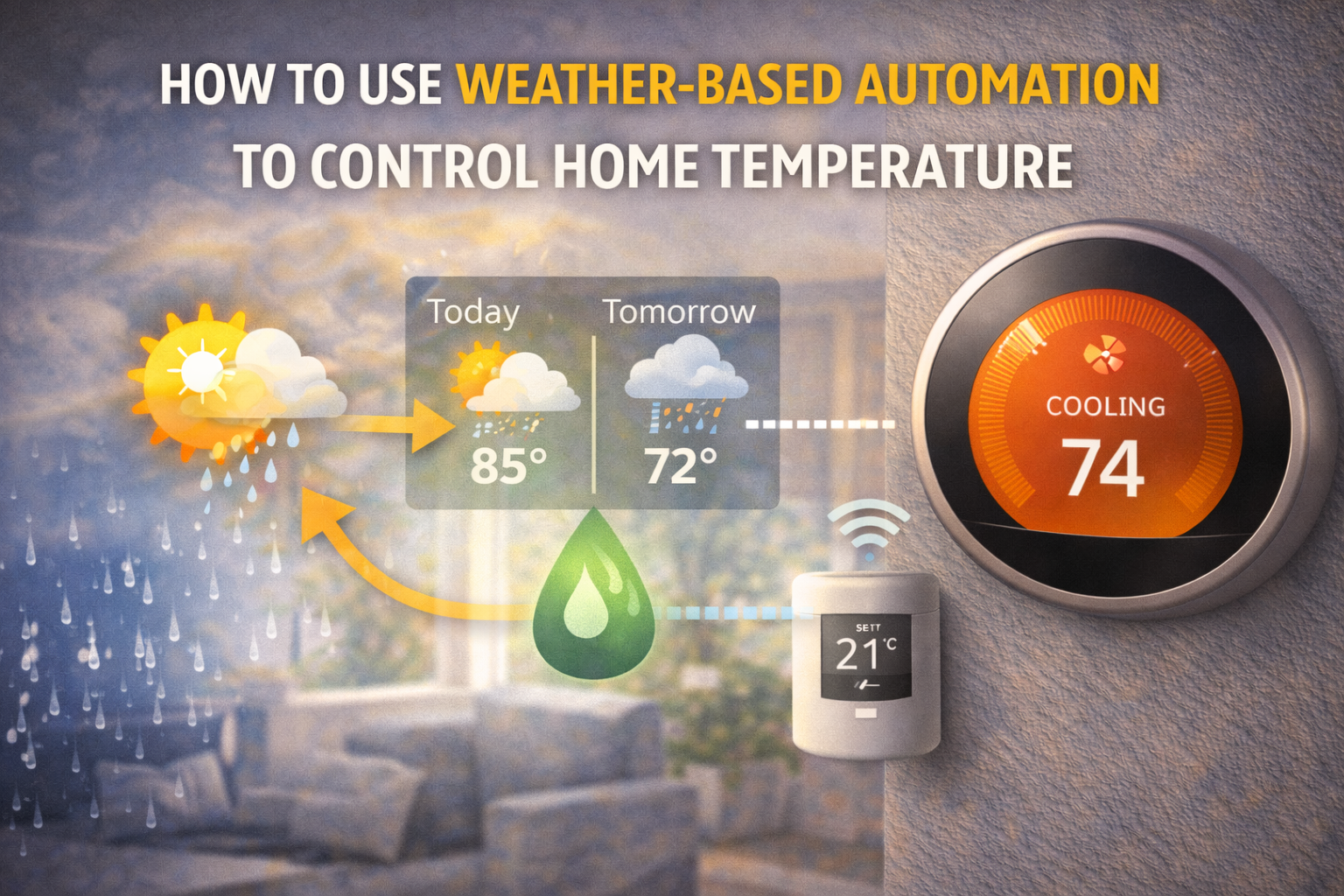
Home temperature control has traditionally relied on fixed schedules and manual adjustments. While these methods provide basic comfort, they rarely account for one of the most powerful influences on indoor climate: the weather. Outdoor temperature, humidity, sunlight, and wind all shape how a home gains or loses heat. Weather-based automation introduces a smarter approach by aligning HVAC behavior with real-time and predicted conditions.
A home does not exist in isolation from its environment. Every shift outdoors affects what happens inside. When outdoor conditions change quickly, static HVAC settings often lag behind. This mismatch can lead to unnecessary energy use or delayed comfort. Weather-aware automation helps reduce this gap.
When configured thoughtfully, weather-based control allows HVAC systems to anticipate needs rather than merely react. Instead of cooling after a home overheats, the system can prepare for rising temperatures. This proactive behavior can improve both efficiency and comfort. Understanding how to use this technology effectively opens new opportunities for smarter climate management.
Indoor comfort is often treated as a separate concern from outdoor conditions. Many homeowners set a thermostat and expect it to maintain comfort regardless of what happens outside. However, buildings constantly interact with their environment. Heat flows through walls, windows, and roofs in response to temperature differences.
As a result, outdoor weather plays a continuous role in indoor temperature stability. A sunny winter day can warm a home naturally, while a windy evening can accelerate heat loss. Yet many HVAC systems operate without fully considering these dynamics.
Weather-based automation addresses this disconnect. By incorporating outdoor data into decision-making, smart systems can align more closely with real-world conditions. This alignment does not require constant user intervention. Instead, it leverages data and automation to adjust behavior intelligently. Exploring how this works reveals how homes can become more responsive and efficient without sacrificing comfort.
How to Use Weather-Based Automation to Control Home Temperature
The Link Between Outdoor Weather and Indoor Comfort
Indoor climate is strongly influenced by outdoor conditions. When outdoor temperatures rise, heat enters through conduction, radiation, and air leakage. When temperatures drop, heat escapes. This exchange happens continuously.
Sunlight introduces radiant heat through windows. Wind influences infiltration rates. Humidity affects perceived comfort and cooling demand. Therefore, outdoor conditions are not background variables; they are active drivers.
Recognizing this connection is the first step toward smarter control. Once HVAC systems respond to weather rather than ignoring it, efficiency opportunities emerge.
What Weather-Based Automation Actually Means
Weather-based automation refers to HVAC adjustments triggered by outdoor data. This data can include temperature, humidity, solar radiation, wind speed, and forecasts.
Instead of running on fixed schedules, the system adapts. For example, if a hot afternoon is predicted, cooling can begin earlier at lower intensity. Conversely, on mild days, aggressive cooling may be unnecessary.
This approach transforms HVAC control from reactive to anticipatory. Anticipation often reduces energy spikes and stabilizes comfort.
How Smart Thermostats Access Weather Data
Most smart thermostats connect to internet-based weather services. These services provide local data based on geographic location. Some systems also use outdoor sensors for hyper-local readings.
Because forecasts update regularly, thermostats can adjust throughout the day. This continuous flow of information supports dynamic decisions.
However, accuracy depends on reliable data sources. Therefore, selecting reputable platforms matters.
Why Static Schedules Fall Short
Static schedules assume predictable conditions. They cool or heat at set times regardless of weather. While simple, this method ignores variability.
On unexpectedly cool days, cooling schedules may waste energy. On heat waves, they may start too late. As a result, comfort and efficiency both suffer.
Weather-based automation introduces flexibility. Flexibility allows alignment with real conditions rather than assumptions.
Understanding Heat Transfer and Outdoor Influence
Heat transfer occurs when temperature differences exist. The greater the difference, the faster the transfer. Therefore, extreme weather accelerates energy exchange.
Automation can moderate this effect. Pre-cooling before peak heat reduces strain. Allowing gentle drift during mild conditions saves energy.
This strategy aligns HVAC effort with actual demand. Alignment supports proportional energy use.
Temperature-Responsive Automation
Temperature-based rules adjust HVAC behavior based on outdoor readings. For instance, if outdoor temperatures exceed a threshold, cooling strategies may activate earlier.
Conversely, if temperatures remain mild, setpoints may relax slightly. This prevents over-conditioning.
Such responsiveness smooths energy use and reduces peaks.
Humidity-Aware Automation
Humidity strongly influences comfort. High humidity makes air feel warmer. Therefore, dehumidification may be needed even if temperature is moderate.
Weather-aware systems can adjust fan speeds or cooling cycles accordingly. This improves comfort without excessive cooling.
Managing humidity often yields hidden efficiency gains.
Using Forecasts Instead of Only Current Weather
Forecasts provide predictive power. Instead of reacting to present conditions, systems can prepare for upcoming changes.
For example, a predicted cold front may reduce the need for aggressive cooling. Anticipation prevents unnecessary runtime.
Forecast-based logic often outperforms reactive logic.
Seasonal Automation Strategies
Seasonal transitions require different rules. Spring and fall often feature mild variability. Summer and winter bring extremes.
Automation should reflect these patterns. Seasonal profiles allow smoother adaptation.
Flexibility ensures relevance throughout the year.
Regional Climate Considerations
Climate zones differ. Coastal regions experience humidity fluctuations. Arid regions face strong solar gain. Cold climates deal with heat retention.
Automation must reflect local realities. Generic settings rarely maximize efficiency.
Customization enhances outcomes.
Common Weather Automation Mistakes
Overcomplicating rules can reduce reliability. Simpler logic often performs better. Another mistake is ignoring humidity.
Additionally, failing to review performance can lock in inefficiencies. Periodic evaluation improves results.
Long-Term Energy Impact
Weather-based automation often produces gradual savings. Each adjustment may seem small. However, cumulative effects matter.
Reduced peaks lower strain. Lower strain extends system life. Over time, these benefits compound.
Efficiency becomes a steady pattern rather than a one-time gain.
Conclusion
Weather-based automation aligns home temperature control with environmental reality. Instead of resisting outdoor influence blindly, smart systems adapt intelligently. By incorporating temperature, humidity, and forecasts, HVAC operation becomes more proportional and less wasteful. Comfort remains stable while energy use becomes more deliberate. This approach reflects a broader shift toward data-informed living. When homes respond to weather thoughtfully, they become not only smarter but also more resilient and efficient.
FAQs
1. Do all smart thermostats support weather automation?
Most modern models do, but features vary.
2. Does it require extra sensors?
Usually not, though outdoor sensors can improve accuracy.
3. Is it hard to set up?
Basic setup is simple; advanced rules take more planning.
4. Can it save money?
Many users see moderate, consistent savings.
5. Does it replace scheduling?
It enhances schedules rather than fully replacing them.

Daniel Harper is a graduate engineer with a postgraduate specialization in Intelligent Solutions and Industry 4.0 technologies. He leads the Mogarzi Team, focusing on smart home automation, residential energy efficiency, and intelligent energy management systems. His work combines engineering principles with practical home optimization strategies, translating complex technical concepts into actionable insights for homeowners seeking smarter and more efficient living environments.