
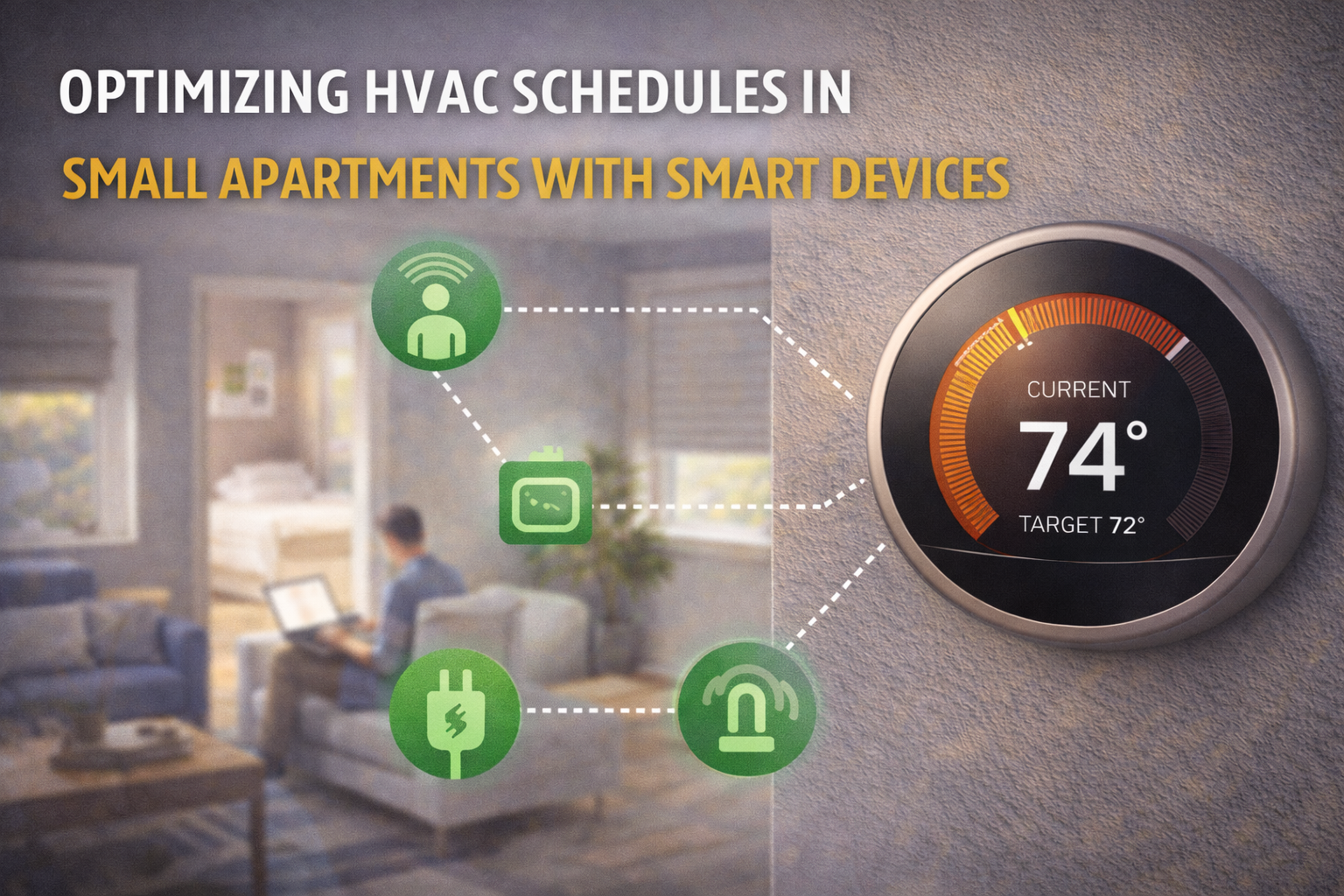
Small apartments are often praised for their efficiency. With fewer rooms to heat or cool, it seems logical that energy use should be minimal. However, many residents still notice inconsistent comfort and higher-than-expected utility bills. The reason is that efficiency depends not only on size but also on how climate control is managed.
Apartments react quickly to temperature changes. Sun exposure, cooking, electronics, and occupancy can shift indoor conditions rapidly. As a result, HVAC systems may cycle on and off frequently. Without smart scheduling, these cycles can become inefficient, even in a small footprint.
Smart devices introduce adaptability. Instead of running on rigid timetables, HVAC systems can respond to real conditions and habits. When schedules are optimized for compact living, the result is a more stable, comfortable, and energy-aware environment. Exploring this topic carefully shows how thoughtful scheduling can unlock efficiency that size alone cannot guarantee.
Optimizing HVAC Schedules in Small Apartments with Smart Devices
Why Small Apartments Still Waste HVAC Energy
It is easy to assume that less space means less waste. Yet energy waste often comes from mismatch, not magnitude. If heating or cooling runs when it is not needed, the size of the apartment becomes secondary.
Small apartments often have shared walls, limited insulation control, and exposure to neighboring units’ temperatures. Consequently, indoor conditions may drift in unpredictable ways. A neighbor’s heating habits can influence your own temperature balance.
Because of this variability, static schedules rarely align perfectly with real conditions. HVAC systems may run longer than necessary simply because the schedule says they should. Therefore, intelligent scheduling becomes just as important in small spaces as in large ones.
How HVAC Behavior Differs in Small Spaces
In smaller volumes, air temperature changes more quickly. When cooling activates, the setpoint may be reached rapidly. Then, once the system stops, temperature may rebound just as fast.
This rapid fluctuation can create short-cycling. Frequent on-and-off cycles reduce efficiency and increase wear. While each cycle is short, the cumulative effect can be significant.
Therefore, schedules must account for responsiveness. Instead of long runtime blocks, smaller apartments often benefit from more nuanced timing.
The Limits of Traditional Thermostat Scheduling
Traditional schedules divide the day into simple periods such as morning, daytime, evening, and night. While this works moderately well in predictable households, it lacks flexibility.
In apartments where residents work from home some days and leave on others, fixed schedules quickly become outdated. The thermostat cannot distinguish between a quiet home and an empty one.
As a result, conditioning may occur unnecessarily. Over time, this erodes the efficiency that small spaces should naturally provide.
How Smart Devices Change Scheduling Logic
Smart thermostats introduce learning algorithms, remote control, and integration with other devices. Instead of rigid programming, they allow dynamic adjustment.
For example, a thermostat can learn that the apartment warms quickly in the afternoon due to sun exposure. It can then adjust cooling timing accordingly. Similarly, remote access allows residents to modify schedules on the go.
Smart scheduling becomes less about setting times and more about guiding behavior. This shift supports better alignment between system operation and real life.
Understanding Thermal Inertia in Apartments
Thermal inertia refers to how slowly or quickly a space changes temperature. Small apartments typically have low thermal inertia. They heat and cool quickly.
Because of this, large setbacks may not be necessary. Allowing temperature to drift slightly can still produce savings without discomfort. Extreme setbacks, on the other hand, may cause sharp recovery cycles.
Moderation tends to work best. Small, consistent adjustments often outperform dramatic swings.
Creating Time-Based Schedules That Actually Work
Effective schedules reflect daily rhythms. Wake-up times, sleep hours, and typical outings should shape timing. However, these schedules should remain flexible.
Instead of assuming absence every weekday, smart devices can combine schedules with occupancy detection. This hybrid approach reduces guesswork.
Additionally, reviewing schedules monthly helps maintain relevance. Life patterns change, and schedules should evolve accordingly.
Occupancy-Aware Scheduling
Occupancy awareness adds intelligence to timing. When residents are home, comfort settings apply. When away, the system relaxes setpoints.
In small apartments, this can produce noticeable savings because conditioning responds directly to presence. Even short absences become opportunities for efficiency.
The key is reliability. Sensors and geolocation must function consistently to avoid discomfort.
Using Sensors to Improve Scheduling Accuracy
Temperature and occupancy sensors provide context. They reveal how different areas behave throughout the day.
For example, a studio apartment may have warmer zones near windows and cooler areas near interior walls. Sensor data helps schedules account for these patterns.
Instead of cooling uniformly, the system responds more proportionally.
Day vs Night Strategies in Small Apartments
Daytime often includes variable occupancy and solar gain. Nighttime usually involves stable occupancy and lower outdoor temperatures.
Therefore, night schedules can often allow slightly higher cooling setpoints or lower heating setpoints without sacrificing comfort. This takes advantage of natural temperature drops.
Aligning schedules with these cycles improves efficiency quietly.
Weather-Responsive Scheduling
Outdoor conditions influence indoor needs. On mild days, aggressive cooling may be unnecessary. Smart thermostats that use weather data can adjust accordingly.
This responsiveness prevents over-conditioning. Instead of following a fixed plan, the system adapts.
Adaptation, over time, produces steadier efficiency gains.
Avoiding Over-Cycling in Compact Spaces
Short cycles consume proportionally more energy. They also strain components. Schedules that trigger frequent start-stop behavior should be adjusted.
Longer, steadier cycles often operate more efficiently. Slightly wider temperature bands can support this.
Balancing precision and stability is essential.
Integrating Fans, Blinds, and Smart Plugs
Fans improve air circulation, making cooling feel more effective. Smart blinds reduce heat gain. Smart plugs can manage heat-producing devices.
When these tools coordinate, HVAC demand decreases. Scheduling then becomes part of a broader strategy.
Efficiency emerges from cooperation among devices.
Long-Term Optimization Mindset
Scheduling is not a one-time task. Reviewing energy reports reveals trends. Small refinements can then be applied.
Over months, these adjustments accumulate. The apartment becomes more predictable and responsive.
Efficiency grows gradually rather than instantly.
Conclusion
Optimizing HVAC schedules in small apartments requires attention to timing, responsiveness, and real-life patterns. Although compact spaces change temperature quickly, this responsiveness can be leveraged for efficiency when schedules are designed thoughtfully. Smart devices provide the tools, but strategy provides the results. By aligning schedules with occupancy, weather, and daily rhythms, residents can achieve stable comfort and reduced energy waste. Ultimately, thoughtful scheduling turns small apartments into highly adaptive environments.
FAQs
1. Do small apartments really need smart thermostats?
Yes, because rapid temperature changes benefit from responsive control.
2. How often should schedules be reviewed?
Every few months or after lifestyle changes.
3. Can smart scheduling lower bills noticeably?
Many residents see moderate but consistent savings.
4. Are sensors necessary in small spaces?
They are helpful but not always required.
5. Is manual control better than automation?
Automation usually provides more consistency.

Daniel Harper is a graduate engineer with a postgraduate specialization in Intelligent Solutions and Industry 4.0 technologies. He leads the Mogarzi Team, focusing on smart home automation, residential energy efficiency, and intelligent energy management systems. His work combines engineering principles with practical home optimization strategies, translating complex technical concepts into actionable insights for homeowners seeking smarter and more efficient living environments.