
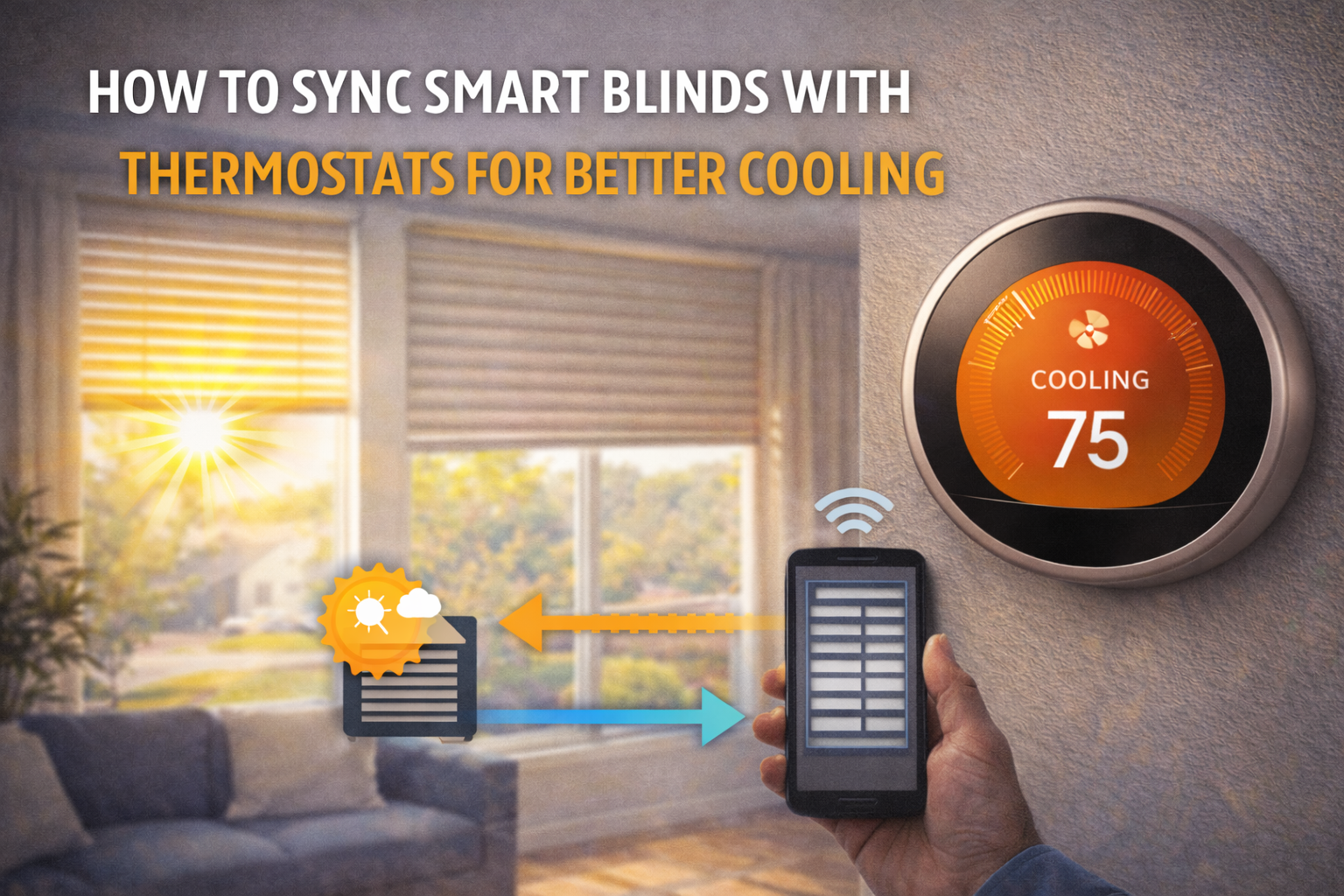
Cooling a home efficiently is not only about producing cold air. It is also about preventing heat from entering in the first place. Many households unknowingly allow large amounts of solar heat to enter through uncovered windows, especially during peak afternoon hours. As a result, air conditioners must run longer and harder to maintain comfort.
At the same time, smart thermostats have become common tools for managing cooling. They learn schedules, respond to occupancy, and adjust setpoints. Yet even the smartest thermostat is reactive by nature. It responds after the indoor temperature rises.
Smart blinds add a proactive layer. By controlling sunlight exposure, they influence how much heat enters a room. When these blinds are synchronized with thermostat behavior, cooling becomes more strategic. The result is not only improved comfort but also reduced energy demand. Exploring this relationship in detail shows how combining technologies often delivers greater impact than using them separately.
How to Sync Smart Blinds with Thermostats for Better Cooling
Why Windows Are a Major Source of Cooling Loss
Windows are thermally weaker than walls. Even high-quality windows allow more heat transfer than insulated structures. Additionally, sunlight entering through glass converts into radiant heat inside the home.
This solar heat gain can dramatically increase indoor temperatures. Rooms with large or west-facing windows often experience afternoon overheating. Consequently, thermostats detect rising temperatures and trigger cooling cycles.
If sunlight continues entering, the HVAC system must repeatedly compensate. This cycle increases runtime and energy use. Therefore, managing window exposure is a logical first step in improving cooling efficiency.
How Smart Blinds Work in Modern Homes
Smart blinds are motorized window coverings that can be controlled remotely or automated. They may operate on schedules, light sensors, or smart home triggers. Some models adjust based on time of day or sunlight intensity.
Because they can move automatically, they remove the need for manual adjustment. Homeowners no longer have to remember to close blinds during hot hours. Instead, the system handles it consistently.
Importantly, smart blinds influence indoor temperature indirectly. They do not cool air, but they reduce heat entry. This distinction matters because prevention is often more efficient than correction.
How Smart Thermostats Make Cooling Decisions
Smart thermostats monitor indoor temperature trends. When temperatures exceed setpoints, they activate cooling. Many also consider humidity and rate of change.
However, thermostats cannot identify the source of heat. They simply respond to its presence. Whether heat comes from sunlight, appliances, or occupancy, the reaction is the same.
Therefore, without blind coordination, thermostats may fight a heat source that could have been reduced earlier.
Why Synchronizing Both Systems Matters
When blinds and thermostats operate independently, opportunities are missed. Blinds may remain open during intense sunlight while the AC runs continuously. This creates a reactive loop.
Synchronization allows coordinated responses. For instance, if indoor temperature begins rising and sunlight is present, blinds can close before cooling intensifies. This reduces the burden on HVAC systems.
The synergy lies in timing. Blinds act as the first line of defense, while thermostats provide precision control.
The Science of Solar Heat Gain
Solar radiation passes through glass and warms interior surfaces. These surfaces then release heat into the air. This process can raise room temperature significantly.
Blocking sunlight interrupts this chain. Exterior shading is most effective, but interior blinds still reduce radiant heat. Even partial shading can lower heat gain.
Because cooling demand depends on heat load, reducing gain directly reduces HVAC runtime.
When Blinds Should Close for Maximum Efficiency
Midday and afternoon hours typically produce the strongest solar gain. West-facing windows are particularly influential. Therefore, closing blinds during these periods often yields the greatest benefit.
However, context matters. On mild days, natural light may not cause overheating. Intelligent systems can account for this variability.
Dynamic control is more efficient than static schedules. It adapts to real conditions rather than assumptions.
Automation Logic Between Blinds and Thermostats
Synchronization can be achieved through smart home platforms. For example, if indoor temperature rises above a threshold and sunlight is detected, blinds can close automatically.
Alternatively, blinds can respond to thermostat mode. When cooling activates, blinds adjust to reduce additional heat gain. This coordination reduces cycling intensity.
Over time, such logic stabilizes indoor temperatures and lowers system strain.
Room-Based Cooling Strategies
Not all rooms need identical blind behavior. Sun-exposed rooms benefit most from shading. Interior or shaded rooms may not require frequent adjustment.
Targeted automation improves precision. Instead of darkening the entire home, it focuses on problem areas. This maintains comfort and natural light balance.
Room-level coordination enhances overall efficiency.
Weather-Aware Automation
Advanced systems incorporate weather data. On cloudy days, blinds may remain open. On hot sunny days, they close earlier.
This responsiveness prevents unnecessary shading while maximizing efficiency when needed. Weather awareness adds predictive capability.
Predictive control often outperforms reactive control in energy management.
Seasonal Adjustments
Summer emphasizes heat blocking. Winter, however, may benefit from solar gain. Therefore, automation rules should shift seasonally.
Allowing sunlight in winter can reduce heating demand. Smart systems can adjust logic accordingly. Seasonal awareness ensures year-round efficiency.
Common Synchronization Mistakes
Over-darkening the home can reduce comfort and increase lighting use. Balance is important. Automation should consider occupant preference.
Another mistake is ignoring orientation. Applying identical rules to all windows reduces effectiveness. Customization improves results.
Finally, failing to review performance can lock in suboptimal settings.
Long-Term Energy Impact
Reduced heat gain leads to shorter cooling cycles. Shorter cycles reduce wear on HVAC equipment. This may extend system lifespan.
Energy savings accumulate gradually. Even small daily reductions add up over a season. Over years, this coordination can become a meaningful efficiency strategy.
Moreover, improved comfort often increases satisfaction with smart home systems. When technology feels helpful, adoption remains strong.
Conclusion
Synchronizing smart blinds with thermostats creates a proactive approach to cooling. Instead of relying solely on air conditioning, the home manages heat at its source. By blocking excess solar gain and coordinating responses, homeowners can improve comfort while reducing energy use. This integration represents a shift from reactive cooling to intelligent climate management. When implemented thoughtfully, it turns windows from energy liabilities into controllable elements of efficiency.
FAQs
1. Do smart blinds really reduce cooling costs?
Yes, by lowering solar heat gain, they reduce HVAC workload.
2. Can blinds and thermostats work together without a hub?
Some ecosystems allow direct integration, but hubs increase flexibility.
3. Are they worth it in mild climates?
They still improve comfort, though savings may be smaller.
4. Do smart blinds block all heat?
They reduce heat but do not eliminate transfer entirely.
5. How often should automation rules be updated?
Reviewing seasonally is usually sufficient.

Daniel Harper is a graduate engineer with a postgraduate specialization in Intelligent Solutions and Industry 4.0 technologies. He leads the Mogarzi Team, focusing on smart home automation, residential energy efficiency, and intelligent energy management systems. His work combines engineering principles with practical home optimization strategies, translating complex technical concepts into actionable insights for homeowners seeking smarter and more efficient living environments.