
Introduction
Energy efficiency has become a central topic in modern home design. As electricity costs rise and sustainability becomes a growing concern, homeowners are increasingly looking for ways to reduce unnecessary energy consumption. In the past, identifying energy waste required manual monitoring, technical knowledge, and often professional energy audits. Today, smart home technologies are changing this process entirely.
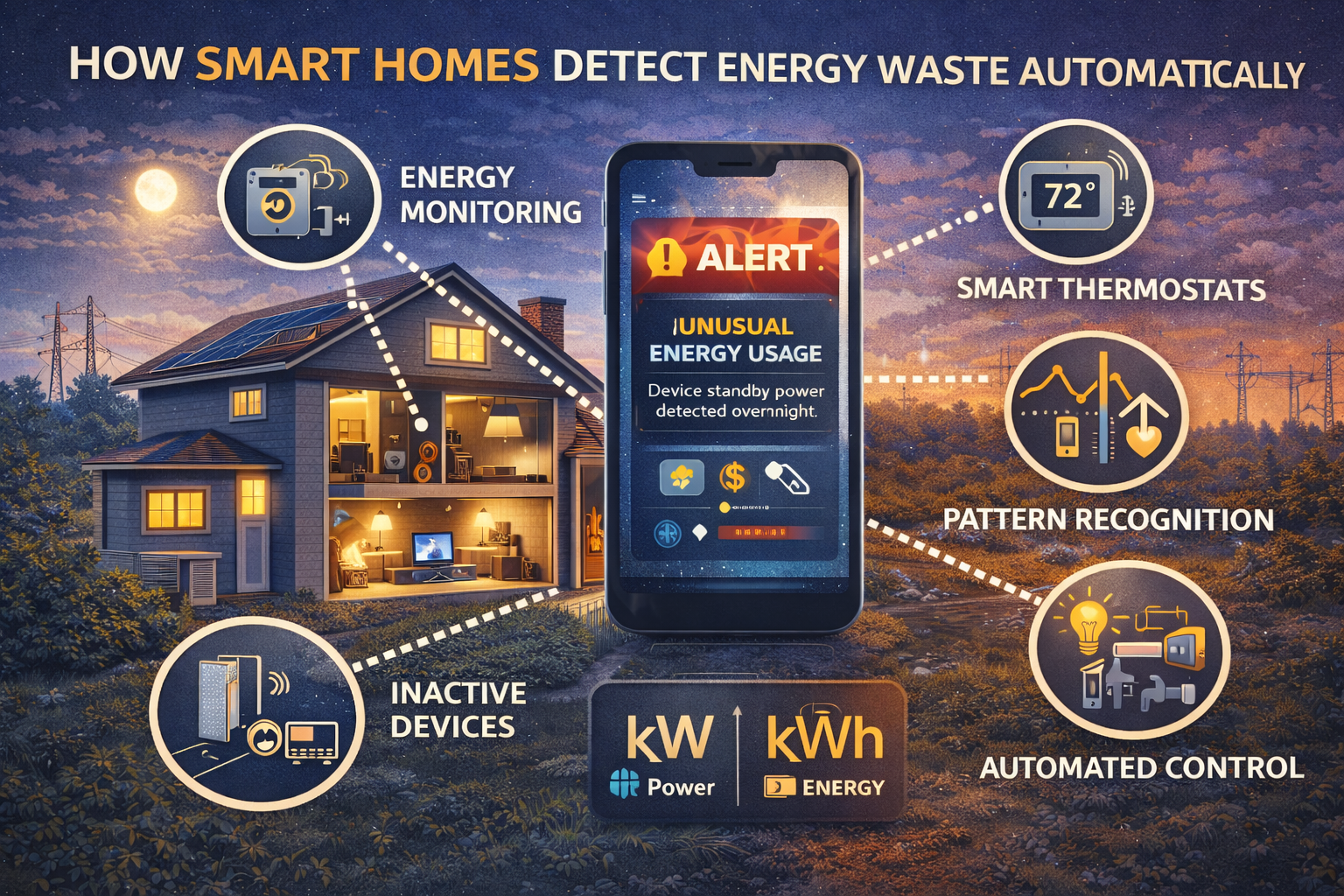
Modern smart homes can automatically detect patterns of energy use, identify inefficiencies, and even alert homeowners when electricity is being wasted. Through the combination of sensors, connected devices, and data analytics, smart home systems continuously analyze how energy flows through a household.
This automation transforms energy management from a reactive process into a proactive one. Instead of waiting for high electricity bills to reveal inefficiencies, homeowners can detect problems immediately and take corrective action.
Understanding how smart homes identify energy waste helps explain why automation is becoming one of the most powerful tools for improving residential energy efficiency.
The Role of Energy Monitoring Systems
At the core of automatic energy waste detection are smart energy monitoring systems. These systems measure electricity consumption throughout the home and convert raw electrical data into usable insights.
Energy monitors are typically installed at the main electrical panel or connected through smart meters. From there, they track how much electricity the home consumes at any given moment. Advanced systems can even identify individual appliances by analyzing their electrical signatures.
This continuous data collection allows the monitoring platform to establish a baseline for normal energy consumption patterns. Once a baseline is established, the system can detect when energy usage deviates from expected behavior.
For example, if a device suddenly begins consuming more electricity than usual, the system may flag it as a potential issue.
Pattern Recognition and Machine Learning
One of the most powerful features of modern smart home energy systems is their ability to analyze consumption patterns using machine learning algorithms.
Over time, these systems learn how energy is typically used within a home. They observe daily routines, appliance usage cycles, and seasonal variations in electricity demand.
Once these patterns are understood, the system can identify anomalies that indicate energy waste.
For instance, if the heating system continues operating while no one is home, the system may recognize that behavior as inefficient. Similarly, if an appliance begins drawing unusually high power compared to its historical usage, the monitoring platform may alert the homeowner.
Machine learning allows smart homes to detect subtle inefficiencies that would be difficult for humans to notice manually.
Detecting Standby Power Consumption
Standby power, often called phantom load, is one of the most common forms of hidden energy waste. Many electronic devices continue drawing small amounts of electricity even when they appear to be turned off.
Examples include televisions, gaming consoles, chargers, and office equipment. Individually, these devices may consume only a few watts of electricity. However, when dozens of devices operate in standby mode continuously, the cumulative energy waste becomes significant.
Smart home monitoring systems detect standby power by measuring electricity consumption when devices should be inactive. If the system notices persistent energy draw during overnight hours or when the home is unoccupied, it may identify the source of standby consumption.
Smart plugs and automated outlets can then be used to shut down these devices automatically when they are not needed.
Identifying Inefficient Appliances
Another way smart homes detect energy waste is by identifying appliances that consume unusually large amounts of electricity.
Every electrical device has a typical energy consumption pattern. For example, refrigerators cycle on and off periodically to maintain temperature, while washing machines draw higher power only during specific stages of operation.
Energy monitoring systems analyze these patterns to determine what is normal for each appliance. When a device deviates from its expected behavior, it may indicate a malfunction or declining efficiency.
For instance, an aging refrigerator may run more frequently than usual because its compressor has become less efficient. A clogged HVAC filter may cause the heating system to operate longer than necessary.
Detecting these issues early allows homeowners to perform maintenance or replace inefficient equipment before energy waste becomes severe.
Smart Thermostats and Occupancy Detection
Heating and cooling systems are often the largest energy consumers in residential buildings. Smart thermostats play a crucial role in detecting and reducing energy waste in this area.
Modern smart thermostats use motion sensors, geolocation data, and scheduling algorithms to determine whether a home is occupied. When the system detects that the house is empty, it automatically adjusts temperature settings to reduce energy usage.
Some systems also analyze historical temperature performance to determine how quickly the home warms or cools. This information helps the thermostat optimize HVAC operation, preventing unnecessary runtime while maintaining comfort.
By coordinating climate control with real-time occupancy data, smart homes eliminate one of the most common sources of energy waste.
Automated Alerts and Recommendations
Detecting energy waste is only useful if homeowners can act on the information. For this reason, most smart home energy platforms include alert systems that notify users when unusual consumption patterns occur.
These alerts may appear as mobile notifications or dashboard warnings within the energy monitoring application. The system might recommend actions such as adjusting thermostat schedules, unplugging unused devices, or inspecting appliances for potential issues.
Some advanced systems even provide estimated cost impacts associated with energy waste. By translating electricity usage into financial terms, these platforms make energy insights easier to understand.
Automation ensures that homeowners do not need to constantly monitor their energy dashboards. Instead, the system highlights potential problems as they arise.
Integration with Smart Automation Systems
Energy monitoring becomes even more powerful when integrated with smart home automation platforms. Instead of simply detecting energy waste, automation systems can respond automatically to eliminate inefficiencies.
For example, a smart home may automatically turn off lighting systems when rooms are empty. Smart plugs may disconnect devices that draw standby power overnight. HVAC systems may reduce activity during peak electricity pricing hours.
These automated responses allow homes to continuously optimize energy use without requiring constant user intervention.
As smart home ecosystems become more interconnected, the ability to detect and eliminate energy waste will become even more sophisticated.
Authority Insight: Automation Is Changing How Homes Manage Energy
From an engineering perspective, one of the most important shifts in residential energy management is the transition from passive monitoring to automated optimization.
In traditional homes, identifying inefficiencies required homeowners to manually analyze electricity bills or conduct professional energy audits. Today, smart homes can perform this analysis automatically using real-time data and advanced analytics.
This capability transforms energy efficiency from a reactive task into an ongoing automated process. Homes are no longer static energy consumers but dynamic systems that continuously adjust to improve performance.
As artificial intelligence and connected devices become more advanced, smart homes will increasingly operate as intelligent energy ecosystems capable of managing electricity use with minimal human intervention.
Frequently Asked Questions
Can smart homes really detect energy waste automatically?
Yes. Smart home energy monitoring systems analyze electricity consumption patterns and identify anomalies that may indicate energy waste.
What devices are needed to detect energy waste?
Common devices include smart energy monitors, smart plugs, smart thermostats, and automation hubs that coordinate device behavior.
Do smart homes require artificial intelligence to detect inefficiencies?
Some advanced systems use machine learning algorithms to improve pattern recognition, although simpler monitoring systems can also detect basic inefficiencies.
Can these systems reduce electricity bills?
Yes. By identifying unnecessary energy consumption and optimizing device usage, smart homes can significantly improve energy efficiency.
Are energy monitoring systems difficult to install?
Many modern systems are designed for simple installation and can be integrated gradually as a smart home ecosystem expands.
Final Considerations
Smart homes are transforming the way households manage electricity consumption. Through continuous monitoring, pattern recognition, and automated control systems, modern homes can detect energy waste almost instantly.
These technologies allow homeowners to identify inefficient devices, eliminate standby power consumption, and optimize heating and cooling systems automatically. Instead of relying on manual energy audits or monthly utility bills, smart home platforms provide real-time insights into how energy is used.
As smart home ecosystems continue to evolve, automated energy management will play an increasingly important role in building efficient, sustainable homes. By understanding how these systems detect energy waste, homeowners can take full advantage of the technologies designed to improve energy performance and reduce unnecessary electricity consumption.

Daniel Harper is a graduate engineer with a postgraduate specialization in Intelligent Solutions and Industry 4.0 technologies. He leads the Mogarzi Team, focusing on smart home automation, residential energy efficiency, and intelligent energy management systems. His work combines engineering principles with practical home optimization strategies, translating complex technical concepts into actionable insights for homeowners seeking smarter and more efficient living environments.