
Introduction
Heating and cooling systems play one of the most important roles in residential energy consumption. In many homes, climate control accounts for the largest portion of electricity use throughout the year. As energy prices rise and homeowners become more focused on efficiency, the technology used to heat and cool homes has become an increasingly important decision.
For decades, traditional HVAC systems—such as gas furnaces combined with central air conditioners—have dominated residential climate control. These systems are familiar, widely available, and effective in many environments. However, a newer alternative has gained significant attention in recent years: heat pumps.
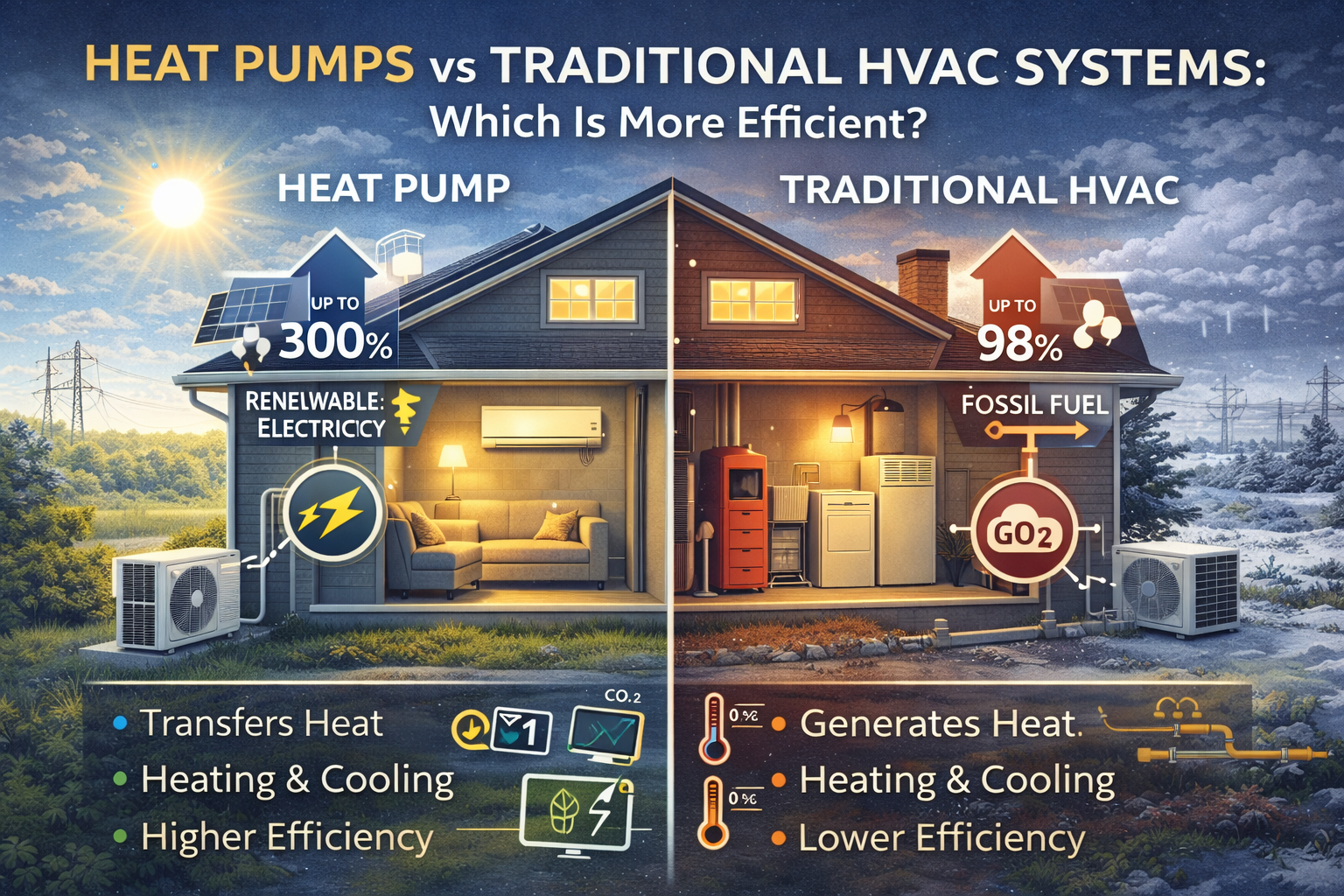
Heat pumps are often promoted as one of the most efficient ways to heat and cool modern homes. Unlike traditional systems that generate heat through combustion or electrical resistance, heat pumps transfer heat from one location to another. This difference in operating principle allows them to achieve significantly higher efficiency levels under many conditions.
Despite these advantages, heat pumps are not always the best choice for every climate or home design. To determine which system is more efficient, it is necessary to understand how both technologies work and how they perform in real-world environments.
How Traditional HVAC Systems Work
Traditional HVAC systems typically rely on two separate technologies for heating and cooling.
During the winter, many homes use furnaces powered by natural gas, propane, or electricity. Gas furnaces generate heat through combustion. The heat produced is transferred to air that circulates through ductwork and warms the home.
During warmer months, central air conditioning systems remove heat from indoor air and release it outdoors through a refrigeration cycle. The cooled air is then distributed through the same duct system used by the furnace.
While these systems are effective and reliable, their efficiency is limited by the processes used to generate heat. Gas furnaces convert fuel into heat, and even high-efficiency models lose some energy during combustion.
Electric resistance heating systems are even less efficient because they generate heat directly from electricity, consuming large amounts of power.
How Heat Pumps Work
Heat pumps operate using a different principle. Instead of generating heat, they move heat from one location to another.
In heating mode, a heat pump extracts thermal energy from outdoor air—even in cold conditions—and transfers it indoors. In cooling mode, the process reverses, removing heat from the home and releasing it outside.
This ability to transfer heat rather than produce it allows heat pumps to deliver much higher efficiency compared to traditional heating systems. Because they move existing heat instead of creating it from fuel, heat pumps can produce multiple units of heat for every unit of electricity consumed.
For example, many modern heat pumps can deliver three to four units of heat energy for every unit of electricity used. This ratio is significantly higher than the efficiency of traditional electric heating systems.
Efficiency Comparison
When comparing efficiency between heat pumps and traditional HVAC systems, several key metrics are used.
Heating systems are often evaluated using the Annual Fuel Utilization Efficiency (AFUE) rating, which measures how efficiently furnaces convert fuel into heat. High-efficiency gas furnaces can achieve AFUE ratings around 90–98 percent.
Heat pumps, however, are evaluated using the Coefficient of Performance (COP) and Heating Seasonal Performance Factor (HSPF). These ratings measure how effectively the system transfers heat relative to the electricity it consumes.
Because heat pumps move heat instead of generating it, their effective efficiency can exceed 300 percent under favorable conditions.
This means that, from a purely technical perspective, heat pumps are often more efficient than traditional heating systems.
Performance in Different Climates
Climate conditions play a major role in determining which HVAC system performs best.
Heat pumps perform exceptionally well in moderate and warm climates where winter temperatures rarely drop to extreme lows. In these environments, outdoor air still contains enough thermal energy for the system to operate efficiently.
In very cold climates, however, heat pump efficiency can decrease because extracting heat from extremely cold air becomes more difficult. Although modern cold-climate heat pumps have improved significantly, some homes still require backup heating systems during severe winter conditions.
Traditional gas furnaces may perform better in regions with long, extremely cold winters because combustion heating can produce consistent high temperatures regardless of outdoor conditions.
As heat pump technology continues to evolve, these limitations are becoming less significant.
Energy Cost Considerations
Efficiency does not always translate directly into lower energy costs. Electricity prices, natural gas prices, and local energy policies all influence the financial impact of HVAC systems.
In regions where electricity is relatively inexpensive and natural gas is expensive or unavailable, heat pumps often provide significant cost savings.
In areas with low natural gas prices, traditional furnaces may remain competitive despite lower efficiency ratings.
However, the growing adoption of renewable electricity and the electrification of residential systems are gradually shifting the economic balance toward heat pumps.
Many energy experts now view heat pumps as a key technology for reducing residential carbon emissions and improving energy efficiency.
Environmental Impact
Another major factor in the heat pump versus HVAC debate is environmental impact.
Traditional heating systems that burn natural gas or propane produce carbon emissions directly within the home. Although modern furnaces are highly efficient, they still rely on fossil fuels.
Heat pumps, on the other hand, operate entirely on electricity. When powered by renewable energy sources such as solar or wind power, they can significantly reduce the carbon footprint of residential heating systems.
Even when electricity is generated from mixed energy sources, heat pumps often produce lower overall emissions due to their higher efficiency.
As energy grids transition toward renewable generation, the environmental advantages of heat pumps are expected to increase further.
Installation and Infrastructure Considerations
The efficiency of an HVAC system also depends on proper installation and home infrastructure.
Traditional HVAC systems rely heavily on ductwork. Poorly designed or leaky ducts can significantly reduce system efficiency by allowing conditioned air to escape before it reaches living spaces.
Many heat pump systems are available as ductless mini-split systems, which deliver air directly to individual rooms. This approach eliminates duct losses and allows for zoned climate control.
However, installing heat pumps may require electrical upgrades in some homes, especially if the property previously relied on gas heating.
Home insulation quality, building design, and climate conditions all influence how effectively any HVAC system will perform.
Authority Insight: The Future of Residential Climate Control
From an engineering standpoint, heat pumps represent one of the most important technologies shaping the future of residential climate control.
As energy systems move toward electrification and renewable energy integration, technologies that operate efficiently on electricity will become increasingly valuable. Heat pumps align well with this transition because they deliver high efficiency while eliminating direct fossil fuel combustion in homes.
Many governments and energy agencies around the world are already promoting heat pump adoption through incentives and efficiency programs.
This does not mean traditional HVAC systems will disappear immediately. In some climates and applications, furnaces will continue to play a role. However, the long-term trajectory of residential heating technology clearly points toward more widespread use of heat pump systems.
Understanding the efficiency differences between these technologies helps homeowners make more informed decisions when upgrading their climate control systems.
Frequently Asked Questions
Are heat pumps more efficient than traditional HVAC systems?
In many situations, yes. Heat pumps can achieve higher efficiency because they transfer heat rather than generate it.
Do heat pumps work in cold climates?
Yes, although efficiency may decrease in extremely cold temperatures. Modern cold-climate heat pumps are designed to operate effectively even in low temperatures.
Are heat pumps expensive to install?
Installation costs can be higher than traditional systems in some cases, but operating costs may be lower due to improved efficiency.
Can heat pumps provide both heating and cooling?
Yes. One of the main advantages of heat pumps is that they can handle both heating and cooling within a single system.
Are heat pumps environmentally friendly?
Heat pumps generally produce lower emissions than fossil-fuel heating systems, especially when powered by renewable electricity.
Final Considerations
Choosing between heat pumps and traditional HVAC systems depends on several factors, including climate conditions, energy prices, home design, and long-term efficiency goals.
Heat pumps offer impressive efficiency advantages because they move heat rather than generate it. In many regions, this makes them one of the most energy-efficient heating and cooling technologies available today.
Traditional HVAC systems remain reliable and effective in certain climates, particularly where extremely cold temperatures are common or natural gas prices are low.
As technology continues to evolve and energy systems transition toward electrification, heat pumps are likely to play an increasingly important role in residential energy efficiency. Understanding the strengths and limitations of both systems allows homeowners to make decisions that balance comfort, cost, and long-term sustainability.

Daniel Harper is a graduate engineer with a postgraduate specialization in Intelligent Solutions and Industry 4.0 technologies. He leads the Mogarzi Team, focusing on smart home automation, residential energy efficiency, and intelligent energy management systems. His work combines engineering principles with practical home optimization strategies, translating complex technical concepts into actionable insights for homeowners seeking smarter and more efficient living environments.