
Introduction
Energy efficiency has become a major focus for homeowners seeking to reduce electricity bills and improve the performance of their homes. With the growing adoption of smart home technologies, solar energy systems, and energy monitoring platforms, it has become easier than ever to track electricity consumption and identify inefficiencies. However, many households still waste significant amounts of energy every day without realizing it.
Modern homes contain dozens of electrical devices that operate continuously or intermittently throughout the day. Some of these systems consume far more energy than people expect, while others quietly draw electricity even when they appear to be turned off. Over time, these inefficiencies accumulate and can significantly increase household energy costs.
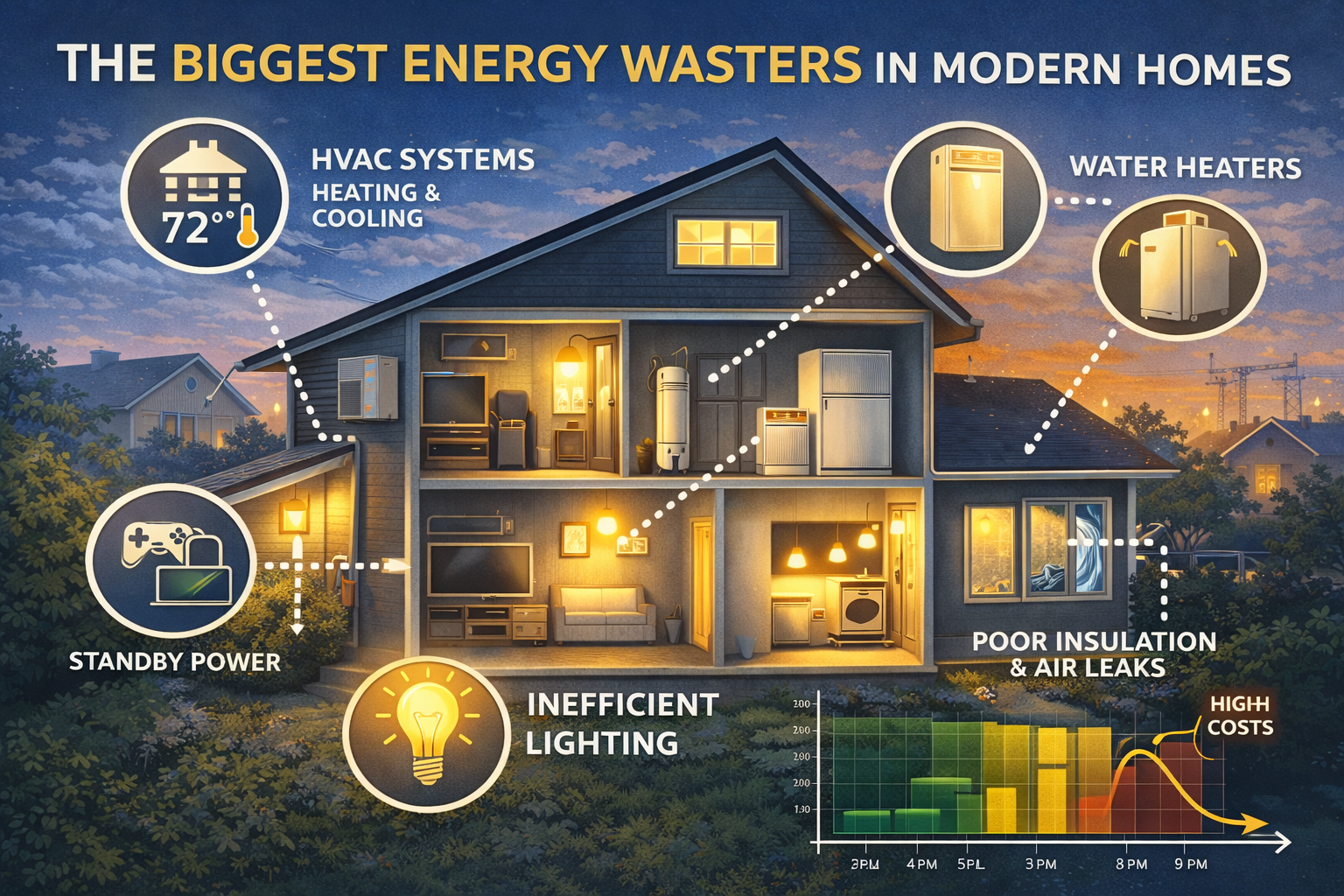
Understanding where energy waste occurs is the first step toward improving efficiency. Many of the biggest sources of waste are not caused by outdated technology but by how systems are used and managed within the home. Heating and cooling systems may operate longer than necessary, lighting may remain on in empty rooms, and electronics may consume standby power around the clock.
By identifying the most common energy wasters in modern homes, homeowners can take practical steps to reduce unnecessary consumption, improve energy performance, and create a more efficient living environment.
Heating and Cooling Systems
Heating, ventilation, and air conditioning systems—commonly referred to as HVAC—are typically the largest energy consumers in residential buildings. In many regions, HVAC systems account for more than half of a home’s total energy usage.
One of the primary reasons HVAC systems waste energy is inefficient temperature management. Many homes maintain constant indoor temperatures even when no one is present. Air conditioning may continue running throughout the day while residents are at work, or heating systems may operate overnight at full capacity when lower temperatures would still be comfortable.
Poor insulation also contributes to HVAC inefficiency. If a home loses heat through poorly sealed windows, doors, or attic spaces, heating and cooling systems must work harder to maintain indoor temperatures.
Smart thermostats and occupancy-based climate control systems help reduce these inefficiencies by adjusting temperatures automatically based on household patterns.
Standby Power from Electronics
Another significant but often overlooked source of energy waste is standby power, sometimes referred to as phantom load. Many electronic devices continue drawing electricity even when they are turned off or not actively being used.
Televisions, gaming consoles, computers, printers, and entertainment systems often remain in standby mode so they can start quickly when activated. Chargers left plugged into outlets also consume small amounts of electricity continuously.
While each device may only draw a few watts of power, the combined effect of dozens of devices operating 24 hours a day can add up to substantial energy consumption over time.
Using smart plugs or power strips with automatic shutoff features can help eliminate unnecessary standby power and reduce electricity waste.
Inefficient Lighting
Lighting has improved dramatically with the adoption of LED technology, but inefficient lighting practices still contribute to energy waste in many homes.
Older incandescent and halogen bulbs consume far more electricity than modern LED alternatives. Even when efficient lighting technology is installed, energy waste can occur if lights remain on in rooms that are not in use.
Large homes with multiple lighting zones are particularly susceptible to this problem. Hallway lights, outdoor lights, and decorative lighting systems may remain active longer than necessary.
Automation solutions such as motion sensors, smart switches, and scheduled lighting routines can significantly reduce lighting-related energy waste.
Old or Inefficient Appliances
Household appliances are essential for everyday life, but older appliances often operate with much lower efficiency compared to modern designs.
Refrigerators, washing machines, dishwashers, and dryers manufactured many years ago typically consume more electricity than newer models built with energy-saving technologies. Refrigerators in particular operate continuously and can become major energy consumers if they lack modern efficiency features.
Even newer appliances can waste energy if they are used inefficiently. For example, running dishwashers with small loads or operating washing machines with partial capacity increases electricity and water consumption unnecessarily.
Upgrading to energy-efficient appliances and optimizing usage patterns can significantly reduce overall household energy demand.
Water Heating Systems
Water heaters represent another major contributor to residential energy consumption. Heating water for showers, laundry, and dishwashing requires significant amounts of electricity or gas.
Traditional tank water heaters continuously maintain stored water at high temperatures, even when hot water is not needed. This constant heating process leads to standby heat losses throughout the day.
In some cases, water heaters are also set to temperatures higher than necessary, increasing both energy usage and safety risks.
Modern alternatives such as heat pump water heaters or tankless systems can improve efficiency by heating water only when it is needed.
Poor Insulation and Air Leaks
A home’s physical structure plays a crucial role in energy efficiency. Even the most advanced appliances and smart systems cannot compensate for poor building insulation.
Air leaks around windows, doors, attic spaces, and duct systems allow conditioned air to escape. When heated or cooled air leaves the home, HVAC systems must run longer to maintain comfortable temperatures.
This problem is particularly common in older buildings that were constructed before modern energy efficiency standards were widely adopted.
Improving insulation, sealing air leaks, and installing energy-efficient windows can significantly reduce heating and cooling energy losses.
Unmanaged Peak Energy Use
Many households consume electricity without considering when energy is used throughout the day. In regions with time-of-use electricity pricing, energy consumed during peak demand hours may cost significantly more than electricity used during off-peak periods.
Running high-power appliances such as clothes dryers, ovens, or electric vehicle chargers during peak hours increases electricity costs and places additional stress on the power grid.
Smart home automation systems can help shift energy usage to lower-cost periods, improving both energy efficiency and financial savings.
Authority Insight: Energy Waste Often Comes from Behavior, Not Technology
From an engineering perspective, one of the most important insights about residential energy efficiency is that technology alone does not determine energy consumption. Human behavior plays a major role in how efficiently a home operates.
Even homes equipped with modern appliances and energy-efficient systems can waste significant amounts of electricity if devices are used inefficiently or left running unnecessarily.
Energy monitoring tools have shown that small behavioral changes—such as adjusting thermostat schedules, turning off unused lighting, or managing appliance usage—can produce meaningful reductions in household energy consumption.
Combining efficient technologies with thoughtful energy management strategies creates the most effective path toward a high-performance home.
Frequently Asked Questions
What is the biggest source of energy waste in most homes?
Heating and cooling systems typically represent the largest source of residential energy consumption.
Do electronic devices use power when turned off?
Yes. Many electronics consume standby power even when they appear to be turned off.
Are LED lights more efficient than traditional bulbs?
Yes. LED bulbs use significantly less electricity and last longer than incandescent or halogen lighting.
Do older appliances consume more electricity?
In many cases, yes. Older appliances often lack modern energy-saving technologies.
Can smart home devices reduce energy waste?
Yes. Smart thermostats, automation systems, and energy monitoring platforms can help identify and reduce unnecessary energy consumption.
Final Considerations
Energy waste in modern homes often occurs in places that are easy to overlook. Heating and cooling systems, standby electronics, inefficient lighting, aging appliances, and structural inefficiencies all contribute to unnecessary electricity consumption.
The good news is that many of these issues can be addressed through relatively simple improvements. Upgrading appliances, improving insulation, managing standby power, and using smart automation tools can significantly reduce energy waste.
As energy prices continue to rise and sustainability becomes increasingly important, identifying and eliminating these hidden sources of energy waste will play a key role in building smarter, more efficient homes.

Daniel Harper is a graduate engineer with a postgraduate specialization in Intelligent Solutions and Industry 4.0 technologies. He leads the Mogarzi Team, focusing on smart home automation, residential energy efficiency, and intelligent energy management systems. His work combines engineering principles with practical home optimization strategies, translating complex technical concepts into actionable insights for homeowners seeking smarter and more efficient living environments.