
Introduction
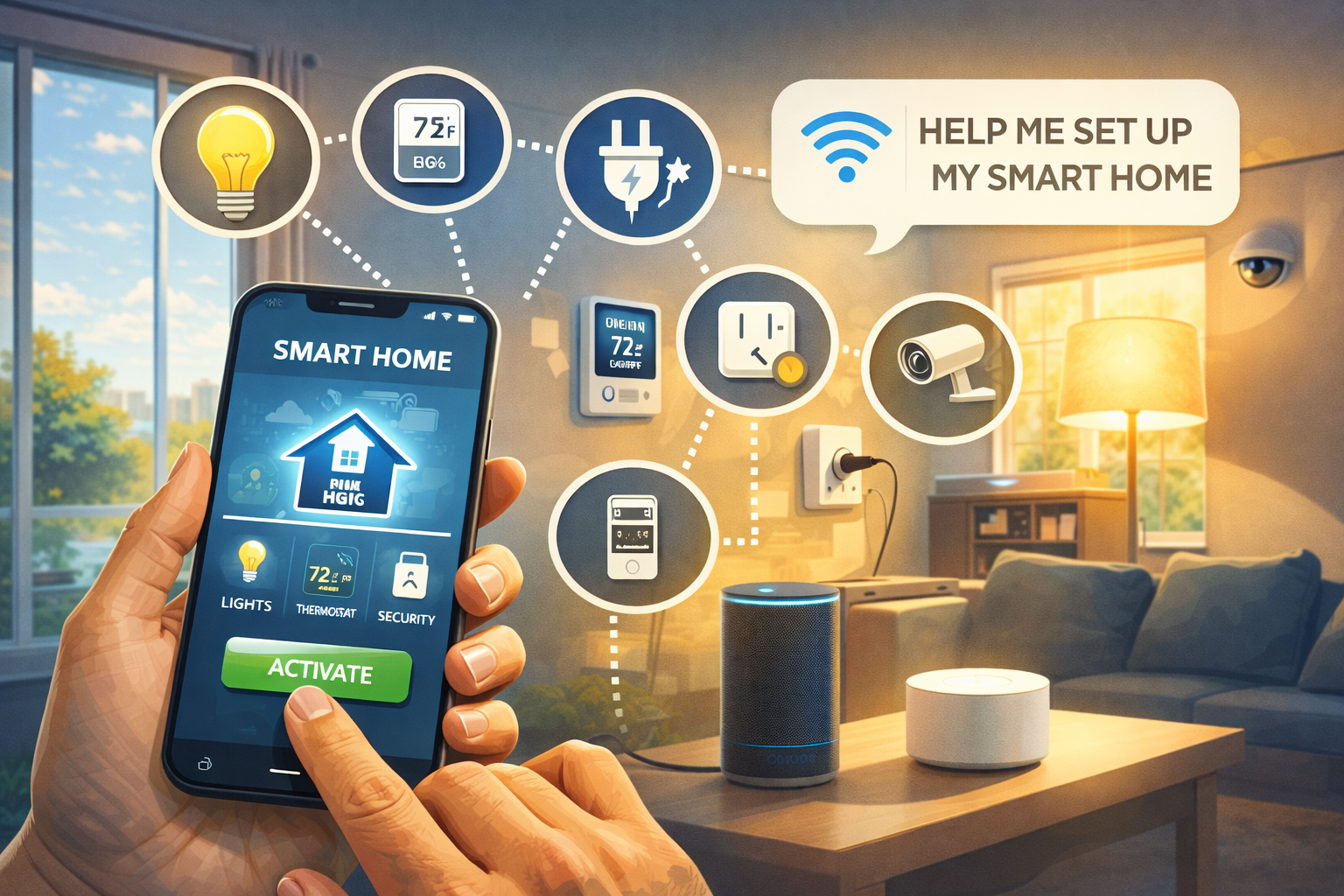
Smart home automation has quickly moved from a futuristic concept to a practical tool used by millions of homeowners around the world. What once required expensive proprietary systems and professional installations can now be achieved with accessible devices, mobile apps, and integrated automation platforms. Despite this progress, many people who are curious about smart homes still feel unsure about where to begin.
The confusion is understandable. The smart home market includes hundreds of devices, competing platforms, and overlapping technologies. New users often wonder whether they should start with smart lighting, voice assistants, security systems, or energy management devices. Without a clear strategy, it is easy to buy isolated gadgets that do not work well together or fail to deliver meaningful benefits.
For beginners, the key to building a successful smart home is not buying many devices at once. Instead, the goal should be to start with a simple foundation that can expand over time. Smart home automation works best when devices communicate with each other and support long-term integration.
This guide explains where beginners should start, which devices create the most impact early on, and how to build a smart home ecosystem that remains scalable and efficient.
Understanding What Smart Home Automation Really Means
Before choosing devices, it is important to understand what automation actually involves. Many people think of smart homes as collections of connected devices controlled through smartphone apps. While remote control is part of the experience, true automation goes further.
Smart home automation refers to systems that perform actions automatically based on conditions, schedules, or sensor data. Instead of manually turning lights on or off through an app, a smart home can detect when someone enters a room and activate lighting automatically. Climate systems can adjust temperatures based on occupancy patterns, and appliances can run during off-peak electricity hours without manual input.
Automation relies on three key components: sensors, connected devices, and a central control platform. Sensors detect conditions such as motion, temperature, or time of day. Connected devices respond to these conditions, and the control platform coordinates everything.
Understanding this concept helps beginners focus on building systems rather than simply purchasing gadgets.
Choosing a Smart Home Platform
One of the most important decisions beginners make is selecting a platform that connects their devices. Smart home platforms act as the brain of the system, allowing different devices to communicate and enabling automation routines.
Popular platforms include ecosystems built around voice assistants and automation hubs. These platforms allow users to control devices through voice commands, mobile applications, or automated routines.
When choosing a platform, beginners should consider compatibility. Many devices are designed to work with specific ecosystems. Selecting a platform early helps ensure that future devices integrate smoothly.
Another important factor is scalability. A good platform should support different categories of devices, including lighting, climate control, security systems, and energy monitoring.
Starting with a widely supported ecosystem reduces the risk of compatibility problems as the smart home grows.
Start with Smart Lighting
For most beginners, smart lighting is the easiest and most effective entry point into home automation. Smart bulbs and switches are simple to install, relatively affordable, and immediately useful.
Smart lighting allows homeowners to control brightness, schedules, and colors through mobile apps or voice assistants. More importantly, lighting systems can be integrated with motion sensors and time-based automation.
For example, lights can automatically turn on at sunset or activate when someone enters a hallway during the night. This improves convenience while also reducing unnecessary electricity use.
Because lighting systems are used daily, they provide an intuitive introduction to how automation routines work.
Add Smart Plugs to Automate Appliances
After lighting, smart plugs are another beginner-friendly automation device. These small adapters connect between a wall outlet and an appliance, allowing the device to be controlled remotely or scheduled automatically.
Smart plugs are particularly useful for managing electronics that often consume standby power. Devices such as televisions, coffee makers, and fans can be scheduled to operate only during specific hours.
For example, a smart plug can automatically turn off a group of office electronics overnight, reducing phantom energy consumption. In the morning, those devices can power on again before work begins.
Because they require no complex installation, smart plugs allow beginners to experiment with automation without modifying home infrastructure.
Introduce Smart Climate Control
Heating and cooling systems represent one of the largest energy expenses in most homes. Adding smart climate control early in the automation journey can produce both comfort improvements and efficiency gains.
Smart thermostats learn occupancy patterns, allow remote adjustments, and optimize temperature settings automatically. Instead of maintaining constant temperatures when the house is empty, the system can switch to energy-saving modes and restore comfort before residents return.
This type of automation reduces unnecessary HVAC runtime and improves overall energy efficiency. It also demonstrates how automation can provide real financial benefits rather than simple convenience.
Smart climate control often becomes the foundation of more advanced home energy optimization strategies.
Expand with Motion Sensors and Automation Routines
Once basic devices are installed, beginners can begin exploring automation routines. These routines connect multiple devices together so that they respond to conditions automatically.
Motion sensors are particularly valuable because they enable context-aware automation. When motion is detected, lights can turn on, climate systems can adjust, or security cameras can activate.
For example, a simple routine might turn on hallway lights when motion is detected after sunset. Another routine might shut off lights and adjust thermostat settings when the home enters “away” mode.
These small automations gradually transform individual devices into a coordinated smart system.
Avoid Common Beginner Mistakes
Many first-time smart home users encounter similar challenges. One of the most common mistakes is purchasing devices from multiple ecosystems that do not integrate well. Without compatibility, automation becomes limited and difficult to manage.
Another common mistake is attempting to automate too many things at once. Installing dozens of devices without understanding how they interact often leads to frustration and underused technology.
Beginners should focus on a small number of devices that provide immediate value and gradually expand their system over time. This approach allows users to learn how automation works before investing in more advanced integrations.
It is also important to prioritize reliability. Automation systems must work consistently to be useful. Choosing reputable devices and maintaining stable internet connectivity helps ensure smooth operation.
How Automation Improves Energy Efficiency
While many people start smart homes for convenience, automation also plays an important role in energy optimization. Automated systems can reduce unnecessary energy use by ensuring devices operate only when needed.
For example, lighting automation prevents lights from remaining on in empty rooms. Smart thermostats reduce heating and cooling when the home is unoccupied. Appliance schedules shift electricity use to off-peak periods.
These improvements may seem small individually, but together they create measurable reductions in household energy consumption. Over time, automation helps homeowners develop a more intentional relationship with how energy is used in their homes.
As more devices become integrated, automation evolves from convenience into a strategic energy management tool.
Authority Insight: Smart Homes Grow Best Through Gradual Integration
From an engineering perspective, the most successful smart homes are built gradually rather than all at once. Automation ecosystems benefit from careful planning and incremental improvements.
Each new device should add meaningful functionality while remaining compatible with existing systems. This approach prevents fragmentation and ensures that the home evolves as a cohesive technology platform.
Automation is also most effective when it solves real problems. Instead of focusing on novelty features, homeowners should prioritize improvements that enhance comfort, efficiency, or security.
By starting with a solid foundation and expanding strategically, beginners can build smart homes that remain useful and adaptable for years to come.
Frequently Asked Questions
What is the easiest device to start with in a smart home?
Smart lighting is often the easiest entry point because installation is simple and the benefits are immediately visible.
Do smart homes require professional installation?
Most beginner devices, such as smart bulbs and smart plugs, can be installed without professional assistance.
Can smart homes reduce electricity bills?
Yes. Automation can reduce energy waste by controlling lighting, heating, and appliances more efficiently.
Is a smart home expensive to build?
A basic system can start with only a few devices and expand gradually over time.
Do all smart devices work together?
Not always. It is important to choose devices that are compatible with your chosen smart home platform.
Final Considerations
Smart home automation can seem complex at first, but starting with the right foundation makes the process far more approachable. By focusing on a reliable platform, installing a few practical devices, and gradually experimenting with automation routines, beginners can build systems that grow naturally over time.
The goal is not to create a house filled with disconnected gadgets, but to develop an ecosystem where devices work together intelligently. When automation is implemented thoughtfully, it improves convenience, enhances comfort, and contributes to better energy efficiency.
For beginners, the most important step is simply starting. With a clear strategy and scalable devices, a smart home can evolve from a few simple automations into a fully integrated system that transforms how a home operates every day.

Daniel Harper is a graduate engineer with a postgraduate specialization in Intelligent Solutions and Industry 4.0 technologies. He leads the Mogarzi Team, focusing on smart home automation, residential energy efficiency, and intelligent energy management systems. His work combines engineering principles with practical home optimization strategies, translating complex technical concepts into actionable insights for homeowners seeking smarter and more efficient living environments.