
Introduction
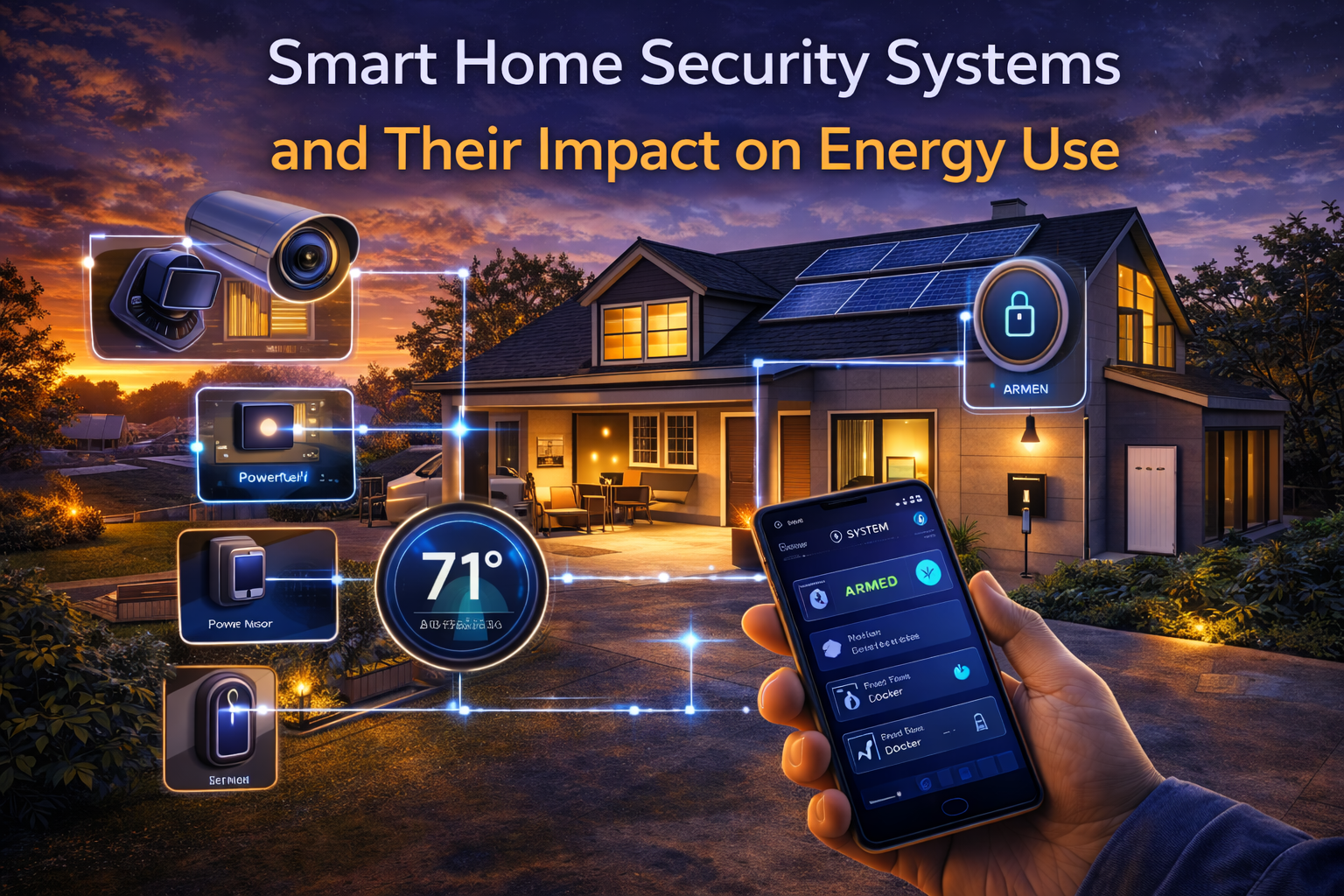
Smart home security systems are typically associated with surveillance cameras, motion detection, smart locks, and intrusion alerts. Most homeowners adopt these systems to enhance safety and property protection. However, beyond their primary function, smart security ecosystems can also influence household energy consumption in measurable ways.
Security systems are deeply integrated into occupancy detection, automation triggers, and remote monitoring platforms. When properly configured, they contribute indirectly — and sometimes directly — to energy optimization. On the other hand, poorly designed systems can introduce additional standby loads and unnecessary energy use.
Understanding the relationship between smart home security and energy consumption requires looking beyond cameras and alarms. It requires evaluating how security data interacts with lighting, HVAC systems, automation routines, and energy management platforms.
This article explores how smart home security systems impact energy use, both positively and negatively, and how homeowners can optimize them strategically.
How Smart Security Systems Consume Energy
Before analyzing energy savings potential, it is important to understand how these systems consume electricity.
Modern smart security systems typically include:
- Wi-Fi-enabled cameras
- Motion sensors
- Smart door and window sensors
- Video doorbells
- Control hubs
- Network routers
- Cloud-based recording systems
Most devices operate continuously, especially cameras that maintain 24/7 connectivity. While individual devices consume relatively low power, cumulative standby usage across multiple components can become noticeable over time.
High-resolution video recording, night vision infrared systems, and constant Wi-Fi communication increase consumption slightly. Therefore, energy efficiency should be considered when selecting security hardware.
Occupancy Detection as an Energy Optimization Tool
One of the most significant ways security systems influence energy use is through occupancy detection.
Motion sensors and door sensors provide real-time data about whether a home is occupied. When integrated with smart home platforms, this information enables dynamic energy adjustments.
For example:
- HVAC systems can shift to eco-mode when the security system is armed in “away” mode.
- Lights can turn off automatically when no motion is detected for extended periods.
- Smart plugs can deactivate selected devices during absence.
Security-triggered automation reduces unnecessary runtime without requiring manual intervention.
In this context, security becomes a behavioral intelligence layer within the home.
Lighting Control and Security Integration
Lighting is one of the most straightforward areas where security and energy management intersect.
Security systems often activate exterior lights when motion is detected. While this increases short-term energy use, it can be optimized to avoid continuous operation.
When integrated properly, lighting automation ensures:
- Lights activate only during motion events.
- Timers prevent extended runtime.
- Daylight sensors prevent unnecessary daytime activation.
Additionally, interior lighting can be programmed to shut off automatically when the system is armed, eliminating common human forgetfulness.
This dual functionality enhances safety while reducing waste.
HVAC Optimization Through Security Modes
Modern security systems typically include multiple modes such as “Home,” “Away,” and “Night.”
When integrated with smart thermostats from brands like Google Nest or Ecobee, these modes trigger climate adjustments automatically.
For example:
- “Away” mode reduces heating or cooling intensity.
- “Night” mode adjusts temperature slightly for sleeping efficiency.
This automation ensures HVAC systems are not operating at full capacity during unoccupied periods.
In homes with irregular schedules, these automatic adjustments produce meaningful reductions in runtime.
Smart Locks and Energy Efficiency
Smart locks may seem unrelated to energy use, but they influence efficiency indirectly.
Remote locking and unlocking eliminates the need for physical key exchanges and reduces the likelihood of doors being left open accidentally. Door sensors also detect when entry points remain open for extended periods, triggering HVAC shutdowns to prevent energy loss.
In colder or warmer climates, preventing prolonged door openings reduces unnecessary thermal exchange.
Surveillance Systems and Standby Load Considerations
Despite their benefits, security cameras introduce continuous standby load.
High-definition cameras with infrared night vision typically consume more power than basic sensors. Cloud recording increases network device activity, which adds marginal load.
Selecting energy-efficient models and optimizing recording settings — such as motion-triggered recording instead of continuous streaming — reduces consumption.
Additionally, using Power over Ethernet (PoE) systems may be more efficient in certain configurations than multiple Wi-Fi cameras with individual adapters.
The key is balancing security coverage with energy awareness.
Integration with Energy Management Systems
The most advanced interaction occurs when security systems integrate with full Energy Management Systems (EMS).
Platforms provided by companies like Enphase Energy allow occupancy data to influence load prioritization decisions.
For example:
- During absence, non-essential circuits can be temporarily deactivated.
- Battery discharge strategies can be adjusted based on occupancy probability.
- Solar self-consumption can be optimized when residents are present.
Security becomes part of a broader predictive model of household behavior.
Potential Energy Drawbacks of Smart Security
While benefits exist, several energy-related drawbacks must be acknowledged.
First, excessive device proliferation increases standby load. Adding multiple cameras, hubs, and connected devices without integration planning can offset efficiency gains.
Second, poor configuration may lead to unnecessary lighting activation or false motion detection triggering systems repeatedly.
Third, constant cloud recording without need increases network energy usage.
Energy optimization requires intentional configuration.
Authority Insight: Security as Behavioral Infrastructure
From a systems engineering perspective, smart security systems function as behavioral infrastructure. They monitor occupancy, detect movement, and interpret environmental changes.
When isolated, they consume energy. When integrated intelligently, they provide data that enables broader energy optimization.
The real efficiency impact depends on integration depth.
In modern smart homes, security data should not operate independently. It should inform climate control, lighting logic, and load management decisions.
Security systems that communicate with automation platforms become contributors to efficiency rather than passive consumers.
Frequently Asked Questions
Do smart security systems significantly increase electricity bills?
Typically, no. Individual devices consume relatively low power, but cumulative load should be monitored.
Can security systems help reduce HVAC costs?
Yes, when integrated with smart thermostats and automation platforms that respond to occupancy status.
Are wireless cameras less efficient than wired ones?
Energy efficiency depends on configuration. PoE systems may be more centralized and efficient in some setups.
Should I disable continuous video recording?
Motion-triggered recording often reduces energy use without sacrificing security effectiveness.
Is integration difficult?
Most modern systems support automation integration, but configuration planning is essential.
Final Considerations
Smart home security systems are primarily designed for protection, but their influence on energy use should not be overlooked.
When integrated thoughtfully, security data enhances occupancy-based automation, improves HVAC scheduling, and reduces lighting waste. However, excessive device deployment without planning can introduce unnecessary standby consumption.
The key is intentional design.
Security should be treated not only as a safety layer but as a behavioral intelligence layer within the broader smart energy ecosystem.
Homes that integrate protection and efficiency strategically gain both resilience and optimized energy performance.

Daniel Harper is a graduate engineer with a postgraduate specialization in Intelligent Solutions and Industry 4.0 technologies. He leads the Mogarzi Team, focusing on smart home automation, residential energy efficiency, and intelligent energy management systems. His work combines engineering principles with practical home optimization strategies, translating complex technical concepts into actionable insights for homeowners seeking smarter and more efficient living environments.