
Introduction
Uneven room cooling is one of the most common comfort problems in modern homes. Many homeowners notice that certain rooms feel significantly warmer or cooler than others, even when the thermostat indicates that the temperature is correct. This issue becomes even more noticeable in larger houses or homes with multiple floors, large windows, or rooms that are used differently throughout the day.
In most cases, uneven cooling is not caused by a single dramatic flaw in the HVAC system. Instead, it emerges from a combination of factors such as home layout, insulation quality, sunlight exposure, and airflow distribution. Daily household activities also influence indoor temperatures. Kitchens generate heat during cooking, home offices accumulate warmth from electronics, and bedrooms may remain cooler because they receive less direct sunlight.
At the same time, homeowners increasingly expect their cooling systems to provide both comfort and energy efficiency. Running an air conditioner longer than necessary increases electricity consumption, yet insufficient cooling in occupied rooms creates discomfort. Achieving the right balance requires accurate awareness of temperature conditions throughout the home.
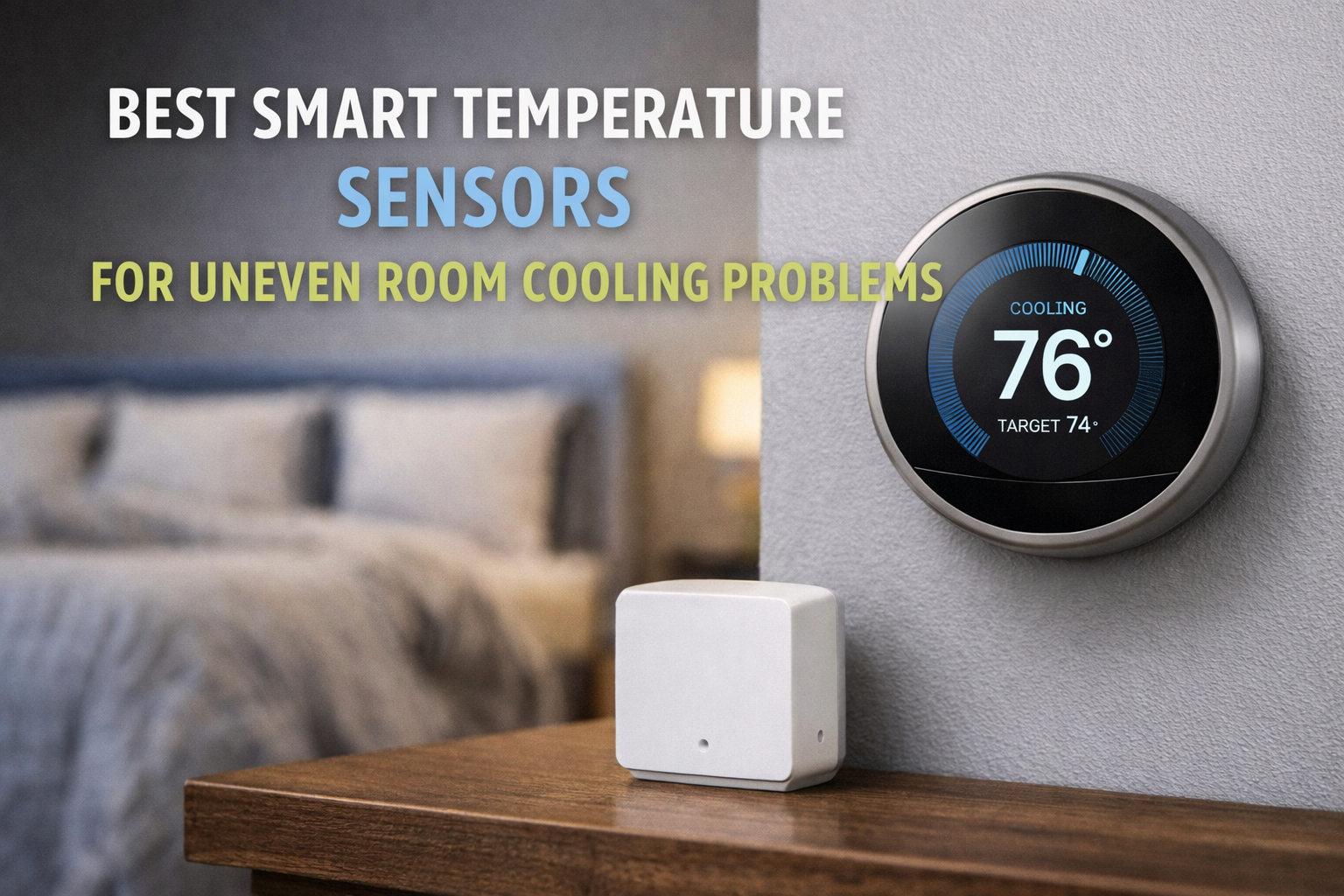
Smart temperature sensors provide a practical solution to this challenge. By supplying real-time temperature data from multiple rooms, they allow smart thermostats to make more informed cooling decisions. Instead of reacting to a single measurement point, the system gains a broader understanding of how temperature varies across the home.
Understanding how smart sensors work—and how to use them effectively—can dramatically improve comfort while reducing unnecessary energy consumption.
Why Uneven Room Cooling Happens
Uneven cooling is largely influenced by physical principles of airflow and heat transfer. Conditioned air does not distribute evenly throughout a house without resistance. Several structural factors affect how air moves through HVAC ducts and into different rooms.
Long duct runs, sharp duct bends, or partially blocked vents can reduce airflow to certain areas of the home. Leakage in ductwork may also cause cooled air to escape before reaching its intended destination.
Solar heat gain is another major factor. Rooms with large south-facing or west-facing windows can absorb significant heat during the afternoon, raising indoor temperatures even when air conditioning is running.
Human behavior also contributes to temperature variation. Closed doors restrict airflow between rooms, electronics generate heat in workspaces, and cooking activities can quickly warm nearby areas.
Because all these variables influence indoor climate, a single thermostat reading rarely represents the entire house accurately. As homes become larger and more segmented, temperature differences become more pronounced.
This is why distributed temperature sensing is increasingly necessary for balanced climate control.
How Smart Temperature Sensors Work
Smart temperature sensors are small wireless devices designed to measure ambient temperature in different parts of a home. They continuously monitor local conditions and transmit this information to a compatible smart thermostat or home automation hub.
Most sensors use low-power communication protocols such as Zigbee, Z-Wave, Bluetooth Low Energy, or proprietary radio frequency systems. These technologies allow sensors to operate for long periods—often one to two years—on small batteries.
The primary advantage of these sensors is that they provide distributed environmental awareness. Instead of assuming that all rooms share the same temperature, the HVAC system receives multiple data points from across the home.
Some thermostat ecosystems average readings from several sensors to determine a balanced temperature target. Others allow homeowners to prioritize specific rooms depending on time of day or occupancy.
Although these devices operate quietly in the background, their influence on HVAC behavior can be substantial. The temperature data they provide directly affects when cooling cycles begin, how long they run, and when they stop.
Why Your Thermostat Alone Is Not Enough
A thermostat acts as the decision-making center of a home’s climate control system. However, its effectiveness is limited by the information it receives.
Traditional thermostats rely on a single temperature measurement. If the thermostat is installed in a naturally cool hallway, the HVAC system may stop cooling too early, leaving warmer rooms uncomfortable. On the other hand, if it sits in a warmer location—such as near a kitchen or sunlit window—the system may continue running longer than necessary.
This mismatch can lead to both comfort problems and energy waste. The HVAC system may overcool certain rooms while trying to satisfy the thermostat reading.
By contrast, when multiple temperature sensors provide data from different areas of the house, the thermostat can make more balanced decisions that reflect real living conditions rather than a single reference point.
What Makes a Good Smart Temperature Sensor
Several characteristics determine whether a smart temperature sensor will perform effectively in a home environment.
Accuracy is the most important factor. Even small measurement errors can influence HVAC operation. Sensors should maintain reliable calibration and stable readings over time.
Responsiveness also matters. Sensors should update often enough to reflect real temperature changes, but not so frequently that they cause constant HVAC cycling.
Compatibility is equally important. Sensors should integrate seamlessly with the thermostat platform controlling the HVAC system. When sensors work within the same ecosystem, the data they generate can be used for more advanced automation strategies.
Battery efficiency and wireless reliability are additional factors that affect long-term usability.
Sensor Placement Strategy
Even the most advanced sensor will provide poor results if it is placed incorrectly.
Sensors should typically be installed at approximately breathing height, around the level where people experience room temperature. Placing sensors near ceilings or floors may produce misleading readings due to natural temperature stratification.
Direct sunlight should also be avoided, as solar exposure can temporarily inflate temperature readings. Similarly, sensors should not be placed near air vents or electronics that produce heat.
Strategic placement ensures that the data collected reflects the true ambient conditions experienced by occupants.
In many homes, relocating a sensor by just a few feet can noticeably improve cooling balance.
Using Sensors With Smart Thermostats
Modern smart thermostats often allow users to control how sensor data is used.
Some systems allow homeowners to activate specific sensors during certain periods. For example, bedroom sensors can be prioritized overnight, while living areas may take priority during daytime hours.
In open floor plans, averaging readings from multiple sensors may provide the most balanced result. In homes where occupancy shifts throughout the day, prioritizing specific rooms can improve comfort.
Choosing the right configuration depends largely on how people move through the home.
Room-by-Room Cooling Strategies
Bedrooms are often the most important areas for nighttime comfort. Sensors placed in sleeping areas allow the thermostat to maintain stable temperatures during the night.
Home offices may require more attention during working hours, especially when computers and electronics generate additional heat.
Living rooms that receive afternoon sunlight may benefit from targeted monitoring during peak solar hours.
By aligning sensor placement with actual usage patterns, the cooling system becomes more responsive to how the home is lived in rather than cooling every room uniformly.
Authority Insight: Distributed Temperature Sensing Improves HVAC Intelligence
From an engineering perspective, distributed sensing is one of the most effective ways to improve HVAC efficiency without modifying ductwork or installing complex zoning systems.
Traditional climate control systems rely on a single feedback signal from one thermostat location. Smart sensors expand this feedback network by providing multiple environmental data points.
This allows the HVAC system to approximate a form of dynamic zoning, where cooling decisions reflect real temperature variations across the house.
While smart sensors cannot replace structural improvements such as duct redesign or insulation upgrades, they significantly improve how existing systems respond to thermal imbalances.
As smart home technology evolves, distributed environmental sensing will likely become a standard feature in residential climate management.
Final Considerations
Uneven cooling is a common challenge in many homes, particularly those with multiple rooms, varying sunlight exposure, or complex layouts. While HVAC systems are designed to regulate indoor temperature, relying on a single thermostat measurement often leads to imbalanced results.
Smart temperature sensors provide a practical solution by expanding the system’s awareness beyond one location. With accurate data from multiple rooms, smart thermostats can make better decisions that improve comfort and reduce unnecessary cooling cycles.
When selected carefully, placed strategically, and integrated with a compatible smart thermostat platform, these sensors transform cooling from a blunt system into a more responsive and adaptive one.
Over time, the improved balance between comfort and efficiency can lead to both lower energy consumption and a more comfortable living environment.
Frequently Asked Questions
How many smart temperature sensors should a home use?
Most homes benefit from two to five sensors placed in key living and sleeping areas.
Do temperature sensors reduce electricity bills?
Indirectly, yes. By improving HVAC decision-making, they help reduce unnecessary cooling cycles.
Can smart sensors fix poor duct design?
No. They cannot correct structural HVAC problems, but they help the system respond more intelligently to temperature differences.
How often do sensor batteries need replacement?
Most sensors operate for one to two years depending on battery size and update frequency.
Are smart temperature sensors difficult to install?
Most models are simple to install and connect wirelessly to a compatible thermostat or smart home hub.

Daniel Harper is a graduate engineer with a postgraduate specialization in Intelligent Solutions and Industry 4.0 technologies. He leads the Mogarzi Team, focusing on smart home automation, residential energy efficiency, and intelligent energy management systems. His work combines engineering principles with practical home optimization strategies, translating complex technical concepts into actionable insights for homeowners seeking smarter and more efficient living environments.