
Introduction
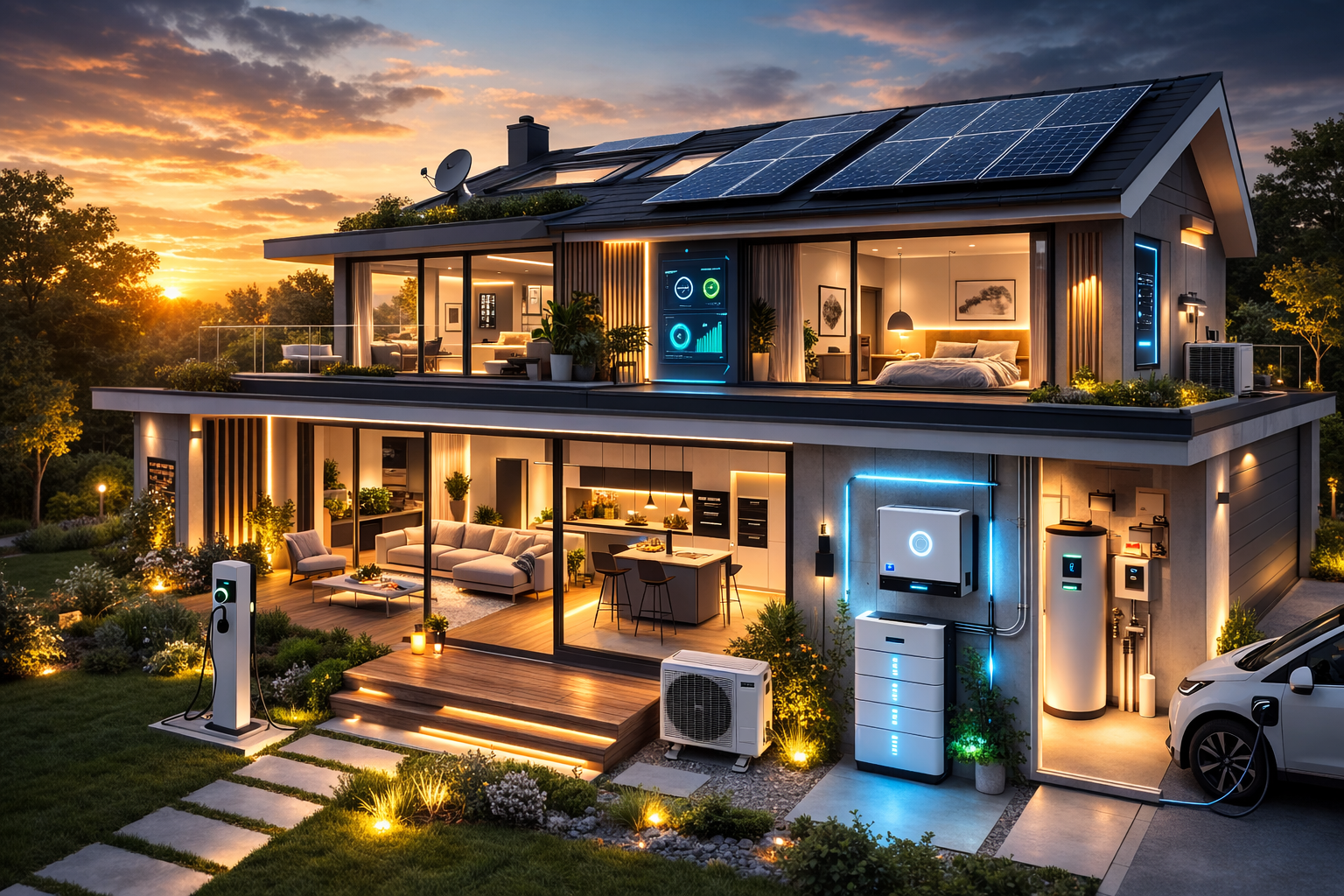
Building a fully energy-efficient smart home is no longer a futuristic concept reserved for luxury projects or experimental architecture. It has become a strategic necessity for homeowners seeking lower energy costs, greater resilience, environmental responsibility, and long-term property value appreciation.
However, energy efficiency is often misunderstood. Many homeowners assume that installing solar panels or replacing light bulbs with LEDs is enough. In reality, true energy efficiency requires an integrated system approach — combining architecture, insulation, HVAC optimization, renewable generation, intelligent automation, storage solutions, and data-driven energy management.
A fully energy-efficient smart home is not just about consuming less energy. It is about consuming energy intelligently, generating clean energy locally, storing surplus power, and optimizing usage in real time.
This guide provides a complete technical roadmap for designing or upgrading a home into a high-performance, energy-optimized smart ecosystem.
Step 1: Start with the Building Envelope
Before adding any technology, efficiency begins with physics.
The building envelope — walls, roof, windows, insulation, and air sealing — determines how much energy a home requires to maintain comfort.
Why It Matters
Poor insulation or air leakage forces HVAC systems to work harder, increasing energy consumption regardless of smart controls.
Key components include:
- High R-value insulation
- Double or triple-glazed low-E windows
- Air sealing to prevent drafts
- Thermal bridge reduction
- Reflective or cool roofing materials
A smart home built on an inefficient envelope will always waste energy.
Strategic Insight
Every dollar invested in passive efficiency reduces the size — and cost — of active systems such as HVAC and solar.
Efficiency first. Generation second.
Step 2: Install High-Efficiency HVAC Systems
Heating and cooling typically represent 40–60% of residential energy use.
Modern energy-efficient homes prioritize:
- Variable-speed heat pumps
- Zoned HVAC systems
- Smart thermostats
- High SEER-rated air conditioning
- Energy recovery ventilators (ERV)
Smart thermostats from companies like Google Nest and Ecobee use occupancy sensing and AI scheduling to reduce unnecessary heating and cooling.
Heat Pump Advantage
Modern air-source heat pumps can achieve coefficients of performance (COP) above 3.0, meaning they deliver three units of heat per unit of electricity consumed.
This dramatically improves system-wide efficiency.
Step 3: Optimize Lighting and Appliances
Energy-efficient lighting and appliances create foundational reductions in consumption.
Lighting
- 100% LED implementation
- Smart dimmers
- Occupancy sensors
- Daylight harvesting systems
Appliances
Look for:
- ENERGY STAR certification
- Inverter-driven compressors
- Smart load scheduling capability
High-efficiency appliances reduce baseline load, making solar systems more cost-effective.
Step 4: Integrate Rooftop Solar Generation
Once demand is optimized, local renewable generation becomes more impactful.
Photovoltaic systems convert sunlight into usable electricity, offsetting grid dependence.
Leading manufacturers include:
- Canadian Solar
- JinkoSolar
- REC Group
System sizing must align with:
- Annual consumption
- Peak loads
- Roof orientation
- Local irradiance
Solar alone does not guarantee efficiency — but it transforms energy economics when combined with intelligent load management.
Step 5: Add Energy Storage for Autonomy
Battery storage allows homeowners to:
- Increase self-consumption
- Avoid peak tariffs
- Maintain backup power
- Stabilize solar variability
Products like the Tesla Powerwall and storage systems from Sonnen enable smart energy shifting and resilience.
Storage becomes increasingly important in markets with time-of-use pricing or reduced net metering.
Step 6: Implement a Smart Energy Management System (EMS)
This is where a home becomes truly intelligent.
An Energy Management System integrates:
- Solar production data
- Battery state of charge
- Real-time consumption
- Utility tariff schedules
- EV charging demand
Companies such as Enphase Energy and SolarEdge Technologies provide monitoring ecosystems that enable granular control.
Advanced Optimization Includes:
- Load prioritization
- Peak shaving automation
- Weather-based predictive charging
- Dynamic tariff arbitrage
Without EMS integration, efficiency remains passive. With EMS, it becomes dynamic.
Step 7: Electrify Everything Strategically
A fully energy-efficient smart home eliminates fossil fuel reliance where possible.
Electrification includes:
- Heat pump water heaters
- Induction cooktops
- EV chargers
- Electric dryers
When combined with solar and storage, electrification maximizes clean energy utilization.
Step 8: Data Monitoring and Continuous Optimization
Energy efficiency is not static. It requires ongoing analysis.
Modern systems allow:
- Per-circuit monitoring
- Appliance-level tracking
- Historical consumption analytics
- AI-based optimization recommendations
The most efficient homes continuously adapt.
Authority Insight: Efficiency Is Systems Engineering
The biggest misconception about energy-efficient smart homes is that they are technology-driven projects.
In reality, they are systems engineering projects.
True efficiency requires:
- Integration across subsystems
- Load balancing
- Financial modeling
- Infrastructure scalability
- Policy awareness
The most successful projects treat the home as an energy ecosystem — not a collection of devices.
Frequently Asked Questions (FAQ)
Is solar required for an energy-efficient smart home?
No, but it significantly enhances long-term performance and cost reduction.
How much can energy bills be reduced?
In optimized homes, reductions of 60–90% are achievable depending on system size and local tariffs.
Are batteries mandatory?
Not mandatory, but increasingly strategic in dynamic pricing environments.
Is building new more efficient than retrofitting?
New builds allow better integration, but retrofits can still achieve high efficiency with proper planning.
What is the biggest mistake homeowners make?
Adding technology before optimizing the building envelope and load demand.
Final Considerations
Building a fully energy-efficient smart home requires more than installing isolated upgrades. It demands a structured, phased strategy:
- Reduce demand.
- Optimize systems.
- Generate clean energy.
- Store intelligently.
- Automate continuously.
Homes built with this systems-first approach achieve:
- Lower lifetime energy costs
- Greater energy independence
- Increased resilience
- Higher resale value
- Reduced carbon footprint
Energy efficiency is no longer optional. It is the foundation of the modern intelligent home.

Daniel Harper is a graduate engineer with a postgraduate specialization in Intelligent Solutions and Industry 4.0 technologies. He leads the Mogarzi Team, focusing on smart home automation, residential energy efficiency, and intelligent energy management systems. His work combines engineering principles with practical home optimization strategies, translating complex technical concepts into actionable insights for homeowners seeking smarter and more efficient living environments.