
Introduction
Smart home technology has evolved far beyond convenience. What began with voice assistants and remote-controlled lighting has matured into a powerful energy optimization ecosystem. Yet not every “smart” device reduces electricity consumption. Some add convenience without measurable savings, while others can significantly reduce household energy costs when properly integrated.
For homeowners focused on efficiency rather than novelty, the real question is not which devices are popular — but which ones genuinely lower electricity usage in measurable ways.
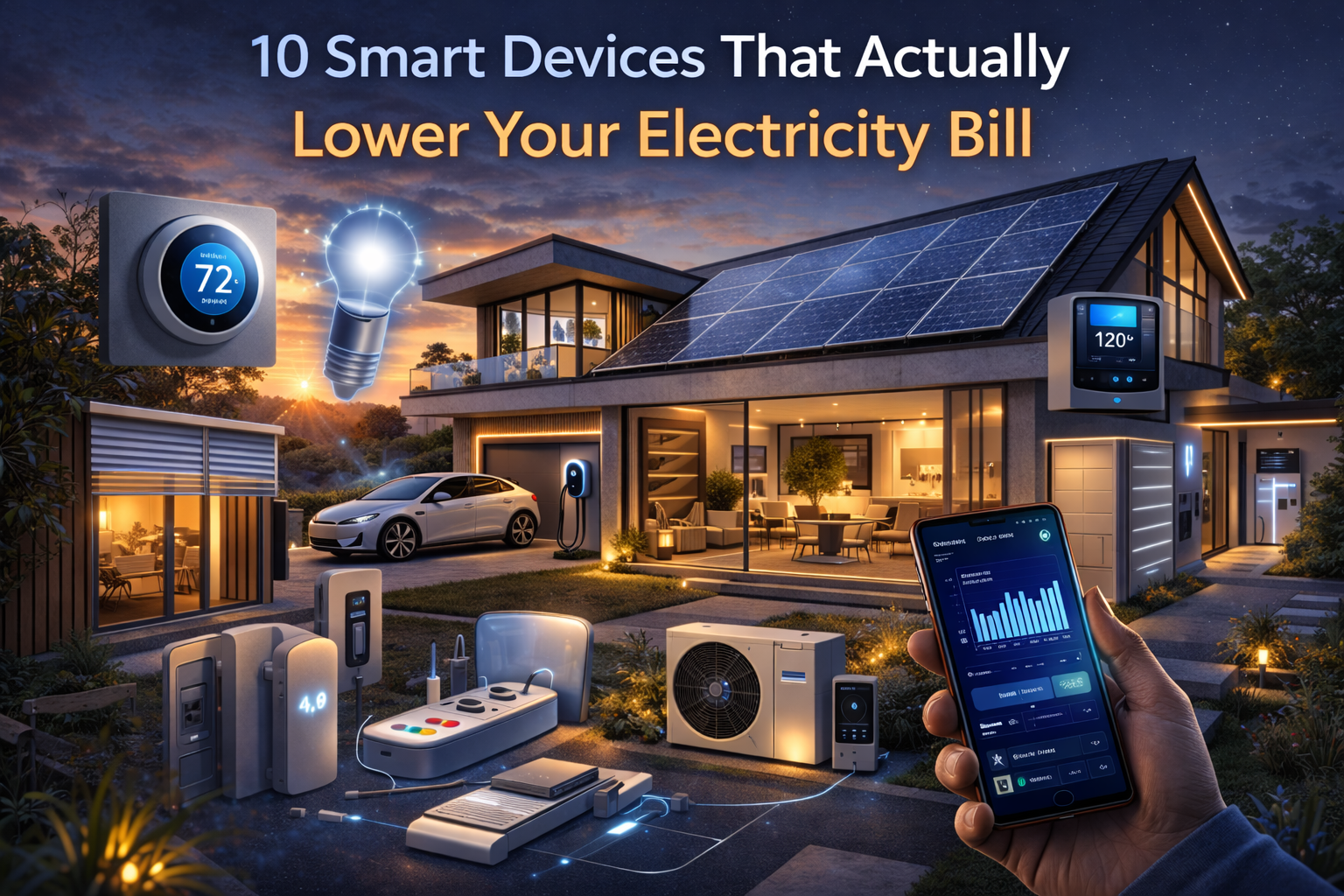
This guide examines ten smart devices that consistently deliver energy savings when used strategically. Instead of focusing on hype, we will explore how each device works, where it creates efficiency gains, and under what conditions it produces meaningful financial impact.
Smart Thermostats
Heating and cooling represent the largest portion of residential electricity use in most regions. Smart thermostats reduce waste by shifting from reactive temperature control to adaptive climate optimization.
Unlike traditional programmable thermostats, smart systems learn occupancy patterns, respond to weather data, and allow remote adjustments. They prevent unnecessary heating or cooling during unoccupied hours and fine-tune runtime to minimize energy spikes.
In homes with irregular schedules, savings between 10% and 20% on HVAC-related consumption are realistic. The impact is even greater in climates with extreme temperatures.
Smart Plugs
Phantom load — also known as standby consumption — quietly drains electricity from devices that appear to be turned off. Televisions, gaming consoles, printers, and kitchen appliances often consume small but continuous power.
Smart plugs eliminate this waste by fully cutting electricity to selected devices during defined periods. When configured with automation rules, they ensure that clusters of electronics do not consume power overnight or during work hours.
Individually, the savings per device are small. Collectively, across multiple rooms and appliances, the reduction becomes measurable over the year.
Smart LED Lighting Systems
Lighting efficiency has improved dramatically with LED technology. However, combining LEDs with smart control multiplies the effect.
Smart lighting systems allow:
- Occupancy-based activation
- Automatic dimming
- Daylight-responsive brightness
- Scheduled shutdown
Rather than relying on user behavior, automation ensures lights operate only when necessary. In high-traffic homes, this significantly reduces unnecessary runtime.
Smart Power Strips
Unlike basic surge protectors, smart power strips detect when a primary device is turned off and automatically cut power to peripheral devices.
For example, when a desktop computer shuts down, the monitor and speakers lose power automatically. This reduces clustered standby loads without manual intervention.
These devices are particularly effective in home offices and entertainment centers.
Energy Monitoring Systems
Energy monitoring systems do not directly reduce electricity consumption, but they influence behavior and enable optimization.
Whole-home monitors and circuit-level tracking reveal:
- Which appliances consume the most power
- When peak usage occurs
- Where inefficiencies exist
Data visibility changes consumption patterns. Homeowners who actively monitor energy use tend to reduce overall demand simply through awareness and targeted adjustments.
Smart Water Heater Controllers
Water heating is typically the second or third largest energy expense in a home. Smart controllers optimize heating cycles based on usage patterns rather than constant temperature maintenance.
Instead of heating water continuously, smart systems activate during anticipated demand windows and reduce standby losses during low-use periods.
In high-demand households, savings can be substantial over time.
Smart EV Chargers
Electric vehicles increase household electricity demand significantly. However, smart chargers allow charging during off-peak hours or during peak solar production periods.
This reduces electricity costs by aligning charging behavior with lower tariff windows or self-generated solar power.
In homes with time-of-use pricing, intelligent EV charging creates one of the most impactful optimization opportunities.
Smart Blinds and Automated Shading
Climate efficiency is not only mechanical — it is architectural.
Smart blinds automatically adjust based on sunlight intensity and indoor temperature. During summer, they reduce solar heat gain, lowering air conditioning load. In winter, they can open to allow passive solar heating.
Reducing HVAC runtime through passive thermal control directly lowers electricity consumption.
Smart Heat Pump Systems
Modern inverter-based heat pumps combined with smart controls deliver highly efficient heating and cooling. Variable-speed compressors adjust output gradually rather than cycling on and off aggressively.
When paired with intelligent thermostats and zoning, heat pumps operate more efficiently and reduce unnecessary runtime.
This technology represents a significant shift away from resistance heating and traditional air conditioning.
Smart Home Energy Management Systems (EMS)
The most advanced layer of optimization comes from integrated Energy Management Systems.
An EMS coordinates:
- Solar production
- Battery storage
- HVAC demand
- EV charging
- Appliance scheduling
Instead of managing devices individually, the system orchestrates the entire home’s energy flow. It shifts loads, avoids peak tariffs, and maximizes self-consumption.
While more complex, this is where the largest long-term efficiency gains occur.
Authority Insight: Efficiency Comes from Integration, Not Individual Devices
One of the most common misconceptions in smart home adoption is assuming that a single device dramatically lowers electricity bills. In reality, energy efficiency is cumulative.
Each device contributes incremental improvement. When integrated strategically, these improvements compound.
For example, a smart thermostat reduces HVAC waste. Smart blinds reduce heat load. Solar panels generate clean electricity. An EMS coordinates everything. Together, they create exponential gains.
Energy optimization is not about gadgets. It is about system design and coordinated automation.
Frequently Asked Questions
Do smart devices always reduce electricity consumption?
No. Only devices designed for energy optimization and properly configured will reduce consumption. Some smart products add convenience without measurable efficiency gains.
Which device produces the fastest ROI?
Smart thermostats and LED lighting upgrades often provide the quickest return due to HVAC and lighting’s share of total consumption.
Is an Energy Management System necessary?
Not mandatory, but highly beneficial for homes with solar panels, batteries, or EVs.
Can renters benefit from smart devices?
Yes. Smart plugs, LED lighting, and portable monitoring systems are accessible without permanent installation.
Do smart devices increase standby power themselves?
Most modern smart devices consume minimal standby energy, but overall savings typically exceed their own consumption footprint.
Final Considerations
Smart home efficiency is not about adopting every available device. It is about identifying where your home consumes the most electricity and applying intelligent automation strategically.
The ten devices discussed here represent proven tools for measurable energy reduction when used correctly. Their effectiveness depends on integration, configuration, and consistency.
In an era of rising energy prices and evolving grid dynamics, smart efficiency is no longer optional. It is the foundation of financially resilient and environmentally responsible homes.

Daniel Harper is a graduate engineer with a postgraduate specialization in Intelligent Solutions and Industry 4.0 technologies. He leads the Mogarzi Team, focusing on smart home automation, residential energy efficiency, and intelligent energy management systems. His work combines engineering principles with practical home optimization strategies, translating complex technical concepts into actionable insights for homeowners seeking smarter and more efficient living environments.